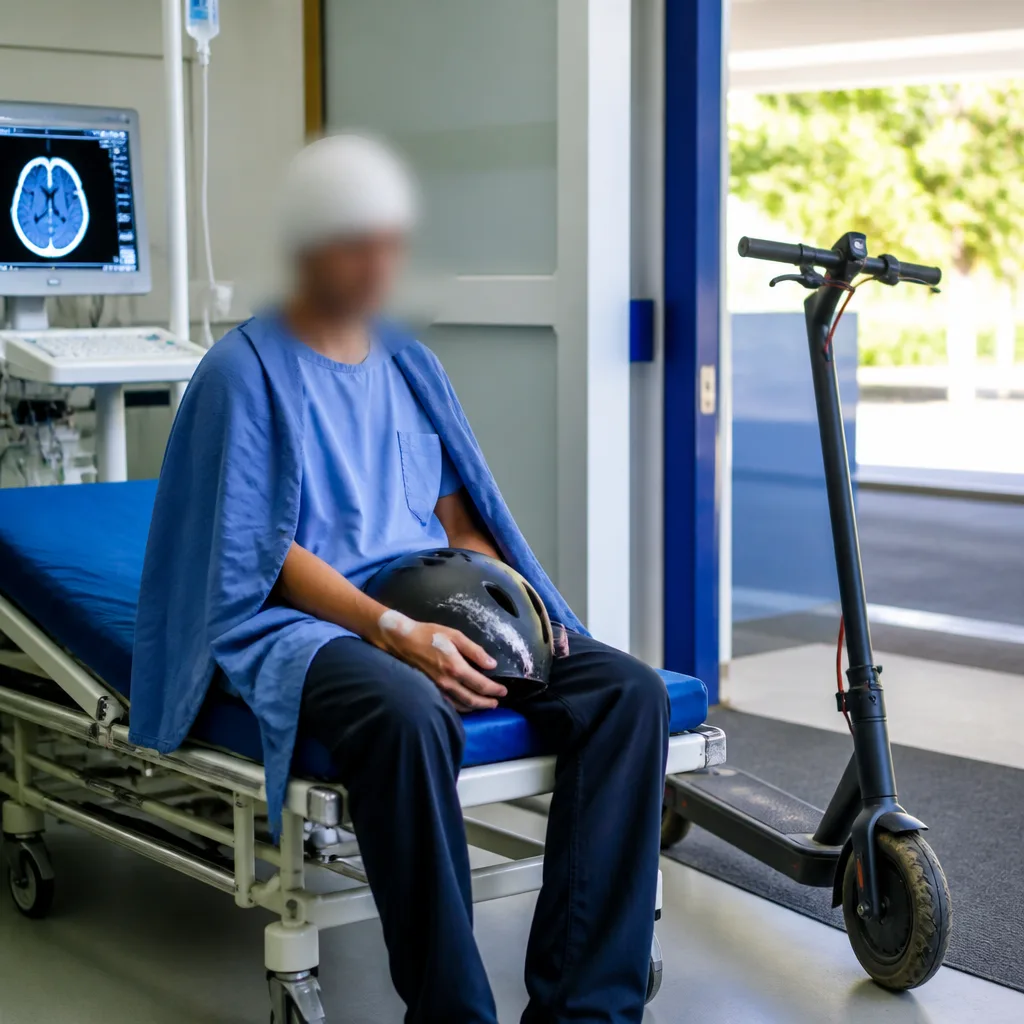
A new analysis of major trauma records in England and Wales has found that people riding electric scooters face a markedly higher risk of serious head and internal injuries than users of motorcycles or bicycles.
Study findings and scale of the problem
Using the national major trauma registry, consultant surgeon David Bodansky examined collisions in 18 cities between 2020 and 2022. The analysis found e‑scooter riders were over three times more likely to suffer traumatic brain injury or blood vessel damage than motorcyclists, and 1.5 times more likely to sustain internal organ injuries. By contrast, the risk of broken bones among e‑scooter riders was lower than for those on bicycles or motorcycles.
Brain injuries accounted for more than a third of adult injuries from e‑scooter collisions in the data set, while children were also affected: about 16% of e‑scooter injuries occurred in people under 18. The analysis also identified gender differences—women were involved in roughly a third more collisions than men and were more than twice as likely to report severe injuries.
“They’ve got very small wheels and it’s very easy to jam one of those into a pothole. You’ll then go head over heels over the front and land on your head,”
Bodansky suggested vehicle design, including small wheel size and handlebar geometry, may be a factor in the pattern of injuries observed.
Regulatory and practical context
The findings come amid ongoing policy debate about e‑scooters. The UK government has supported rental e‑scooter trials since 2020, but an estimated additional 1 million privately owned scooters are in the country. These private machines remain illegal on public roads, paths and cycle lanes, and police forces have confiscated thousands for that reason.
Experts and commentators responding to the analysis urged measures to reduce harm, including:
- Design improvements to increase stability and reduce the risk of being thrown by small obstacles;
- Mandatory helmet use for riders;
- Compulsory safety training for new users, particularly in rental schemes.
What the data do and do not show
The registry analysis compares injury patterns between vehicle types but does not explain the specific causes of collisions. While design features such as wheel size are plausible contributors, the data cannot identify whether rider behaviour, road conditions, vehicle maintenance or other factors are the primary drivers of higher injury severity.
That limitation leaves open several policy and research questions: how much reduction in severe injury would helmets or training achieve; whether certain e‑scooter designs are demonstrably safer; and how enforcement of existing rules on privately owned scooters should be handled alongside rental trials.
| Measure | Relative risk for e‑scooter riders |
|---|---|
| Traumatic brain injury / blood vessel damage vs motorcycles | 3× |
| Internal organ injury vs motorcycles | 1.5× |
| Proportion of adult injuries that were brain injuries | >33% |
| Share of e‑scooter injuries in under‑18s | 16% |
The analysis therefore strengthens evidence that e‑scooter collisions produce a distinct pattern of harm and heightens the urgency for targeted measures to protect riders. Policy responses could range from technical standards and mandatory protective equipment through to rider education and better- enforced rules for private scooters.
For South African readers, the findings add a cautionary note as micromobility devices become more common: they underline the need to consider vehicle design, rider protection and the legal framework together, rather than assuming that practices suitable for bicycles or motorcycles automatically apply to e‑scooters.