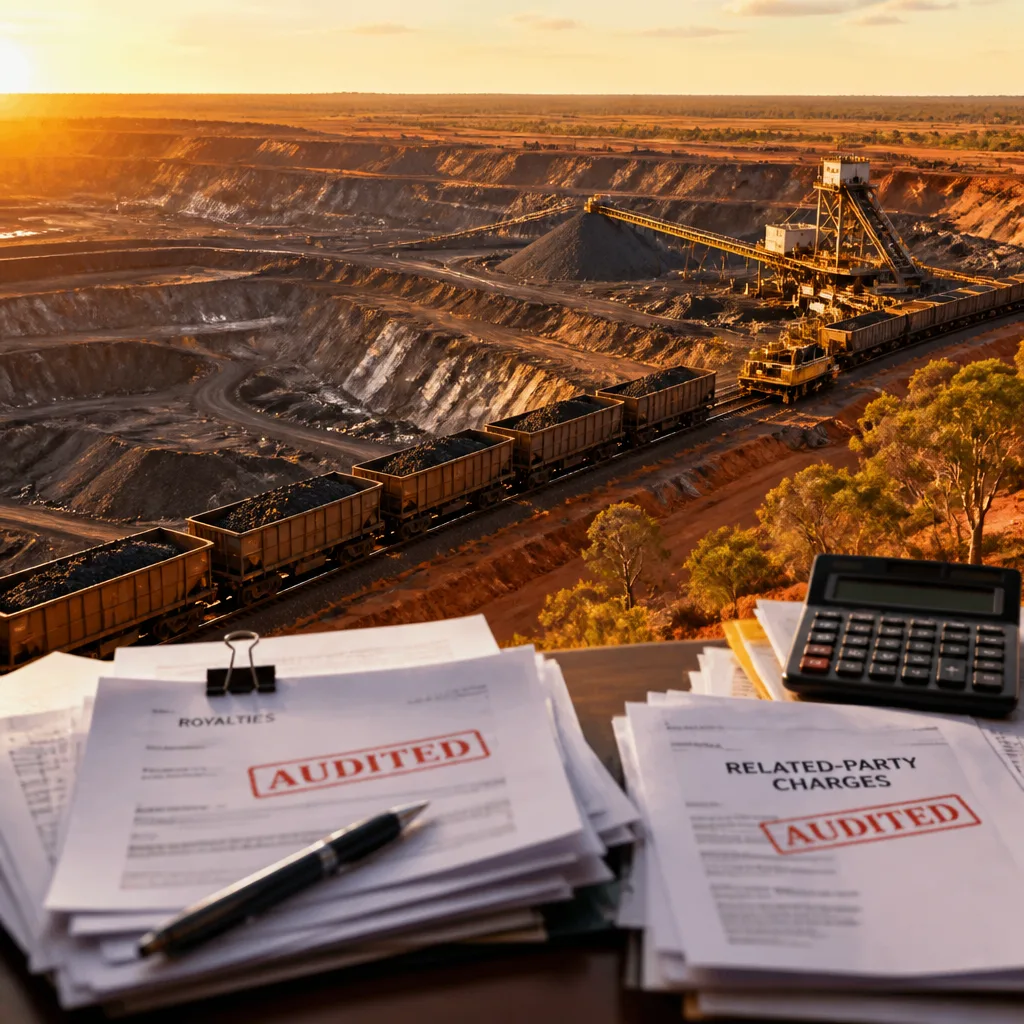
Accounts for Adani Mining’s Carmichael thermal coal operations in central Queensland show the project booked US$963.5m in revenue in the year to 31 March but recorded a US$340.6m loss, leaving it with no company tax liability for the period. The figures, published in recent financial statements and examined in reporting by an Australian news organisation, underline how operating costs and related‑party charges can eliminate taxable profit even when headline sales approach US$1bn.
How the bottom line was reduced
The Carmichael operation — which opened in 2021 in the Galilee Basin — used large production costs and significant related‑party logistics expenses to offset revenue, according to the accounts. The disclosures show the mining project also paid royalties of US$58m to governments in the 12 months and US$33.1m to a related party.
| Item | Amount (US$) |
|---|---|
| Revenue (12 months to 31 March) | 963.5m |
| Reported loss | 340.6m |
| Royalties to governments | 58m |
| Related‑party royalty | 33.1m |
Claims and criticism
The project has been controversial since approval, drawing strong environmental opposition and heated public debate about promised local benefits. Industry supporters previously said taxes and royalties from Carmichael would fund schools, hospitals and infrastructure. The recent accounts show the operation has not paid company tax since it opened in 2021, the reporting states.
“We comply fully with our state and commonwealth taxation and royalty obligations and our statutory profit and tax outcomes are determined in accordance with Australian accounting standards and the Corporations Act,” a spokesperson for Adani Mining said, according to the reporting.
That defence sits alongside scrutiny from analysts and campaigners. Tim Buckley, director of Climate Energy Finance and a former investment banker, told the reporting the company’s structure appears designed to avoid corporate tax in Australia and highlighted the need for rule changes to limit deductions used to reduce taxable income.
What this means for policy and investors
The Carmichael case illustrates two recurring tensions in resource taxation: the difference between royalties — payments for the right to extract state‑owned resources — and company tax on profits, and the role of related‑party transactions in shifting taxable income. For governments, royalties deliver direct revenue irrespective of profit but do not replace company tax when businesses show accounting losses.
The reporting notes Adani paid substantial royalties despite the lack of company tax. That dynamic is likely to prompt renewed calls for revision of tax rules governing deductions, transfer pricing and the capital structures of foreign‑owned projects, particularly where governments had expected substantial corporate tax flows as part of the social licence for large resource developments.
- Revenue: US$963.5m in the year to 31 March.
- Reported loss: US$340.6m for the period, producing no company tax payable.
- Royalties: US$58m to governments and US$33.1m to a related party.
For South African readers, the episode is a reminder of how multinational corporate structures and accounting practices can produce outcomes that differ from public expectations about tax contributions. Policymakers here and elsewhere wrestle with similar issues — how to ensure fair returns from extractive industries while keeping projects viable. The Carmichael disclosures will add fuel to debates about tighter rules on deductions, related‑party transactions and the transparency of project accounts.
The company’s spokesperson pointed to compliance with accounting standards and legislation in explaining the result, while critics argue that structural changes are necessary to prevent large projects from showing little or no corporate tax despite significant revenues.