Long after delivery apps made regional groceries a click away, a quiet practice endures: people acting as informal food couriers for friends and family. The tradition — hauling sweets, spices and snacks across state lines or even continents — persists not because convenience has vanished, but because these edible gifts carry emotional weight that an online order rarely matches.
Food as a personal courier service
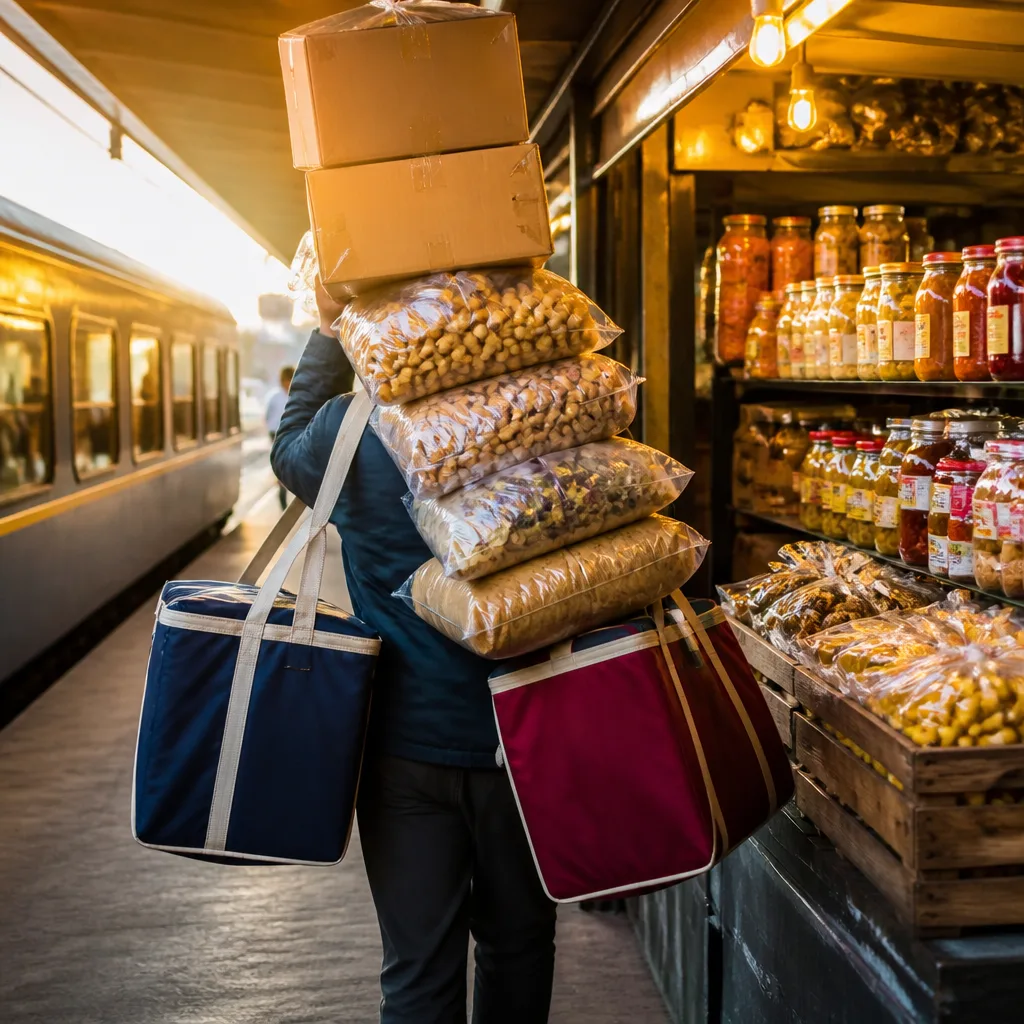
The practice is rooted in specific memories and tastes. The source material recalls travellers racing to get on a departing train with boxes of biryani, galouti kebabs and shahi tukda in hand. Over the years the list of sought‑after items has expanded to include regional sweets and staples such as milk cake from Alwar, kapur kand from Kannauj, and even dry goods and condiments like gunpowder and mustard.
Some items are almost emblematic of place. The piece mentions Naturals ice cream — a dessert that friends were once asked to smuggle in travel boxes for those who wanted its specific texture and flavour — and Bikaneri bhujia, a snack the writer has transported across continents in suitcases that retained a faint smell of besan for months.
Why people keep carrying food
Delivery platforms have made many regional products available for doorstep delivery. The article notes that items once difficult to source — from biscuits to regional chutneys — can now arrive at the home within hours, with services specifically named as examples. Yet the habit of bringing food persists. The reasons are partly practical and partly emotional:
- Food as a tangible expression of affection — people choose items thinking about "someone else’s face" when they shop;
- Certain products are prized for their freshness, packaging or a very particular taste linked to a specific shop or maker;
- Shared ritual and memory: carrying food ties travellers to family traditions and past journeys.
“There’s a particular kind of customer I’ve come to recognise,” Rahul Patel, who runs Neelam Foodland in Khar, said. “They walk in slightly hurried, sometimes with a suitcase still half‑packed, with a look that’s equal parts love and logistics. They’re not shopping for themselves. Every item they pick up, they’re thinking of someone else’s face.”
Patel’s observation spotlights a social pattern: the act of gifting food while travelling is often less about the item itself and more about the message it carries — that you remembered, you went out of your way, you preserved a link back home.
What delivery can and cannot replace
The article acknowledges that apps and overnight shipping have reduced the urgency of sourcing regional products. It cites examples where goods once smuggled in suitcases can now be ordered for prompt delivery. But convenience does not fully substitute the personal touch of a hand‑delivered parcel packed with care. A shipped box may arrive intact, yet lack the story and the immediacy of a traveller who deliberately set aside space in a suitcase for a favourite sweet or a jar of chutney.
For readers thinking about travel and gifts, the story has practical implications. If you want your offering to feel special, consider:
- Choosing items with a clear provenance or a link to a family tradition;
- Packaging that protects fragile foods but still looks personal;
- Being mindful of customs and transport restrictions when crossing borders.
| Item | Place associated |
|---|---|
| Milk cake | Alwar |
| Kapur kand | Kannauj |
| Shrewsbury biscuits | Pune |
| Bikaneri bhujia | Bikaner |
At the heart of this behaviour is a simple economy of affection: some gifts are valued not for rarity or rarity alone, but for the care they demonstrate. Delivery platforms have reshaped how goods travel, but not necessarily how people show they care.
This is partly why, even in an era of instant fulfilment, the person who offers to bring back a tin of biscuits or a box of sweets remains, in many circles, a keeper.