
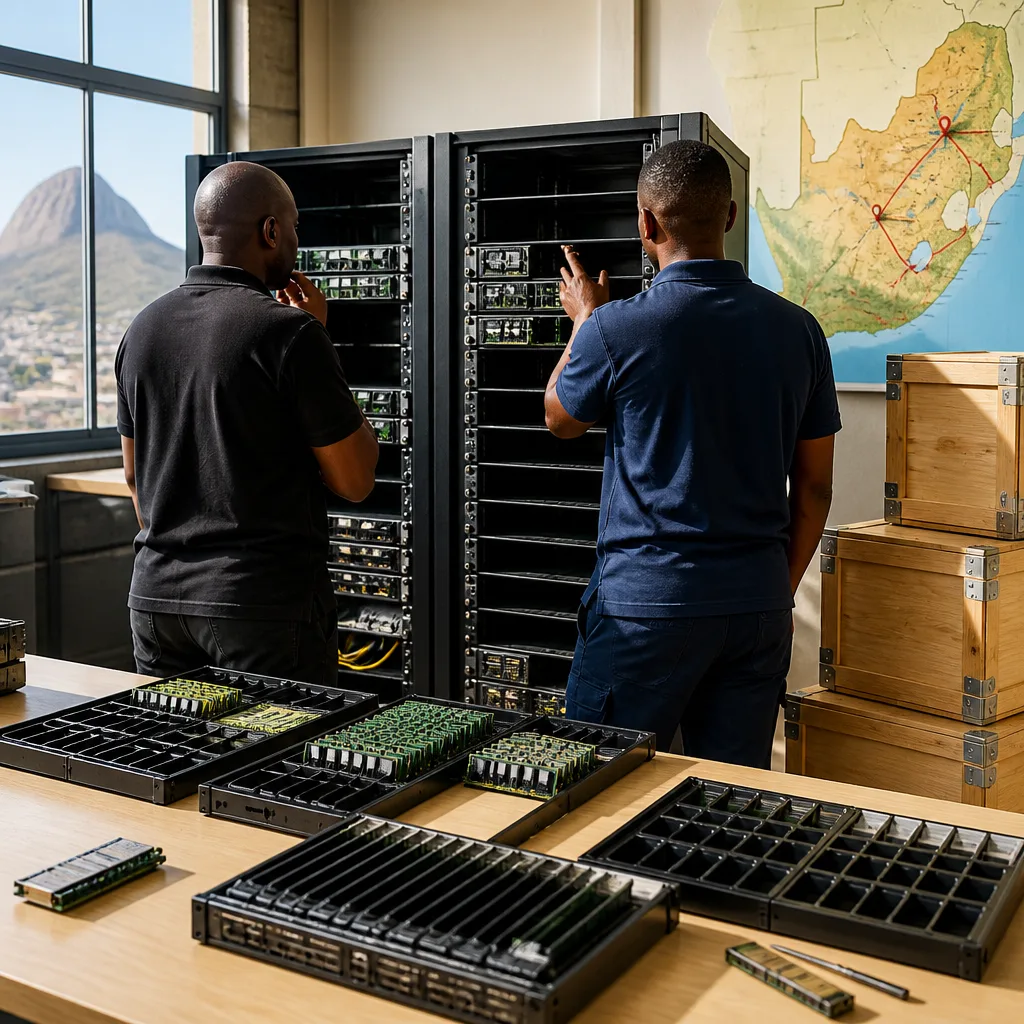
South Africa's technology supply channel is shifting how it buys and delivers projects as global constraints on hardware and memory components create delays, added costs and technical risk, according to a recent industry survey by value-added distributor Westcon-Comstor.
Projects delayed, designs revised
The survey of more than 100 members of Westcon-Comstor's Tech Xpert community — a group of resellers, systems integrators and service providers — found that 87% of operators across global markets, including EMEA and APAC, are taking steps to mitigate supply and specification risks. Responses were gathered during May and June 2026.
Organisations told the distributor that the biggest single impact is the need to redesign or revalidate solutions when components become unavailable or when product specifications change. That additional work increases delivery time and complexity, and in many cases raises project costs.
Technical and capacity risks
The poll identified several concrete worries facing channel partners:
- 24% of respondents flagged the inability to scale capacity as a key risk;
- 39% highlighted technical risk, including performance instability, degraded user experience, and reduced resilience;
- 60% said they had improved infrastructure capacity to better match supply with demand.
Those figures point to a market where suppliers and integrators are balancing short-term fixes with longer-term infrastructure changes to avoid repeating the same disruptions.
Changes in vendor choice and service models
Buying patterns are shifting as companies try to protect projects and timelines. More than half of respondents (52%) reported that they or their customers have accelerated hardware purchases to head off future shortages. At the same time, nearly a quarter (23%) reported order delays or cancellations.
To reduce exposure to memory bottlenecks and component scarcity, channel partners are exploring alternative approaches:
- 29% have switched vendors or platforms;
- 27% are using storage tiering or caching to reduce reliance on RAM;
- 25% have moved workloads or components to managed services.
These measures indicate growing adoption of managed services and performance optimisation techniques as a way to keep projects on track without depending solely on fragile hardware supply chains.
Cost, capacity and the question of who is left out
The survey underscores two familiar tensions for South Africa's public and private ICT buyers: rising procurement costs from accelerated buying and the increased technical overhead of redesigning solutions. While larger integrators may be able to absorb supply shocks or switch vendors, smaller resellers and local SMEs could face higher upfront costs or longer delivery times — a concern when budgets are fixed and timelines inflexible.
Providers told Westcon-Comstor that redesign work, platform migrations and investment in caching or tiering add not only technical complexity but also financial strain. That raises the practical question of which organisations can pay to adapt, and which may be left behind as wealthy customers secure scarce inventory.
| Action taken | Share of respondents |
|---|---|
| Accelerated hardware purchases | 52% |
| Order delays or cancellations | 23% |
| Switched vendors/platforms | 29% |
| Moved workloads to managed services | 25% |
| Using storage tiering or caching | 27% |
Overall, 75% of respondents reported some change in business behaviour because of supply constraints, illustrating how widespread the impact has been across the channel.
For South African public-sector IT projects, enterprise roll-outs and smaller technology buyers, the survey is a prompt to re-examine procurement strategies, contingency planning and the total cost of ownership when hardware and memory availability are no longer reliable assumptions.
As the industry adapts, the practical issues will centre on who can afford accelerated buying or platform changes, and whether alternative approaches such as managed services will widen or narrow access to essential digital infrastructure.