South Africa’s staging of the 2027 ICC Cricket World Cup carries a diplomatic as well as sporting burden, with organisers and officials saying the tournament must help repair frayed relations with neighbouring African states after recent anti‑immigrant demonstrations.
Event framed as nation‑building opportunity
Qondisa Ngwenya, chief executive of the World Cup Local Organising Committee (LOC), told reporters the competition presents an opportunity to "reposition ourselves and demystify the narrative around our role on the continent." Ngwenya, appointed to the LOC in March, said changing perceptions was a central task for the hosts.
The 14th edition of the Cricket World Cup will be co‑hosted by South Africa, Zimbabwe and Namibia and marks South Africa’s biggest international sporting event since the 2010 Fifa World Cup. Locally, the tournament is being prepared against a backdrop of tension: recent demonstrations against illegal immigration saw thousands of foreign nationals, including many Zimbabweans, return home amid violence and intimidation.
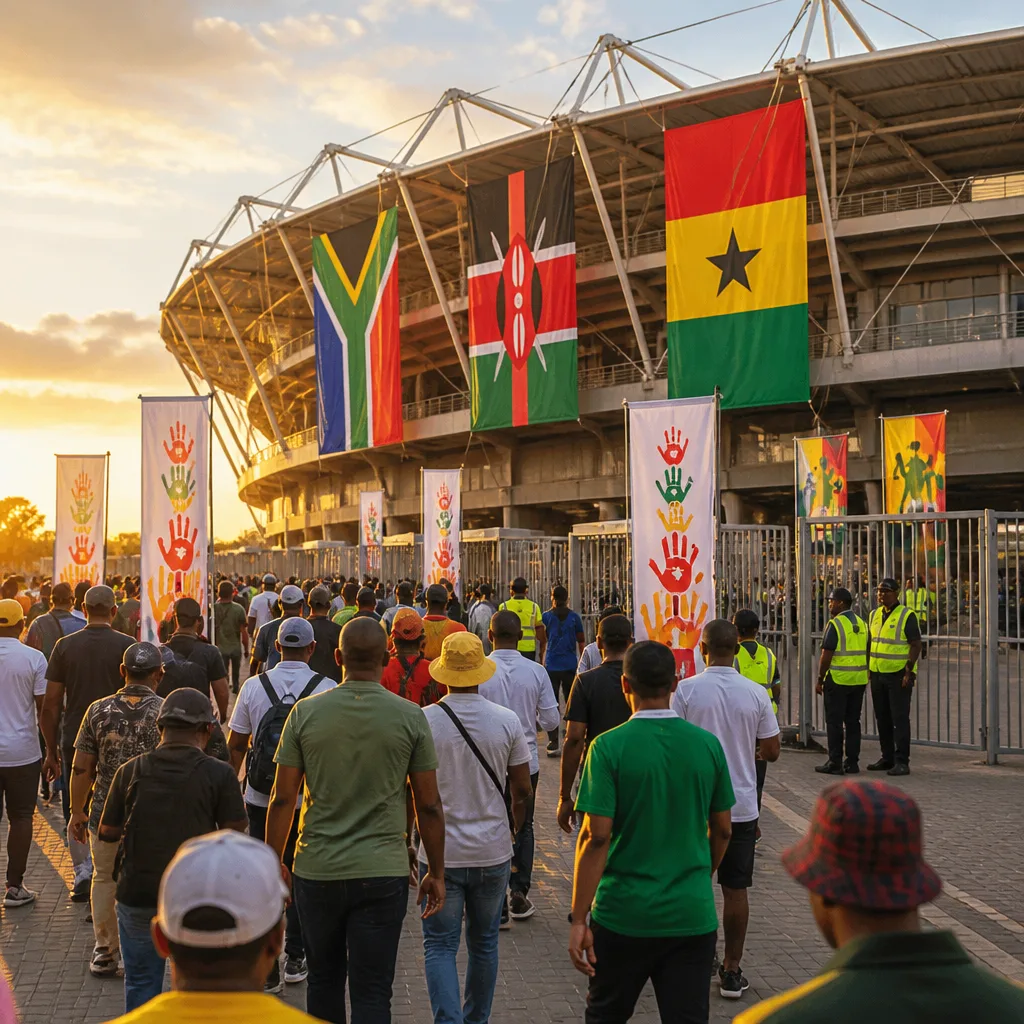
Trevor Manuel, chair of the LOC, used the World Cup launch to underline how much more is at stake than boundaries and bowling attacks. "When the world looks at South Africa, it should not see closed borders and clenched fists. They should see open arms, vibrant diversity and a shared African dignity," Manuel said, framing the competition as a chance to show a different national story.
Organisational context and leadership
Ngwenya brings a background in sports business and sponsorship management to the role. He was appointed four months later than originally intended by the LOC, and acknowledged that his skillset is rooted in commercial and marketing experience rather than a deep cricketing pedigree.
Ngwenya said he would draw on his years in sponsorship and marketing to ensure the event showcases South Africa positively. He also referenced previous work with veteran cricket administrator Ali Bacher, noting a merchandise deal two decades earlier.
- Hosts: South Africa, Zimbabwe, Namibia
- Event: 2027 ICC Cricket World Cup (14th edition)
- LOC chief executive: Qondisa Ngwenya (appointed March)
- LOC chair: Trevor Manuel
Diplomatic and social stakes
Organisers are explicit that the World Cup is an instrument of soft power. Beyond ticket sales and broadcast rights, the tournament is being tasked with helping to heal regional relations strained by recent unrest. The scenes of foreign nationals being forced to leave South Africa will be difficult to erase, and the LOC says the World Cup must show an alternative narrative.
"When the world looks at South Africa, it should not see closed borders and clenched fists. They should see open arms, vibrant diversity and a shared African dignity." — Trevor Manuel
The challenge for the LOC extends beyond public messaging. Rebuilding trust with partner nations will require effective coordination with Zimbabwe and Namibia on logistics, security, visa arrangements and fan management, as well as ensuring matches and stadia are welcoming to visiting teams and supporters.
| Item | Fact |
|---|---|
| Tournament edition | 14th ICC Cricket World Cup |
| Hosts | South Africa, Zimbabwe, Namibia |
| LOC chief | Qondisa Ngwenya (appointed March) |
Ngwenya acknowledged he did not come from a traditional cricket administration background, saying his experience lies more in sponsorship and marketing. That background, he and others argue, may be precisely what is needed to shape the public-facing aspects of the World Cup and to counter negative perceptions.
As preparations continue, the World Cup will be watched not just for the cricket, but for how well South Africa and its co‑hosts can use sport to mend diplomatic fractures. The LOC has set out an ambitious narrative: that sport can be a unifying force and a means to demonstrate a South Africa that is open, inclusive and respectful of its neighbours.
The coming months will test whether that aspiration can be converted into tangible improvements in regional relations and whether the tournament can leave a positive legacy beyond the boundary ropes.