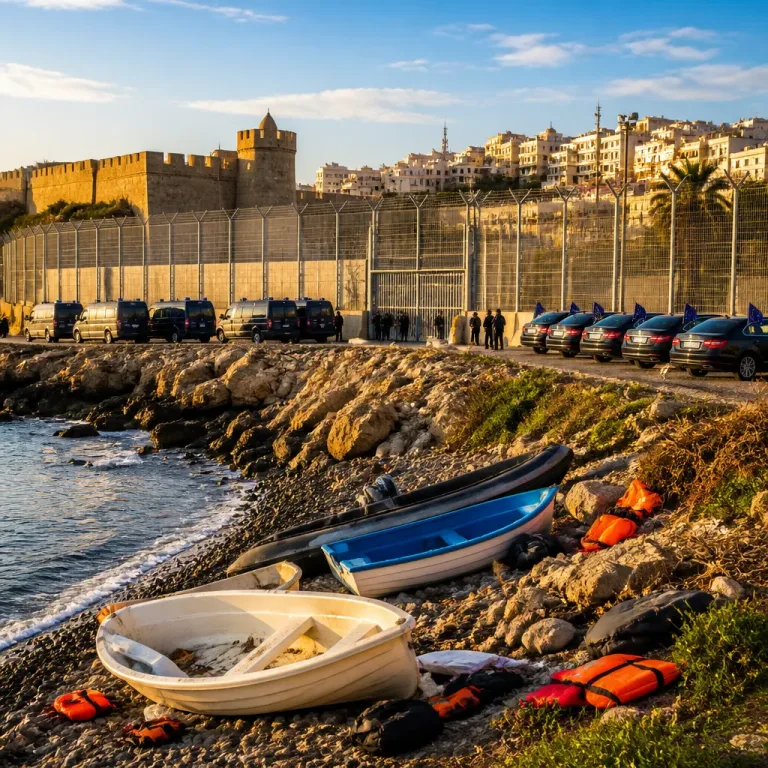

The European Commission confirmed on Thursday that no EU member state has so far requested activation of the Digital Services Act (DSA) crisis response mechanism to tackle social media disinformation connected to the mass crossings into Ceuta.
Commission monitoring but no formal escalation
Under the DSA, large social media platforms such as Instagram, Facebook, TikTok and X must assess systemic risks on their services, including threats to public safety, and take mitigation steps. The Commission reiterated this obligation during its daily briefing, while noting that national regulators are empowered to ask for centralised assistance from the Commission to scrutinise platform activity in crisis situations.
Despite heightened concern about online content that may have encouraged migrants to attempt the crossing from Morocco into Spanish Ceuta on 30 July — an event that local media SER reported resulted in 141 deaths — no country has formally triggered the Commission's crisis tool, the spokesperson said.
“We have seen that there were foreign information manipulation and interference (FIMI) channels, in particular Russian ones, that were trying to amplify the situation across different platforms starting on 30 July,” the Commission spokesperson said.
The Commission also said it continues to monitor the online information environment. Migration Commissioner Magnus Brunner confirmed on Tuesday that Europol is examining reports related to FIMI, while the EU's External Action Service (EEAS) is investigating possible exploitation of the crisis by Russian actors on social media.
Ongoing investigations, but no conclusions yet
Brussels has opened several DSA-related investigations into large platforms since the new rules began to be enforced almost three years ago. However, the Commission acknowledged that none of those cases have been concluded.
The absence of a formal DSA crisis request means the Commission has not been asked to coordinate an intensified, cross-platform response that would compel platforms to prioritise takedowns, transparency reporting or other mitigation measures under the crisis framework.
- 30 July: Tens of thousands reportedly crossed into Ceuta, according to the source reporting the event.
- Reported fatalities: 141 deaths, as reported by local media SER.
- Actors involved in probes: Europol and the EEAS are examining suspected foreign information manipulation and interference (FIMI).
- DSA status: Several platform investigations opened, none concluded; no national regulator has requested the DSA crisis mechanism.
Spanish intelligence services, the Commission noted, have warned that calls on social media for a possible new crossing attempt on 15 August are credible. That warning underlines the continuing risk and the potential for further online mobilisation.
Why the crisis mechanism matters
The DSA's crisis response tool is designed to provide a faster, more coordinated approach when online content poses a systemic risk to public safety. If used, it would allow national authorities, in cooperation with the Commission, to request targeted action from platforms and to obtain more intensive monitoring and information sharing.
By not invoking the mechanism so far, national regulators have left the task of monitoring and mitigation primarily to the platforms themselves and to ongoing law-enforcement and diplomatic inquiries — including Europol and the EEAS assessments. The Commission's statement signals both vigilance and limits to what Brussels can do absent a formal request.
As investigations into the role of disinformation continue, the situation exposes broader tensions over how to balance platform self-regulation, national responsibilities and EU-level coordination in crises that cut across borders and digital spaces.
| Item | Status |
|---|---|
| DSA crisis mechanism activation | None requested by any member state |
| DSA investigations opened | Several; none concluded |
| Investigative bodies | Europol, EEAS |
| Reported deaths in Ceuta | 141 (per SER) |
The Commission's position leaves open whether national regulators will escalate their intervention as intelligence warnings and ongoing probes develop. For now, Brussels continues to monitor the online information space while law-enforcement and EU external action bodies pursue parallel lines of inquiry.