The United Nations Office on Drugs and Crime (UNODC) has issued a renewed appeal for stronger action to protect victims of human trafficking and to dismantle transnational criminal networks that profit from modern slavery, as the world marked World Day Against Trafficking in Persons on 30 July 2026. The agency warned that organised crime groups are using increasingly sophisticated methods to exploit vulnerable people across borders.
‘Trapped Behind the Scam’
"Trapped Behind the Scam"
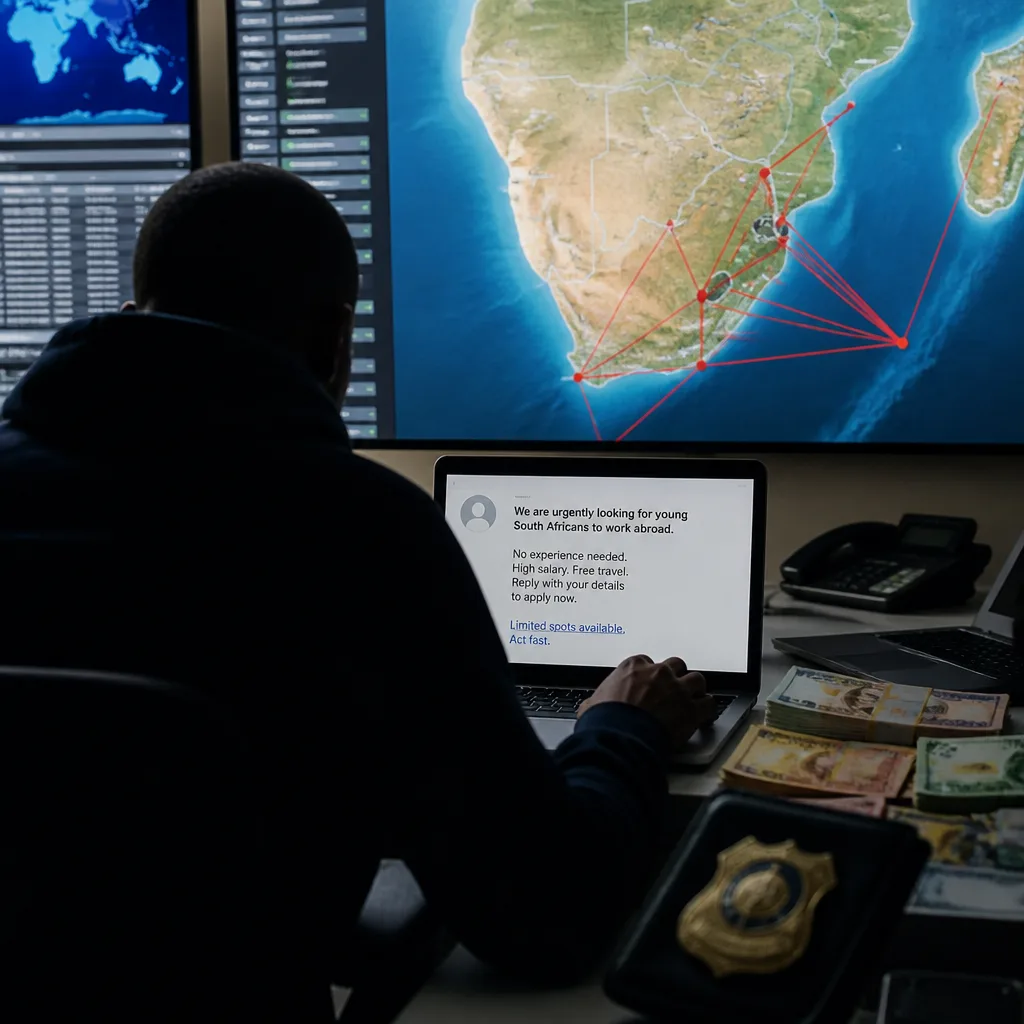
The 2026 theme — "Trapped Behind the Scam" — draws attention to the role of complex financial and recruitment fraud in luring victims into trafficking. The UNODC’s message, cited in a press release published in collaboration with Bateleur Software, urged coordinated responses from governments, judicial authorities, law enforcement, businesses and civil-society organisations.
Bateleur Software, which supplies technology to organisations operating in regulated environments, said the partnership on the release forms part of its broader work to strengthen anti-financial-crime awareness, governance and compliance across southern Africa. The company highlighted that preventing financial crime and protecting vulnerable people requires cooperation between public and private actors.
South Africa’s double role
The UNODC and Bateleur emphasised that South Africa occupies a troubling, dual position in the continent’s migration and trafficking picture. The country is cited as both a source of young South Africans who are trafficked abroad — often after being lured by false promises of work or travel — and a destination where migrants from elsewhere in Africa can be exploited through forced labour and other forms of modern slavery.
Recent civil-society marches that focused on illegal migration have intensified public debate over migration, unemployment, crime, service delivery and social cohesion. The commentary surrounding those demonstrations, the press release noted, has at times overlooked the deeper structural drivers of migration across Africa: high unemployment, economic inequality and limited legal migration pathways.
What technology can — and cannot — do
Technology vendors and compliance specialists like Bateleur argue that stronger digital tools for financial-crime detection, improved governance frameworks and information sharing can help identify and interrupt trafficking revenue streams. Yet the press release stressed that technological solutions are not a cure-all: combating trafficking also requires legal reform, victim protection services and cross-border police cooperation.
That raises practical questions about cost and inclusion. Who pays for advanced monitoring systems? Which victims are visible to data-driven interventions, and which remain invisible to state systems? Those concerns are central to whether technology supports survivors or primarily helps law enforcement and regulators track transactions.
- Stakeholders called on: governments, law enforcement, judicial authorities, business and civil society.
- Key focus: disrupting organised crime networks that use financial scams to traffic people.
- Regional emphasis: southern Africa, reflecting cross-border migration and exploitation patterns.
| Actor | Role |
|---|---|
| UNODC | International coordination and awareness |
| Bateleur Software | Technology partner advocating anti-financial-crime measures |
| Governments & Law enforcement | Policy, prosecution, cross-border cooperation |
The press release underscores that tackling trafficking means addressing the economic realities that drive people to take risky migration paths. It also implies a responsibility for private companies — from recruitment agencies to fintech firms — to ensure their systems are not exploited by trafficking networks.
For South Africa, the UNODC’s warning adds urgency to existing debates about migration policy, labour enforcement and the capacity of authorities to trace complex financial flows. It also suggests that anti-trafficking work will increasingly require technical expertise: forensic accounting, transaction monitoring and digital intelligence to follow the money that enables exploitation.
Those demands raise questions for policymakers about funding, oversight and civil-liberties safeguards. As technology is mobilised against trafficking, legislators and advocates must consider how to protect victims’ privacy, avoid disproportionate targeting of marginalised groups and ensure survivors can access support rather than only serve as sources of evidence.
The UNODC and Bateleur’s joint release is a reminder that preventing trafficking is not solely a law-enforcement task. It requires a mix of social, economic and technological interventions — and an insistence that those interventions are accessible to the people most at risk of being "trapped behind the scam".