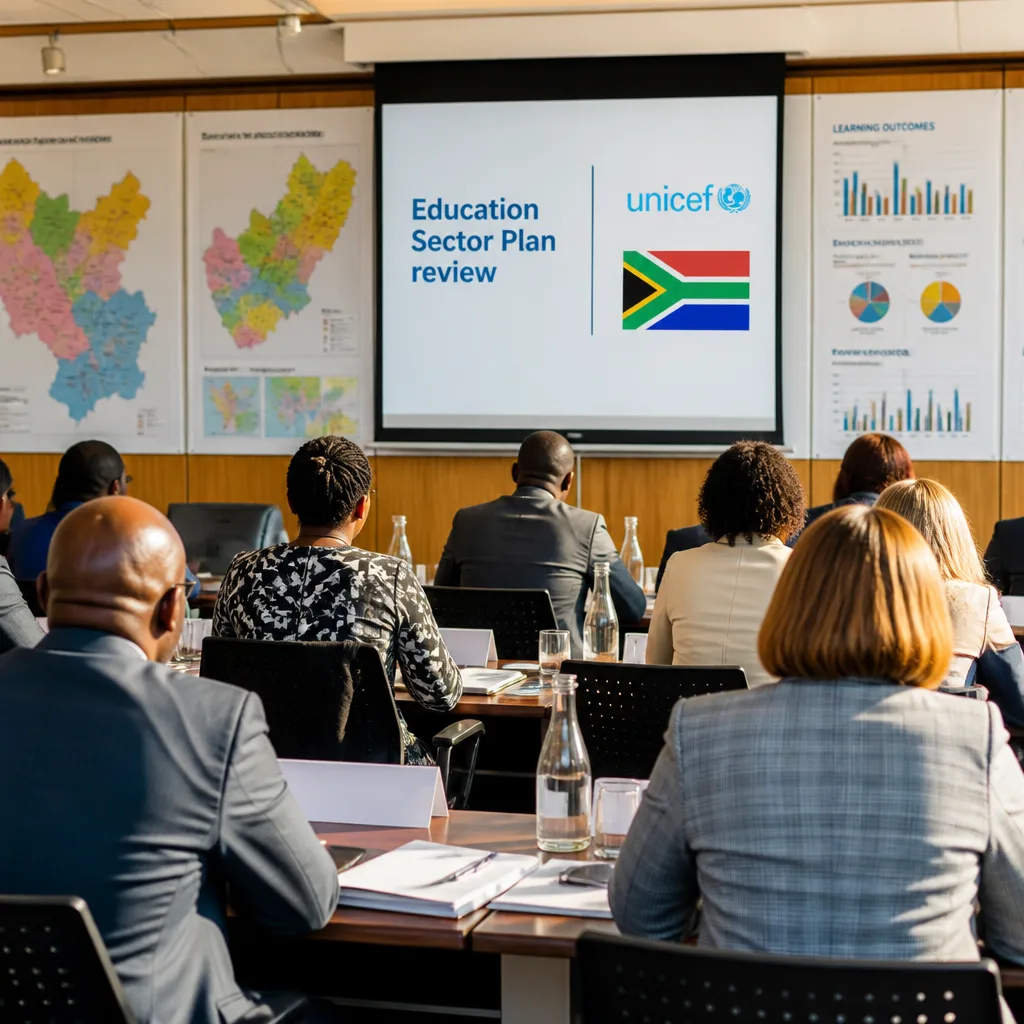
The Government of Togo formally launched the revision of its national Education Sector Plan (PSE) on 23 July 2026, the Ministry of National Education announced, signalling the start of a structured review intended to shape education priorities for the coming years.
Participatory review with development partners
The ministry said the exercise will be carried out with the assistance of technical and financial partners, including UNICEF. The review will follow a participatory and inclusive approach that brings together key stakeholders to define the policy choices needed to respond to the evolving needs of learners, teachers and institutions.
According to the Ministry, the updated plan will form the country’s strategic framework for education development and guide reforms to tackle both current and emerging challenges across the sector.
- Primary focus: improving the quality of learning;
- Equity and access: promoting inclusive, equitable and accessible education;
- Reducing disparities: addressing educational inequalities;
- System strengthening: boosting the capacity of the education system to prepare children and young people for future opportunities;
- Resilience: building an education system able to withstand shocks and ensure access for all children.
The Ministry framed the revision as necessary to align education policy with broader social and economic development objectives, and to ensure that reforms are responsive to the needs of learners and educators.
Implications and next steps
By positioning the revised PSE as both a policy guide and an operational blueprint, the government has signalled an intent to use the process to re-orient investments, build capacity and coordinate partner support. The ministry did not publish detailed timelines, budget figures or stakeholder lists in its announcement; it said the process would be inclusive and participatory but provided no further specifics on the sequencing of consultations or on mechanisms for public accountability.
Development partners’ involvement, including UNICEF’s, indicates that international agencies will play advisory and financial roles during the review. Such partnerships often bring technical expertise, data support and links to financing, but the precise nature of partner contributions to Togo’s revision was not specified in the ministry statement.
“The revised Education Sector Plan will provide the policy direction needed to strengthen education outcomes and support Togo’s broader social and economic development objectives,” the Ministry said.
Policy makers and education stakeholders typically expect a sector plan revision to cover diagnostics of current system performance, targets for learning and access, teacher policy, infrastructure and financing strategies. The ministry’s public summary highlights quality, inclusion, inequality reduction and resilience as priorities; these will likely shape the technical workstreams as the review proceeds.
| Priority area | Purpose (as described by the ministry) |
|---|---|
| Quality of learning | Improve learning outcomes for students |
| Inclusive education | Ensure equitable and accessible education for all learners |
| Reduce inequalities | Address disparities across populations and regions |
| System capacity | Strengthen institutions and prepare youth for future opportunities |
| Resilience | Build an education system capable of withstanding shocks |
For South African and regional observers, the Togo review will be one to watch for signals about priorities in francophone West Africa, partner coordination, and how governments mobilise resources to translate plans into classroom-level changes. The ministry’s public announcement marks only the start of the process; the substantive issues will emerge as diagnostics, costing, stakeholder consultations and implementation plans are produced.
Further details on timelines, financing and stakeholder consultations are expected as the review progresses and as technical partners outline their contributions.