Global Marine Travel, a travel management company that serves the maritime sector, has agreed to roll out Travelogix’s data and reporting tools to centralise travel information and strengthen duty-of-care for seafarers and offshore staff.
What the deal covers
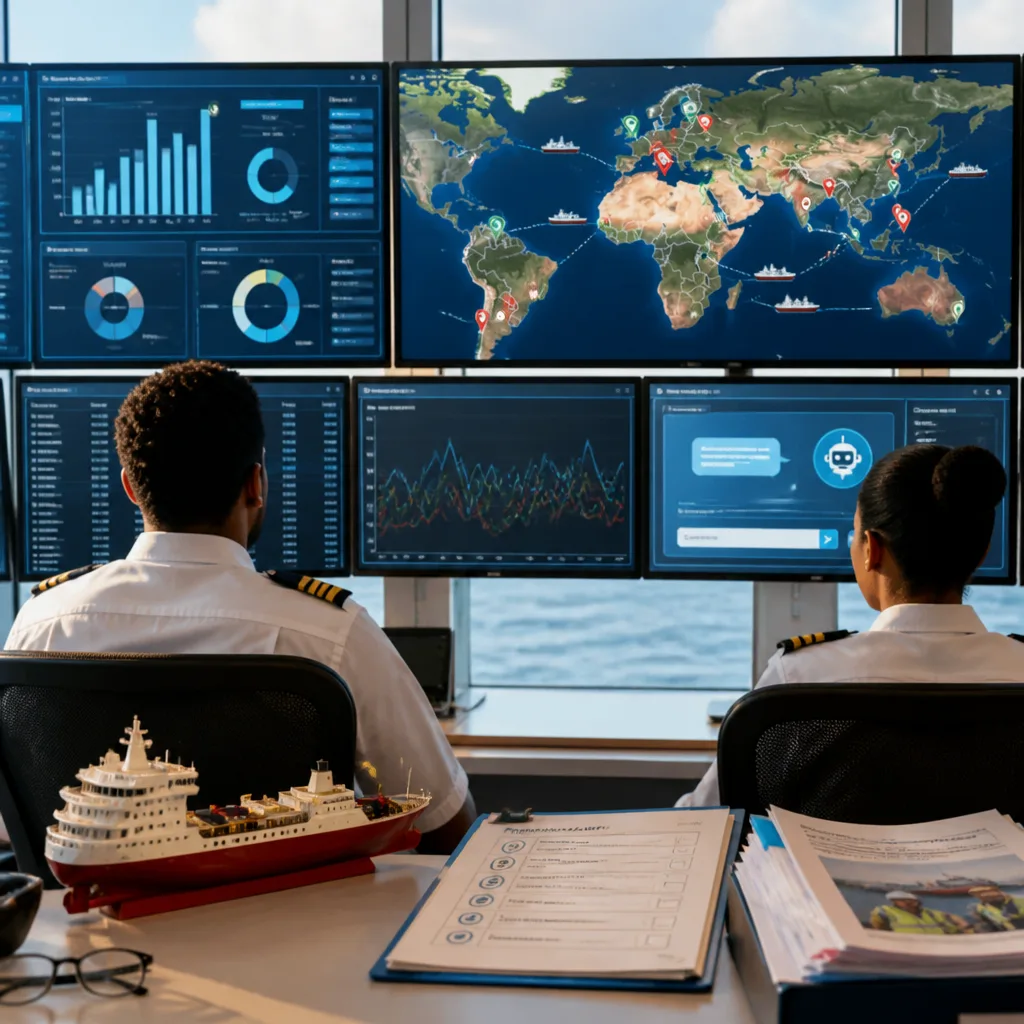
Under the arrangement, Global Marine Travel (GMT) will deploy three Travelogix products: Analytix for data aggregation and reporting, Geo for duty-of-care tracking and location-based oversight, and an integrated ChatGPT module that operates inside Analytix to speed up data analysis.
- Analytix — consolidates travel data from multiple sources to produce standard reports.
- Geo — enhances location-aware duty-of-care measures for travellers in high-risk or remote maritime environments.
- ChatGPT module — provides natural-language analysis and question-and-answer capability within the data platform.
GMT is headquartered in Fort Lauderdale and maintains operations across North America, Europe and Asia-Pacific. The company specialises in travel for the maritime industry, where frequent crew rotations, unpredictable itineraries and offshore logistics create particular reporting and duty-of-care challenges.
Why GMT says it needs the tech
According to Mark Taylor, GMT’s global director of operations and product innovation, the firm’s focus on AI and agent-supported online booking tools makes high-quality data management essential. The platform is intended to support GMT’s product suite for maritime customers, helping to tie booking and safety workflows together.
“As GMT continues to specialise in AI and live agent-supported online booking tools to drive efficiencies within the maritime travel environment, the need for high-quality data management is vital,”
Travelogix’s chief executive, Chris Lewis, said the partnership will build a data foundation that can evolve as GMT’s business grows.
Context and likely effects
Maritime travel presents complications that differ from standard corporate travel: crew changes at short notice, transfers to ships at sea, and the need to protect personnel in remote locations. Centralised data and location services can reduce response times and improve oversight when incidents occur.
For corporate buyers and procurement teams, the practical benefits may include:
- Faster, consolidated reporting across regions for clearer management information;
- Improved traveller tracking and duty-of-care measures for employees working offshore or at sea;
- Potential efficiency gains in booking and supplier management through AI-assisted analysis.
Travelogix’s deal with GMT follows a previous June agreement with Singapore-based maritime travel specialist Energia, in which Travelogix helped consolidate data onto a single platform. The sequence of partnerships suggests Travelogix is expanding its foothold among niche travel management companies focused on maritime logistics.
What to watch for
Organisations considering similar platforms should weigh benefits against data governance and privacy obligations. Centralising travel and location data raises questions about storage, access and cross-border transfers — issues that procurement and legal teams must address, particularly for businesses operating across several jurisdictions.
| Provider | Tool | Primary purpose |
|---|---|---|
| Travelogix | Analytix | Data aggregation and reporting |
| Travelogix | Geo | Duty-of-care and location services |
| Travelogix | ChatGPT module | Natural-language data analysis |
For travel managers and finance teams, the key questions will be whether the technology lowers overall travel costs through efficiencies, and how quickly it improves incident response for personnel offshore. For maritime operators, better data may mean faster crew changes and a clearer audit trail for safety compliance.
The partnership underscores growing interest in AI and specialised analytics within the travel management industry, particularly where complex logistics and duty-of-care responsibilities demand more integrated systems.