
A Wits‑trained teacher has described how a lack of preparation for full‑service classrooms left her facing silent Grade 4 classes and forced her to develop new approaches through disciplined self‑study. The experience shaped her 2019 master’s research and is now informing doctoral work, and she says teacher‑training programmes should include specific modules on teaching in full‑service schools.
From a silent classroom to academic inquiry
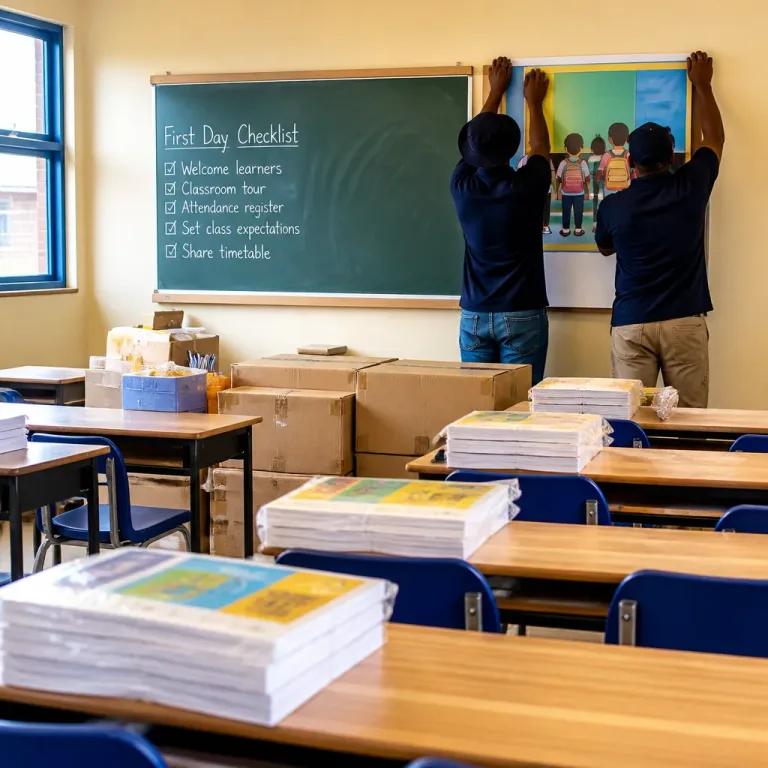
In 2017 the teacher, who completed a four‑year Bachelor of Education at the University of the Witwatersrand, was four years into a post at a Gauteng public school when she realised the school was designated a full‑service school — a category intended to support learners identified as having barriers to learning, such as dyslexia, dysgraphia, attention difficulties and processing delays. She said she had not been told this when she was hired.
Her account begins with a simple classroom moment. She asked Grade 4 learners,
"What is half of two?"and received silence. She tried a different prompt — asking for double two — and again the class did not respond. Confronted by the silence, she adapted her strategy immediately: she brought four pupils to the front and used their bodies to show halving and doubling. The technique produced an immediate response.
Self‑study as a research method
That episode was one of eight "trigger incidents" the teacher recorded over a three‑month period as part of a self‑study for her master’s, completed at the Wits School of Education in 2019. Rather than studying other teachers, she turned a critical eye to her own practice.
Her method involved:
- Keeping a journal of classroom incidents that unsettled or surprised her;
- Discussing each incident with two experienced remedial teachers at her school and with her supervisor;
- Recording those conversations and writing reflective notes to develop teaching responses.
She is now pursuing a PhD, continuing to investigate how teachers learn to teach in inclusive settings.
Concrete classroom adjustments and culturally relevant examples
The teacher found that shifting from abstract verbal questions to physical demonstrations or culturally familiar examples produced instant learning gains. A separate lesson on fermentation — planned initially around explanations and pictures of dough rising — likewise benefited from using familiar cultural references, including umqombothi (traditional beer), to make the concept tangible for learners.
Her experience underscores the difference between the content of many teacher‑education degrees and the demands of full‑service classrooms. She says the gap between university training and classroom realities motivated her research and strengthens her call for curriculum change in initial teacher education.
Policy implications
Full‑service schools are meant to support learners with barriers to learning, yet this account highlights how staffing and training gaps can blunt that mandate. The teacher’s record shows that relatively small, practical changes in pedagogy — grounded in observation, reflection and collaboration with remedial specialists — can produce rapid improvement in learner engagement.
| Item | Detail |
|---|---|
| Initial qualification | Four‑year BEd, Wits |
| School type | Full‑service school (Gauteng) |
| Research | Master’s self‑study (2019); ongoing PhD |
| Method | Three months of journalling, eight trigger incidents, recorded discussions with two remedial teachers and a supervisor |
Her findings point to two clear priorities for education planners: ensuring newly employed teachers understand the classifications and needs of the schools where they are placed, and revising teacher‑education syllabuses to include compulsory, practical modules on teaching in inclusive and full‑service environments.
For teachers already in post, the study suggests that structured self‑reflection, collaboration with remedial specialists and the use of culturally relevant, hands‑on examples can materially improve learner access and understanding.