The communication and education sector in Vietnam has repeatedly restructured to meet the changing demands of the nation’s political and social development, the sector’s commemorative history shows. Over a period of 96 years, authorities have repositioned institutions and priorities to combine ideological work, public education and the training of personnel for state programmes.
Origins and early tasks
Following the Party’s founding conference on 3 February 1930, the Party Central Committee established the Propaganda and Agitation Board as the advisory body responsible for directing ideological work. Its immediate tasks, according to the retrospective account, were to disseminate Marxism‑Leninism, promote the Party’s political platform and strategy, and mobilise the population by raising revolutionary awareness.
One early output of the new structure was a publication dated 1 August 1930, titled
“International Red Day – August 1”. The document is cited as the earliest surviving publication bearing the imprint “Published by the Propaganda and Agitation Board of the Communist Party of Viet Nam”, and is described as marking a significant milestone in the Party’s communication and education work.
Designation of a commemorative day and later institutional change
Two later institutional acts are singled out in the account. In 2000 the Politburo formally designated 1 August as the traditional day for the Party’s ideological and cultural work. Subsequently, after a later organisational merge, the Party Central Committee’s Secretariat again recognised the date for the broadened sector.
In 2007, the Central Commission for Ideology and Culture and the Central Commission for Science and Education were merged into the Central Commission for Communication and Education. The Secretariat designated 1 August as the traditional day of the newly configured communication and education sector, underlining the continuity officials see between earlier propaganda work and modern communication and educational tasks.
Role across revolutionary periods
The retrospective emphasises that, between 1930 and 1945, communication and education work accompanied every stage of the revolutionary movements. It lists activities carried out during that period and attributes to the sector responsibilities that included:
- disseminating Marxism‑Leninism;
- promoting the Party’s policies and revolutionary line;
- training propaganda cadres and developing the press;
- publishing activities intended to foster public confidence and patriotic sentiment across society.
Those functions indicate an integrated approach to messaging, public mobilisation and cadre development that was intended to bind political education to the broader objectives of the revolution.
Contemporary implications
The account frames the sector’s evolution as a pattern of continual innovation and adaptation to the demands of different historical stages. It suggests that contemporary communication and education responsibilities are presented by officials as the inheritors of earlier propaganda and mobilisation functions, adjusted for new social, cultural and technological contexts.
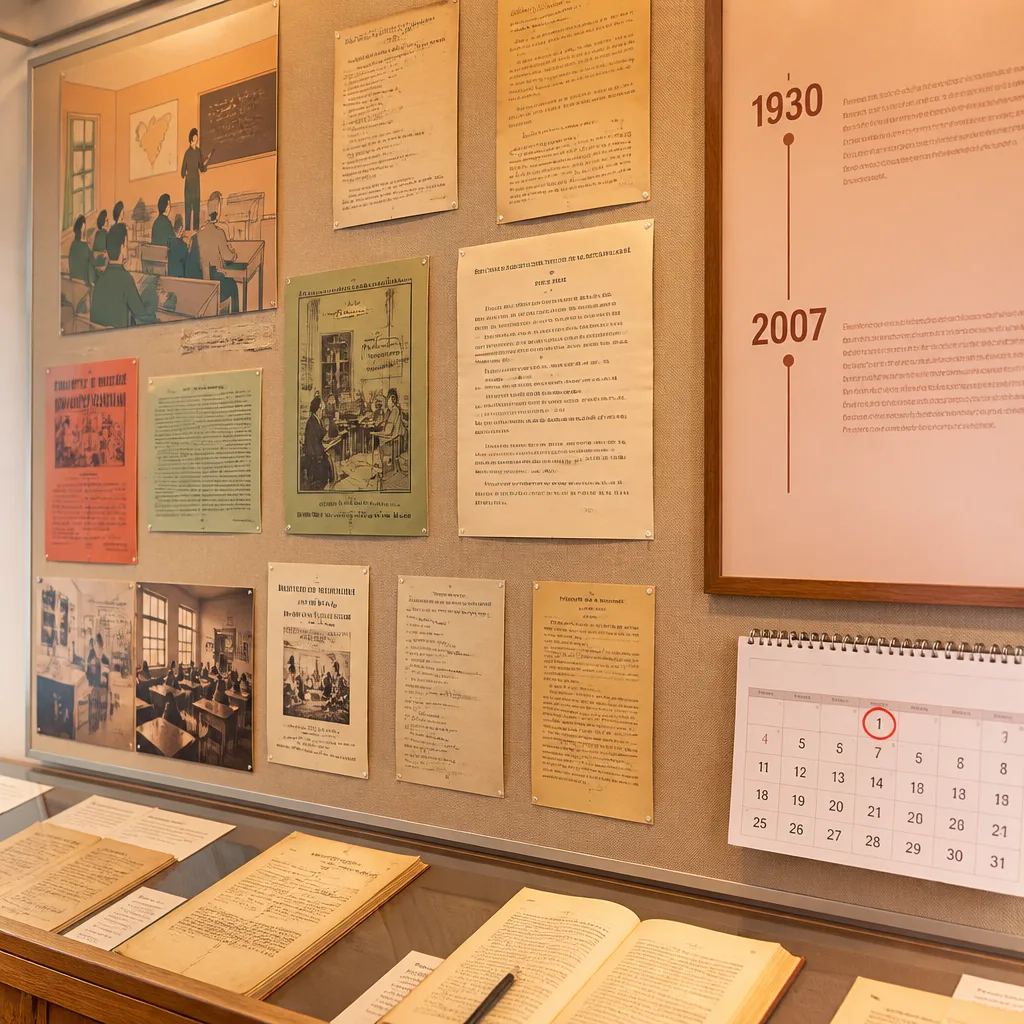
While this review is celebratory in tone, it also serves to mark institutional milestones — the initial establishment of a central propaganda body in 1930, the formal commemoration of 1 August in 2000, and the creation of a unified commission in 2007 — that shape how the sector defines its remit today.
| Year | Event |
|---|---|
| 1930 | Establishment of the Propaganda and Agitation Board; publication of “International Red Day – August 1” |
| 2000 | Politburo designates 1 August as traditional day of ideological and cultural work |
| 2007 | Merger forming the Central Commission for Communication and Education; Secretariat designates 1 August as traditional day of the sector |
The historical outline underscores how political communication and public education have been institutional priorities in Vietnam’s statecraft. For observers of education policy and public communication, the narrative is a reminder that structures for ideological education are often as much about institutional continuity as they are about adapting to new challenges.