The State Board of Education is proposing a comprehensive update to high school graduation requirements that would preserve the existing 24-credit diploma while enlarging students’ personalised pathways and adding explicit courses in quantitative reasoning, health and financial literacy.
Major structural changes to credits
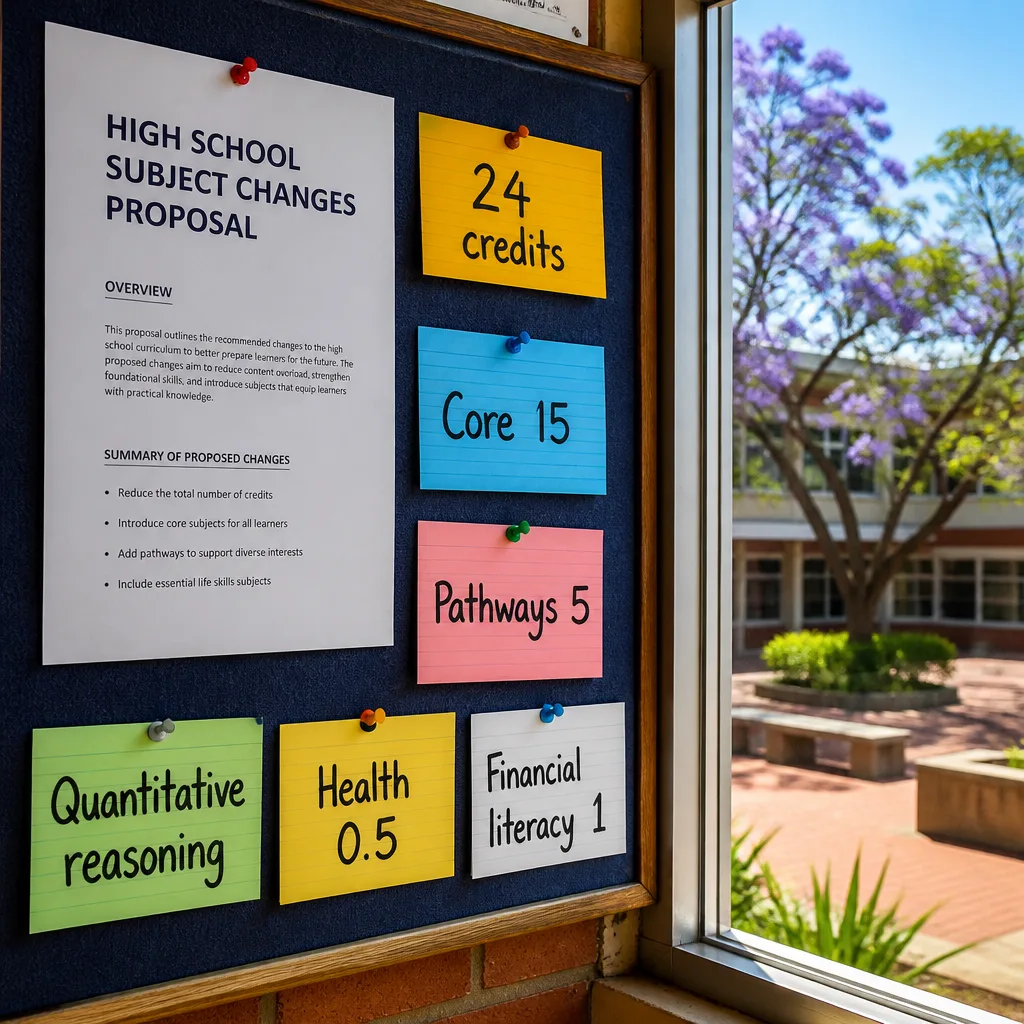
Under the board’s proposal — set for a vote in September and intended to be sent to the Legislature during its 2027 session — the total number of credits required for graduation would remain at 24. However, the distribution of those credits would be altered.
- Core course credits would fall from 17 to 15.
- Personalised Pathway Requirements, the default set of electives designed to align study with career goals, would increase from 3 to 5.
Officials say the changes aim to give students more options to link courses directly with their career plans while ensuring exposure to essential literacies.
New and reconfigured course requirements
The proposal specifies that students must complete three standard math credits plus an additional quantitative reasoning course. The document lists acceptable options for that quantitative course to include Algebra II, statistics or a math-based technical course.
Two new classes would be required for the personalised track, which schools would need to offer:
- a half-credit health course; and
- a one-credit course covering financial literacy, practical life skills and time to work on students’ "High School and Beyond" plans.
Separately, the board proposes combining the existing civics course with the contemporary world problems course to create a yearlong, one-credit class.
Timing and conditions for implementation
Even if the State Board approves the proposal in September, the changes would not take effect automatically. The plan must be funded by the Legislature before schools are required to implement it. The earliest cohort that could be subject to the new requirements is the class of 2031, assuming lawmakers approve and appropriate funds in time.
The board’s work on the proposal has been extensive. Over two years, members of the FutureReady Task Force consulted with hundreds of students, families and educators and engaged with federally recognised tribes while drafting the recommended changes, according to the proposal summary.
What this means for schools and students
Keeping the same total number of credits but shifting which credits are core and which are personalised effectively moves responsibility for some content from prescriptive core requirements into student-directed pathways. That is intended to allow learners to choose courses that connect to post‑school plans while retaining a baseline of academic preparation.
The added quantitative reasoning requirement signals a policy emphasis on numeracy across disciplines, while the new financial-literacy and health credits respond to longstanding calls for more practical life-skills instruction in high school. Schools will need to plan staffing, timetables and course offerings if and when funding is secured.
| Current requirement | Proposed requirement |
|---|---|
| 24 total credits | 24 total credits (unchanged) |
| 17 core credits | 15 core credits |
| 3 personalised pathway credits | 5 personalised pathway credits |
The board’s next formal step is the September vote. If approved, the Legislature will consider the proposal in its 2027 session and must allocate funding for the changes to proceed.
The proposed rewrite is framed as the first comprehensive update to graduation requirements in roughly a decade, reflecting an effort to better prepare students for life after high school while preserving flexibility for local districts.