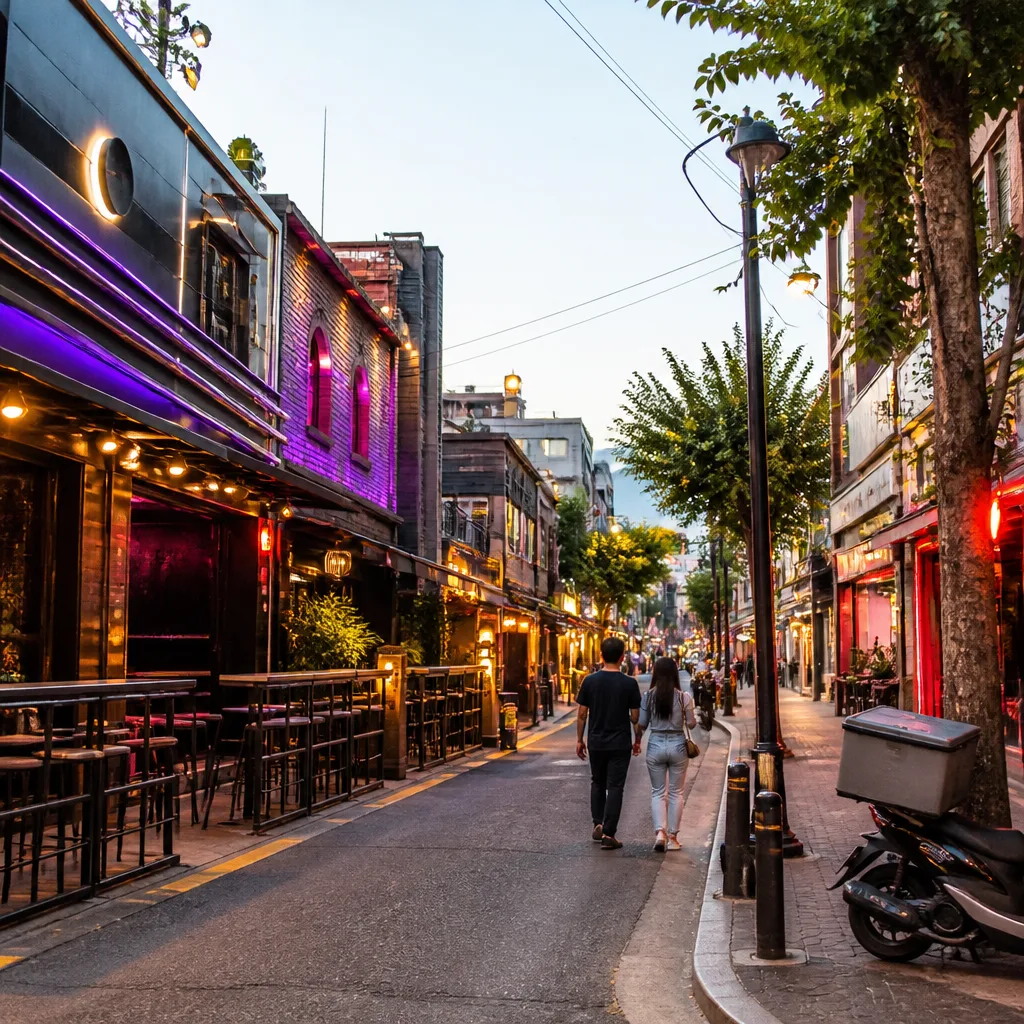
On a midsummer Thursday evening the usually frenetic streets of Hongdae — the entertainment neighbourhood around Hongik University in Seoul — were only slowly coming to life, according to reporting from the area. Long a magnet for students and young adults, parts of Hongdae are now noticeably quieter than in previous years.
From packed clubs to quieter blocks
Several blocks away from Hongdae’s main clubbing strip, numerous pubs and restaurants were seeing far fewer patrons than they once did. The change is most visible in the contrast between the district’s busy thoroughfares and its quieter side streets.
A young fashion industry worker, Chris Kim, 27, described the shift in tone. He recalled when clubs in the area “were always packed” and frequent altercations and visible police presence were part of a rough-and-tumble nightlife scene. His account underlines how the area’s identity as an entertainment hotspot has altered.
“Hongdae is not what it used to be like… In the past, the whole point of getting together was often to drink until you got drunk. But drinking isn’t the main reason for meeting up any more,”
The pandemic is cited as a turning point; it diminished Hongdae’s reputation and, according to the reporting, coincided with a discernible decline in young drinkers. The resultant gap has left some pubs — including traditional pocha (outdoor late-night drinking spots) — struggling to attract their former customer base.
What is changing and what it means
The observed shifts in Hongdae are presented as both cultural and commercial. Youth social habits appear to be evolving: meeting up for reasons other than heavy drinking is now more common, altering demand for the kinds of businesses that thrived when alcohol-centred nights were the norm.
That change matters for a range of stakeholders:
- Small-business owners and pub operators who relied on late-night drinking trade will need to adapt their offerings or face lower footfall.
- Nightlife districts and local authorities will have to reconsider safety and policing strategies if crowd dynamics change.
- Urban cultural planners and entertainment promoters must account for different leisure preferences among younger cohorts when programming events.
| Characteristic | Before pandemic | After pandemic (reported) |
|---|---|---|
| Typical nightlife activity | Heavy drinking and packed clubs | Quieter streets; less drink-focused meet-ups |
| Atmosphere | Rowdy, frequent police presence | Less crowded; fewer altercations reported |
The original reporting notes the visible decline in customers at pocha pubs — an indicator that longstanding modes of socialising in the area have been affected. While the article does not provide detailed data on numbers or revenues, the anecdotal evidence from those who frequent and work in Hongdae suggests a substantive shift.
Broader implications for nightlife economies
Hongdae’s experience may be a case study for other entertainment districts globally where youth preferences have evolved since the pandemic. For the local scene, reinvention could mean diversifying attractions beyond bars and clubs, developing daytime cultural programming, and creating spaces that cater to socialising without centred alcohol consumption.
Photographs accompanying the reporting, credited to David D. Lee, capture the quieter corners of the district and the downturn at some outdoor drink spots.
Whether Hongdae will return to its pre-pandemic bustle or settle into a new, less alcohol-centred rhythm remains to be seen. What is clear from the on-the-ground reporting is that the district’s nightlife economy, and the young people who shaped it, are in transition.