Seaport Entertainment Group recorded its first quarter of positive operating EBITDA in the second quarter of 2026, reporting improved profitability across its landlord, hospitality and entertainment operations as it reshapes its tenant mix and pares corporate costs.
Quarterly turnaround driven by tenant shifts and cost cuts
For the three months ended 30 June, Seaport's operating EBITDA rose to $4.5 million, reversing a prior-year operating loss of $1.1 million, according to the company's second-quarter report. On a non-GAAP basis, adjusted net income moved to $320,000, a marked improvement from an adjusted loss of $7.4 million in the same period last year.
Management attributed the improvement to a combination of operational gains across its business segments, reduced general and administrative expenses and specific accounting effects related to the early termination of a major tenant lease.
"This quarter's results reflect continued momentum since our inception," said Matt Partridge, president and chief executive officer, adding the company recorded its seventh consecutive quarter of double-digit improvement in non-GAAP adjusted net income per share.
The company noted that all three operating segments — Landlord Operations, Hospitality and Entertainment — produced positive operating EBITDA in the quarter.
One-off lease termination and new openings reshape landlord outlook
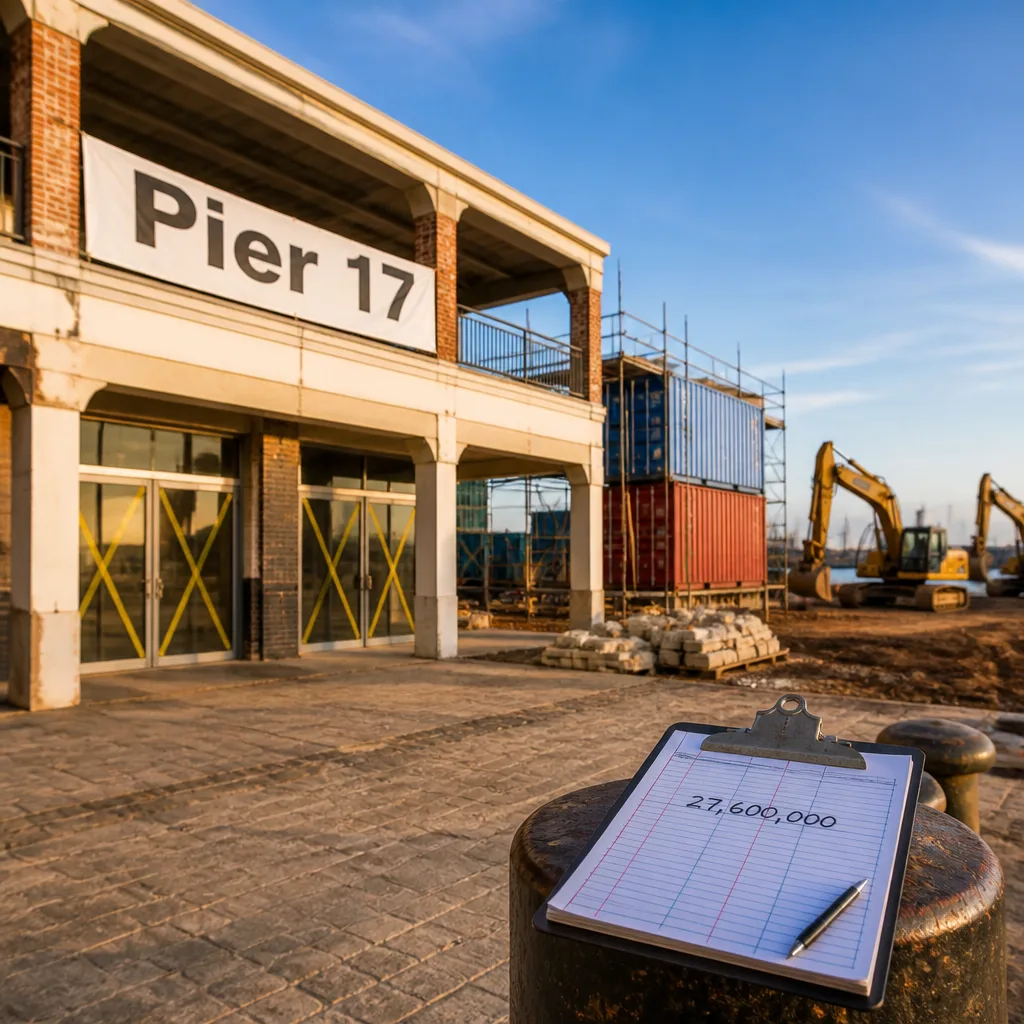
Seaport's landlord results benefited from the early termination of Nike's lease at Pier 17. The company said the termination has aided landlord results this quarter and will permit earlier construction of a planned Pier 17 event venue. Alongside that, Seaport expects a pipeline of tenant openings spanning more than 194,000 square feet that could generate in excess of $20 million in incremental annualised operating EBITDA once fully leased and operating, the report said.
- Operating EBITDA: $4.5 million in Q2 versus a $1.1 million loss a year earlier.
- Adjusted net income (non-GAAP): $320,000 versus a $7.4 million adjusted loss in the prior year.
- Cash and restricted cash: $127 million at quarter-end, against $38.1 million of debt.
- G&A reductions: General and administrative expenses fell by 20% year on year.
The company finished the quarter with $127 million in cash and restricted cash and reported $38.1 million of debt on the balance sheet. Management emphasised the strength of the balance sheet as a pillar supporting the recovery and future development plans.
Outlook: further improvements expected in 2027 and 2028
Seaport said it anticipates continued year-on-year improvements in results, with the potential for broader earnings gains projected in 2027 and 2028 as tenant rollouts and the Pier 17 development progress. Cost reductions and the company’s emphasis on occupancy of new retail and hospitality spaces were highlighted as key drivers for the medium-term outlook.
Net loss attributable to common stockholders narrowed to $10.5 million, or $0.82 per share, the report stated, marking a 29% improvement from the prior comparative period.
While the company reported a meaningful operational turnaround in the quarter, the results reflect both ongoing business recovery and discrete items — notably the Nike lease termination and the closure of the Tin Building — that affected comparatives and timing. Management’s guidance points to a multi-year improvement trajectory as new tenants open and planned capital projects proceed.
| Metric | Q2 2026 | Q2 2025 (prior-year) |
|---|---|---|
| Operating EBITDA | $4.5m | -$1.1m |
| Adjusted net income (non-GAAP) | $320,000 | -$7.4m |
| Cash & restricted cash | $127m | — |
| Debt | $38.1m | — |
For observers of live-venue economics and the intersection of real estate and entertainment, Seaport’s update shows how strategic tenant decisions and tighter cost control can deliver near-term profit improvement while setting the stage for asset redevelopment. The company’s ability to translate lease changes and tenant rollouts into sustainable, recurring earnings will be central to whether the gains seen this quarter extend into the forecast period.
As development on Pier 17 and the rollout of new tenants progress, industry stakeholders will be watching occupancy metrics and the timing of venue openings closely to assess the durability of Seaport’s recovery.