
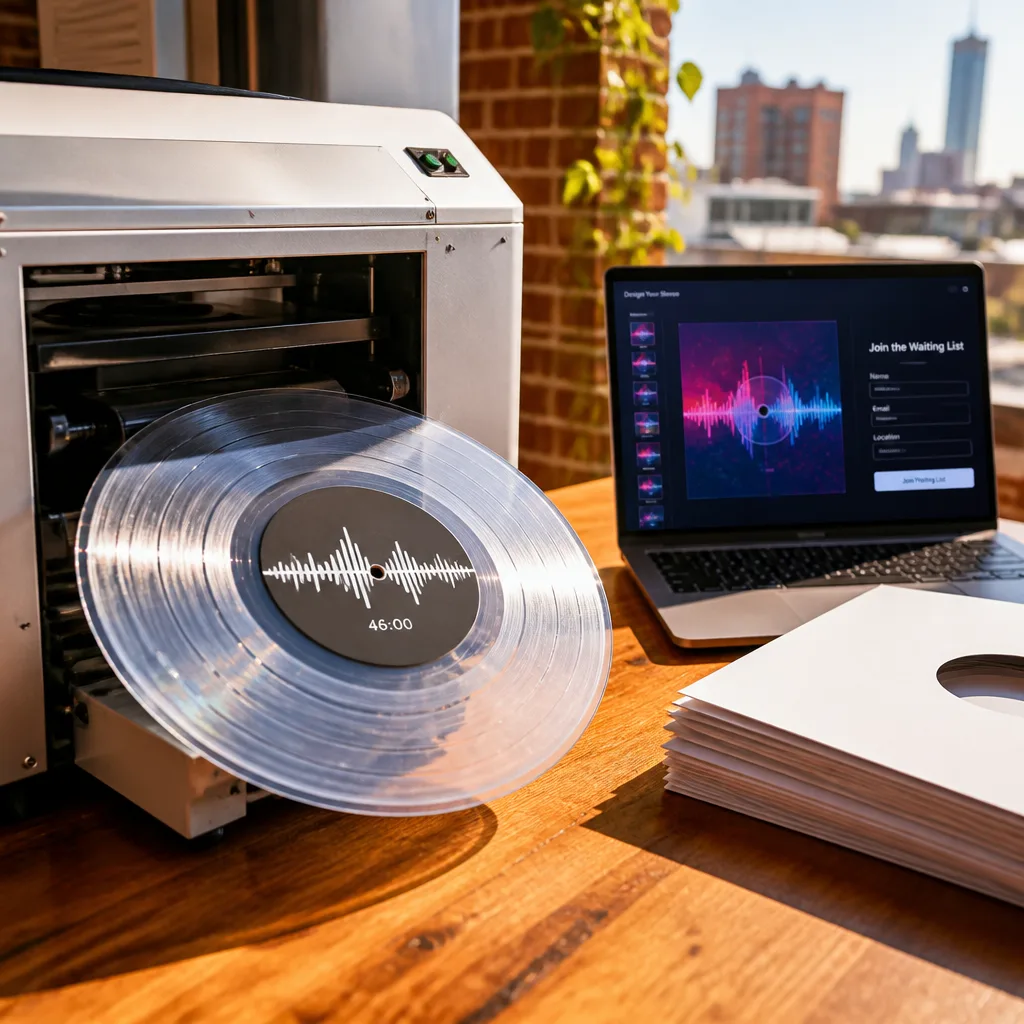
Suno, the artificial intelligence music company behind popular generative tools, has revealed plans for Suno Vinyl, a service that will press user‑created AI tracks onto 12‑inch records. The offering is not yet live; Suno has opened a waiting list and reserves its first pressing for early sign‑ups.
What Suno is offering
The Cambridge, Massachusetts‑based firm said customers will be able to compile a record with up to 46 minutes of music drawn from their Suno libraries. Buyers can either upload their own artwork or use Suno’s generator to create sleeve and label art. Each disc will be a 12‑inch pressing produced from PETG plastic.
“Press a banger, because it's too good to live on a screen,”
The company’s website uses that exhortation to describe the move from digital files to tangible objects. Suno has not disclosed the pressing plant it will use, and the service remains in the pre‑launch phase. Pricing was estimated at about R45 plus shipping on the announcement page.
Context: vinyl’s rebound and Suno’s rise
Vinyl has experienced a sustained revival over the last decade, driven in part by younger listeners who value physical formats and expanded collector editions. The Recording Industry Association of America (RIAA) reported that, in 2025, vinyl revenue surpassed R1 billion for the first time since 1983, with 46.8 million units sold. CDs moved 29.5 million units that year.
Suno, founded in 2022, has rapidly grown its user base and commercial profile. The company reported having more than 2 million paid subscribers earlier this year and said it was on pace for R300 million in annual revenue. In June, Suno closed a Series D financing round in which it raised more than R400 million, pushing its valuation to about R5.4 billion from R2.45 billion less than a year earlier.
| Metric | Figure (as reported) |
|---|---|
| Vinyl revenue (2025, US market) | R1 billion |
| Vinyl units sold (2025) | 46.8 million |
| Suno paid subscribers | 2 million+ |
| Recent Series D raise | R400 million+ |
| Latest valuation | R5.4 billion |
Industry and legal backdrop
The push into physical merchandise comes as Suno faces legal scrutiny. The company and a rival, Udio, were sued by the RIAA in 2024 on claims of copyright infringement related to their AI music systems. That litigation forms part of a broader debate about how generative AI should be regulated, how creators are credited and paid, and what obligations platforms have when models are trained on copyrighted material.
For musicians and rights holders, a service that converts AI‑generated tracks into collectible objects raises questions about attribution, licensing and compensation. It also tests whether the appetite for physical products extends beyond traditional artist releases to creator‑led, AI‑assisted works.
What this means for South African artists
- Creators experimenting with AI tools could gain a new way to monetise output through collectible vinyl pressings.
- Labels and rights holders may need to adjust licensing practices if user‑generated AI works become commercially available on physical formats.
- The move highlights the continuing commercial value of vinyl even as digital reproduction and AI become central to music production.
Suno’s announcement signals another intersection between technology and tangible music culture. Whether the service becomes a significant revenue stream — for Suno or for the creators who use it — will depend on adoption, the outcome of ongoing legal disputes and how rights are cleared when an AI‑assisted track moves from screen to sleeve.