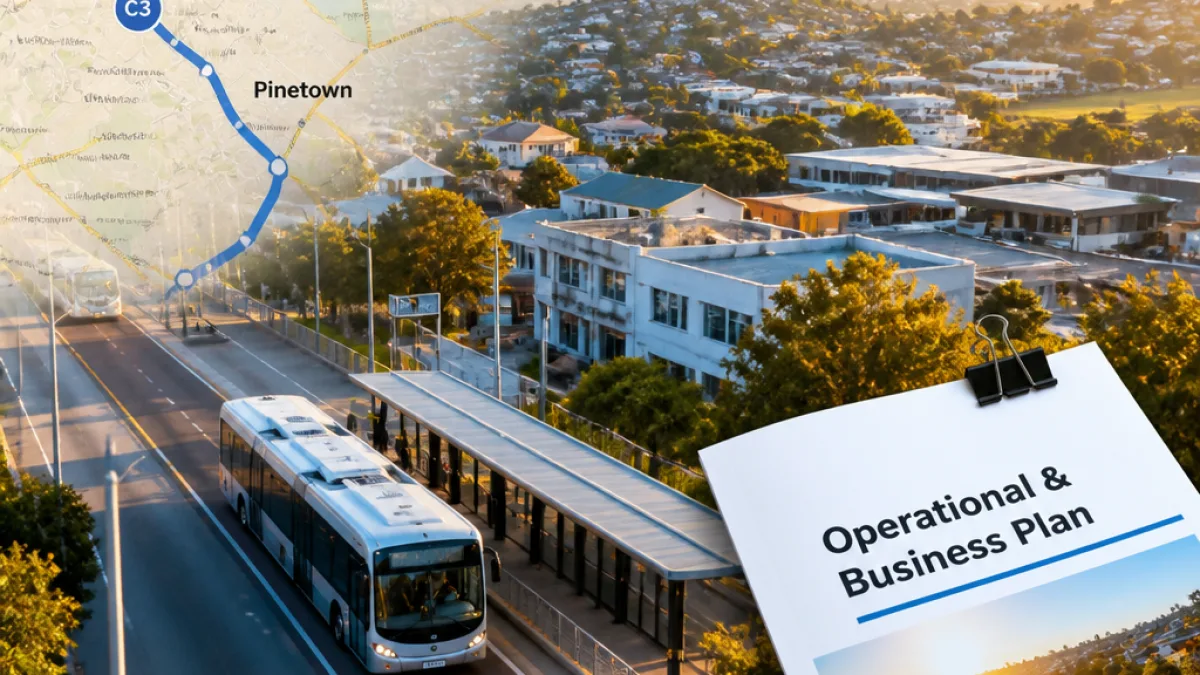
Council prioritises the Bridge City–Pinetown corridor for GO!Durban rollout
The eThekwini Municipality has flagged the C3 Bridge City–Pinetown corridor as the immediate implementation priority for the phased rollout of the GO!Durban public transport programme, council minutes show. The decision was recorded during the ordinary council meeting on 30 July.
Council noted progress on the programme and approved a revised implementation approach described by municipal officials as operations-led and affordability-focused. A detailed Operational and Business Plan is to be presented separately to outline the financial implications, operating costs, fleet needs and long-term sustainability of services on the corridor.
“A detailed Operational and Business Plan will be presented separately to address financial implications, including operating costs, fleet requirements and long-term sustainability,”
According to the municipality’s marketing and communications director, Mandla Nsele, the phased rollout responds to evolving national funding arrangements. Council discussions also included plans for a pilot Inner City Distribution Service using electric buses, but this remains subject to funding availability, operational readiness and the necessary supporting infrastructure.
For Pinetown residents the priority status of the C3 corridor signals a potential shift in how local and regional trips are made. The rollout process will involve engagements with existing public transport operators, the establishment of Vehicle Operating Companies (VOCs) and completion of operational planning and contractual arrangements. The municipality will also continue discussions with the National Department of Transport, the KwaZulu‑Natal Department of Transport and National Treasury to secure funding and support.
- Immediate focus: Bridge City–Pinetown (C3) corridor.
- Next steps: presentation of an Operational and Business Plan detailing costs and fleet requirements.
- Pilot proposal: electric-bus Inner City Distribution Service, conditional on funding and infrastructure.
- Stakeholder engagement: affected public transport operators, VOCs, national and provincial transport departments, National Treasury.
| Item | Role / Responsibility |
|---|---|
| Operational & Business Plan | Municipality to present detailed financial and operational proposals |
| Electric-bus pilot | Dependent on funding, route infrastructure and operational readiness |
| Stakeholder negotiations | Engagements with operators, VOCs, National Dept of Transport, KZN DoT, National Treasury |
Local operators and commuters face several immediate questions: how existing minibus-taxi services will be integrated or compensated, the timetable for roll-out and the scale of capital and operating subsidies required. Council papers and Nsele’s statement did not provide firm dates or cost figures for the C3 implementation, emphasising instead that detailed financial modelling will follow.
For residents, the potential benefits include an integrated public transport option linking Pinetown with Bridge City and potentially improving connectivity to the inner city and other transport nodes. However, the municipality’s emphasis on an affordability-led model underlines that services will be rolled out in stages and contingent on available funding and negotiations with national and provincial departments.
Ward councillors, commuter groups and operators in Pinetown will be watching the next phase closely — particularly the Operational and Business Plan and any procurement or VOC formation steps that follow. The municipality’s continued engagement with national funding authorities will be central to whether the C3 corridor moves from priority designation to passenger services.
The council decision marks a formal shift in implementation sequencing for GO!Durban; for Pinetown that means the corridor has been singled out for near-term planning and resource allocation, even as specifics on timing and financing remain to be published.