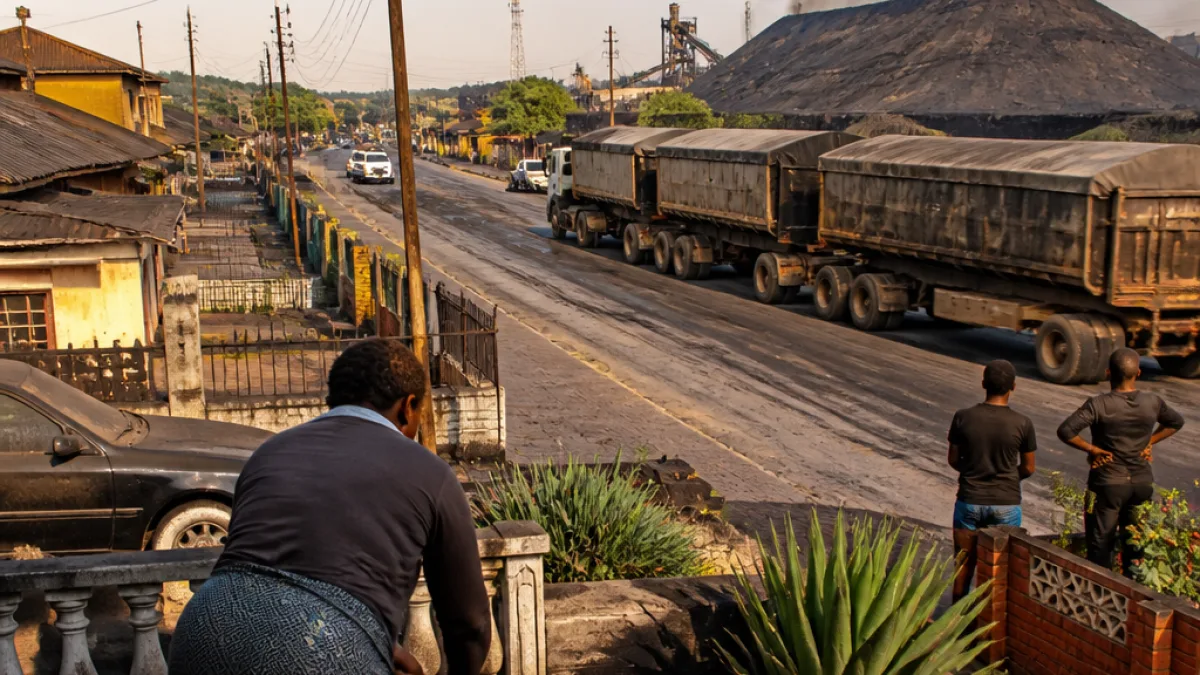
Richards Bay residents are demanding urgent intervention after recurring coal dust deposits from passing trucks and nearby stockpiles left homes, businesses and the environment coated in black residue, according to the Concerned Residents Civic Association.
Health, property and environment under strain
The civic association told reporters the problem has intensified over recent years as the number of coal trucks moving through residential areas has grown. The association says the pollution presents a risk to public health, causes damage to buildings and harms local flora and fauna.
Jean Gerber of the Concerned Residents Civic Association described the day-to-day consequences for those living and working in affected suburbs. She said buildings required repeated cleaning and that people experienced worsening respiratory issues. Gerber described how quickly dust accumulates inside offices, saying it blackened faces within hours.
"I can see the wildlife suffering, plants and animals suffering under this challenge. I've just recently moved the business into Alton. It started off as a joke where my colleagues and I were taking wet wipes and wiping our faces. We did it again two hours later, and it's black. Your face is black within two hours, and that's from sitting inside your office," said Gerber.
Local responses and community action
The association said one port access gate was closed following community complaints, but residents report little improvement in coal dust levels since that change. At a public meeting planned for Saturday — the association's fifth — residents will discuss potential solutions and next steps.
Among actions called for by residents is the removal of coal truck traffic from residential routes. The civic association also urged a return to more extensive rail operations to reduce truck movements and the associated dust, arguing rail would limit the need for coal stockpiles and heavy truck traffic in populated areas.
- Complaints: Increased truck movements, visible dust on properties, respiratory concerns.
- Observed impacts: Damage and increased cleaning costs for buildings; negative effects on plants and wildlife.
- Local demands: Reroute or remove coal trucks from residential areas; reduce local stockpiles; restore rail logistics where feasible.
What remains unclear
The story of coal dust in Richards Bay raises several questions that residents expect local government and industry to answer. News organisations have reached out to the uMhlathuze Municipality for comment; a response from the municipality or industry operators was not included in the association's statement.
| Issue | Example from residents |
|---|---|
| Property damage and cleaning costs | Businesses in Alton reporting soot-like deposits requiring frequent cleaning |
| Health concerns | Residents reporting worsened respiratory symptoms; dust accumulates quickly indoors |
| Environmental impact | Local wildlife and vegetation observed to be affected by dust deposits |
Why this matters to Richards Bay
Richards Bay is a port city with significant industrial and logistical activity. When airborne particulates compromise air quality, consequences extend beyond nuisance soiling: they can increase the burden on local healthcare resources, affect business operating costs and degrade the local environment.
Residents considering next steps will be watching for commitments from municipal authorities and the companies that control coal logistics. The civic association plans to use its forthcoming meeting to build consensus on actions to press for, and to coordinate further community engagement.
The association's public meeting is expected to keep the issue in the local spotlight and may determine whether additional civil or regulatory steps are pursued.
What residents can do now: document visible dust and its impacts with photographs, keep records of cleaning costs and health visits, and raise concerns through ward councillors while attending community meetings.