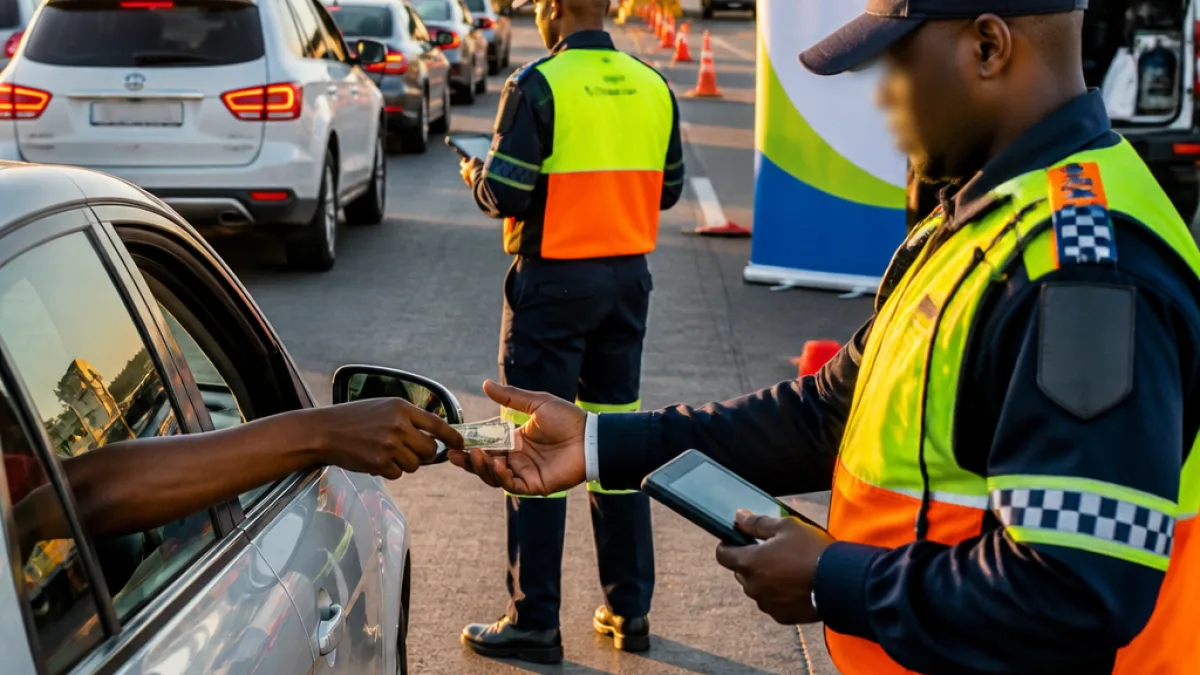
The national Administrative Adjudication of Road Traffic Offences (AARTO) Phase 2 was officially launched at the Mariannhill Toll Plaza on Tuesday morning, and within hours the new system had its first practical impact in KwaZulu‑Natal when a motorist paid R2,000 in outstanding speeding fines on the spot.
What happened at Mariannhill
Officials conducting the operation used portable digital devices that link to the National Traffic Information System (NaTIS) to check vehicles and identify outstanding infringements across South Africa. During an enforcement window between 08:00 and 09:00, authorities stopped 356 vehicles. From that checkpoint:
- three AARTO charges were issued;
- 54 speeding fines were settled immediately, totalling R23,300;
- one motorist paid R2,000 for two outstanding speeding fines and was required to settle the debt on the spot.
What Phase 2 changes mean for motorists
The Road Traffic Infringement Agency (RTIA) has emphasised that Phase 2 introduces a uniform administrative system for issuing, managing and enforcing traffic infringements in newly proclaimed municipalities. The current rollout does not yet introduce demerit points; that is planned for a later phase.
“The biggest change motorists would notice was that most traffic infringements would no longer be dealt with through the Criminal Procedure Act,”
said RTIA spokesperson Monde Mkhaliphi, according to the department briefing. The agency describes the shift as one away from the criminal justice system and towards an administrative adjudication process aimed at speeding up how infringements are processed and resolved.
Where AARTO Phase 2 now applies in KZN
The Department of Transport listed the municipalities now operating under the AARTO framework in KwaZulu‑Natal. These include the eThekwini Metropolitan Municipality (Durban) and a number of district municipalities and local councils across the province.
| Municipality | Notable town(s) |
|---|---|
| eThekwini Metropolitan Municipality | Durban |
| Msunduzi | Pietermaritzburg |
| KwaDukuza | KwaDukuza |
| Alfred Duma | Ladysmith |
| uMhlathuze | Richards Bay, Empangeni |
| Ray Nkonyeni | Port Shepstone |
| Newcastle | Newcastle |
| Ulundi | Ulundi |
| Jozini | Jozini |
| Mtubatuba | Mtubatuba |
How the enforcement works
Portable enforcement devices used at the Mariannhill operation are connected to NaTIS and can access a motorist's national record. That means outstanding fines issued anywhere in South Africa can be identified and actioned during local checkpoints. RTIA has stressed the initial phases prioritise administrative processing, with the demerit points system to follow once municipalities are prepared.
Practical advice for motorists
Motorists in municipalities now covered by Phase 2 are advised to:
- check their vehicle record on NaTIS or through authorised RTIA channels for outstanding infringements;
- carry valid driving and vehicle documentation while travelling; digital checks at roadblocks can reveal outstanding fines issued elsewhere;
- attend to any fines promptly to avoid escalation — administrative processes may allow for quicker resolution than criminal procedures, but fines paid at the scene remain enforceable;
- stay informed about the later introduction of demerit points, which will affect driver licence standing once implemented.
Background and provincial context
AARTO is already in operation in Gauteng municipalities including Johannesburg and Tshwane. The phased rollout across KwaZulu‑Natal is intended to allow municipalities time to prepare for the system change and to improve road safety through more efficient handling of traffic infringements.
At Mariannhill the swift detection and immediate settlement of fines demonstrates how the linked enforcement technology can produce instantaneous results. Transport officials say this is part of a broader effort to reduce road deaths and streamline how traffic law is enforced across different jurisdictions.
As Phase 2 expands, motorists should familiarise themselves with the administrative process and monitor communications from the RTIA and local traffic authorities for further updates on demerit points and related changes.