Recent commentary on classroom language practice warns that the drive towards digital programmes cannot replace the classroom talk multilingual learners need to build reading comprehension. The argument, published as a letter in response to an article on kindergartners’ verbal participation, contends that oral‑language development has been sidelined and that this disproportionately harms learners still acquiring English.
Classroom conversation versus software
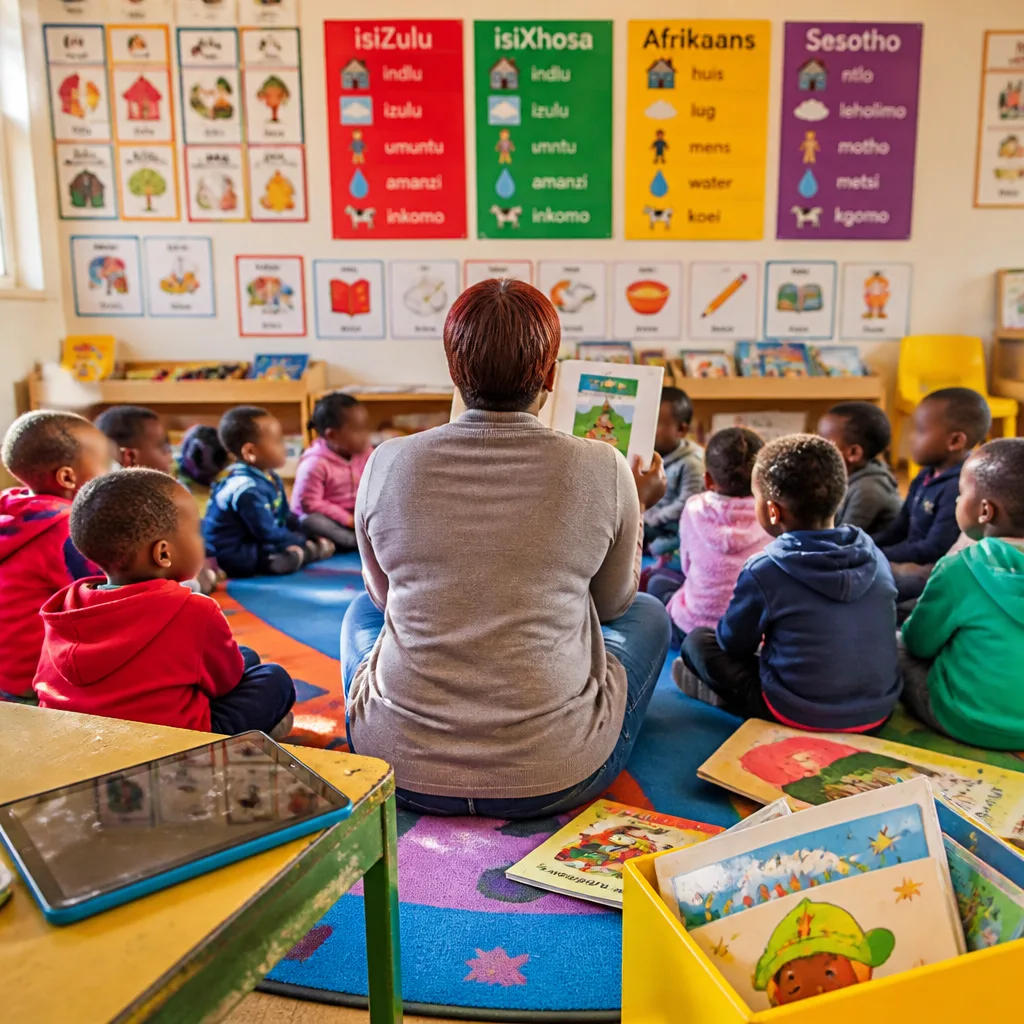
The letter, by a senior curriculum professional, says teachers often do not prioritise time for "rich class discussions" and receive insufficient support to facilitate and monitor productive student talk. It stresses that students who are still building English vocabulary and syntax cannot fully participate in read‑alouds, discussions or text‑based tasks regardless of the quality of the materials.
"The room that 'hums with excited discussions' should be the model, not the exception."
The writer draws on cognitive science to critique reliance on ed‑tech. Citing a 2018 study by researchers at the Massachusetts Institute of Technology, the letter highlights a structural limitation of many adaptive programmes: they provide input and limited opportunity for back‑and‑forth responses. For multilingual learners, the author argues, that absence of conversational exchange matters enormously.
Consequences for reading comprehension
According to the letter, the comprehension gap identified by researchers — including Sonia Cabell of the Florida Center for Reading Research, who was quoted in the original reporting — is exacerbated when classrooms lack regular oral‑language practice. The correspondent warns that high‑quality curriculum should make space for both foundational skill practice and the rich discussion that builds vocabulary and comprehension.
- Oral interaction provides responsive, scaffolded language input that supports vocabulary and syntax growth.
- Ed‑tech programmes often deliver one‑way input and limited opportunities for real dialogue.
- Curriculum design needs to balance foundational skills and structured opportunities for student talk.
Implications for classrooms and policy
The letter does not prescribe specific interventions, but its argument points to several practical consequences for educators and policymakers concerned with multilingual cohorts.
First, teacher preparation and in‑service support should include strategies for creating and managing sustained oral‑language routines so that learners can practise and be assessed on language use, not only on discrete reading skills. Second, procurement and implementation of digital programmes should be accompanied by clear guidance on how they complement — rather than substitute for — guided classroom conversation. Third, assessment systems that privilege written or computer‑administered tasks risk underestimating comprehension when oral language is underdeveloped.
| Modality | Strength | Limitation |
|---|---|---|
| Oral classroom discussion | Responsive, builds vocabulary and syntax | Requires teacher skill and time |
| Adaptive ed‑tech | Scales instruction, gives practice | Limited dialogue; less responsive to spontaneous language use |
Education systems must therefore judge programmes by their contribution to both skill mastery and to students’ ability to use language in authentic, dialogic contexts. Where digital tools are used, lesson plans and teacher guidance should intentionally create moments for back‑and‑forth exchanges around texts and tasks.
What this means for multilingual settings
In linguistically diverse classrooms, vocabulary and syntax are not neutral items of knowledge: they are the tools learners use to access curriculum content. The letter insists that without structured opportunities to engage orally, multilingual learners will be unable to exploit even strong instructional materials.
That observation challenges the view of some administrators and funders who see ed‑tech primarily as a solution to teacher shortages or uneven instructional quality. The author’s caution is a reminder that technology can assist but not replace the human conversation that research identifies as central to language development.
As schools plan curriculum and select instructional resources, the balance between digital innovation and practices that foster sustained oral interaction must be explicit. The correspondence concludes with the simple reformulation of a classroom ideal: make vibrant, structured talk the norm rather than the exception.