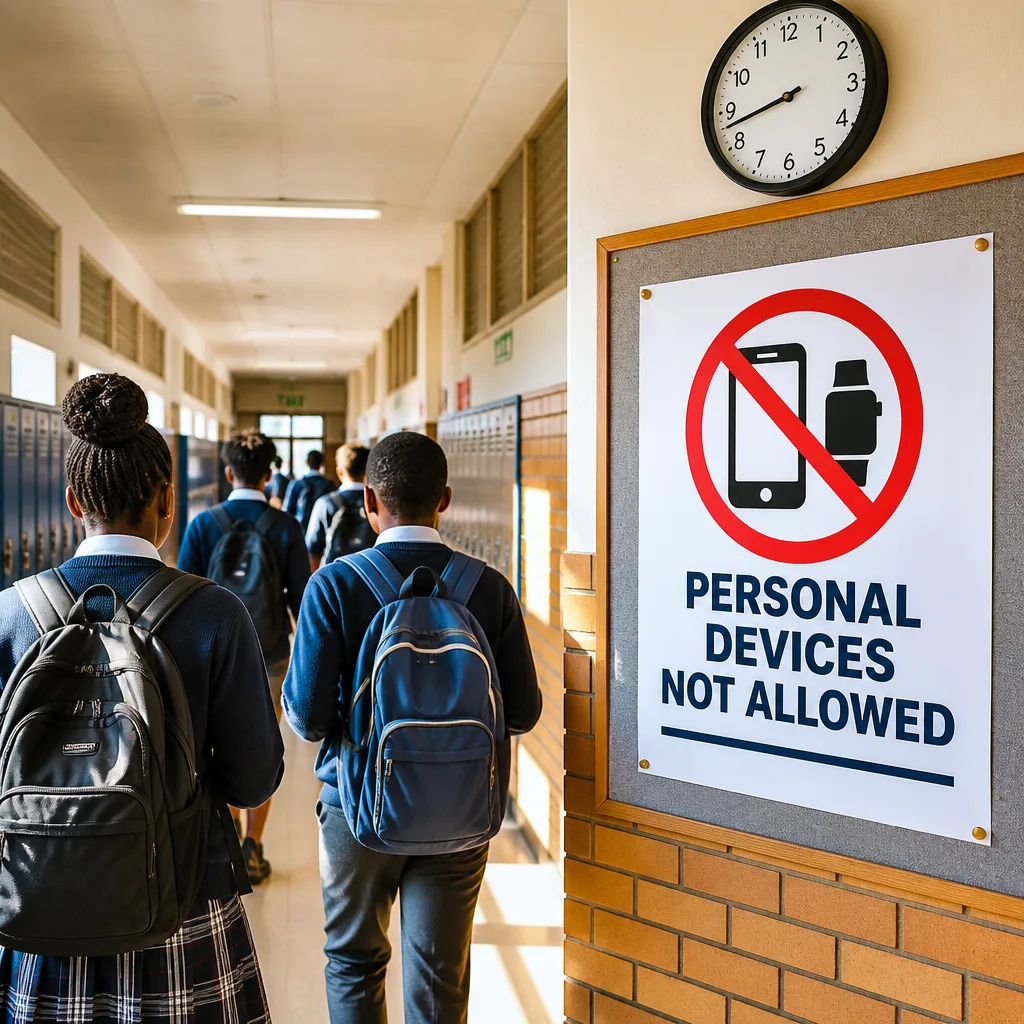
The Connecticut State Board of Education has adopted new guidance urging school districts to impose bell-to-bell bans on cellphones, smartwatches and other personal devices and to establish formal limits on school-day screen time, potentially in force as soon as the 2026–27 school year.
State recommends uniform personal-technology and screen-time policies
The guidance, approved during a special board meeting, recommends that every district draw up a "Personal Technology Use and Purposeful Screen Time Policy" that would prohibit students' use of personal devices from the beginning to the end of each school day. It also calls on districts to review their relationship with technology and set explicit limits for how much screen time is appropriate during school hours.
State education officials said the move is part of a broader re-evaluation of the role of technology in classrooms, as districts nationwide assess whether the presence of personal devices supports or distracts from learning.
What the data shows
The board pointed to survey results gathered by the state Department of Education between October 2024 and February 2025. According to that survey, nearly 100 school districts reported that their existing personal-technology policies had been either "very effective" or "somewhat effective" in raising student engagement and improving learning outcomes.
"We're seeing that these policies are indeed working," said Education Commissioner Charlene Russell-Tucker during the meeting.
The guidance also summarised current adoption rates for bell-to-bell cellphone restrictions across school levels in Connecticut:
- Elementary schools: 70% have bell-to-bell restrictions
- Middle schools: 71% have bell-to-bell restrictions
- High schools: 31% have bell-to-bell restrictions
| School level | Bell-to-bell restriction in place |
|---|---|
| Elementary | 70% |
| Middle | 71% |
| High | 31% |
Policy context and near-term prospects
The board's action comes two years after it first issued guidance urging districts to craft policies limiting cellphone access during the school day. The latest move arrives amid a parallel push in Connecticut's legislature and from the governor for a statewide law that would prohibit cellphone use in schools during instructional hours.
The guidance, while not itself legislation, signals a coordinated state effort to tighten rules around personal devices and to encourage districts to treat screen use deliberately rather than as an unregulated part of the school day.
Questions for districts
Districts will need to consider several practical questions if they adopt the recommended approach. These include enforcement mechanisms, exceptions for medical devices or contact with caregivers, the handling of digital learning tools that require screens, and steps to support teachers who will implement the rules. The board's guidance also asks schools to examine how their use of school-provided technology complements or conflicts with restrictions on personal devices.
How Connecticut districts interpret and implement the guidance will determine whether bell-to-bell restrictions move from a majority practice in younger grades to a near-universal standard across all school levels. The board framed the policy as an attempt to boost engagement and learning by reducing distractions from personal devices during instructional time.
As districts prepare for the 2026–27 school year, the guidance places clear pressure on local school boards to weigh the educational benefits cited in the state's survey against concerns about practicality and equitable access to communication for students who rely on devices outside school.