Thousands of Western Cape residents have opted for a newly introduced long‑acting HIV prevention medicine, provincial health authorities said, as early data show the injection is reaching people who were not previously on daily pre‑exposure prophylaxis (PrEP).
Uptake in first weeks
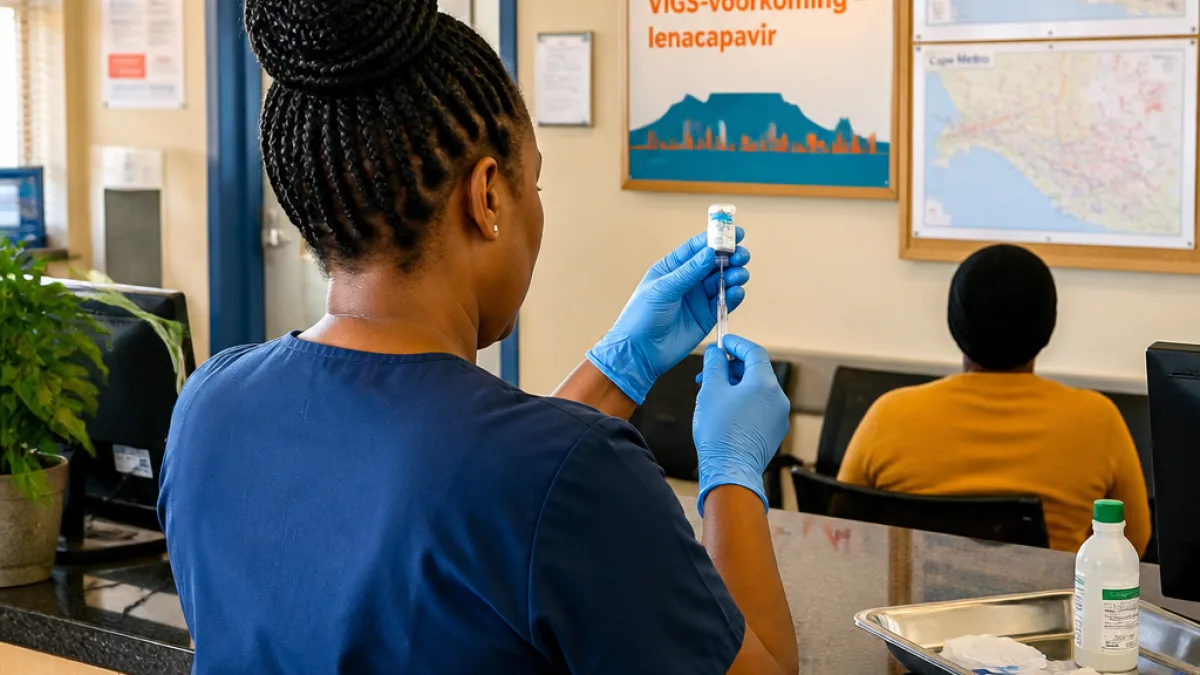
The Western Cape Department of Health and Wellness reported that 2 339 lenacapavir injections were administered at 22 public health facilities in the Cape Metro between 8 June and 24 July. Of those injections, 2 049 — or 87.6% — were given to people who had not previously been taking oral PrEP.
Lenacapavir is an antiretroviral medicine used for both treatment and prevention of HIV; in the prevention context it is given as an injection every six months. It is not a vaccine. The department says offering a long‑acting option can remove barriers associated with daily pills.
What the figures show
| Metric | Number |
|---|---|
| Total injections (8 June–24 July) | 2 339 |
| Recipients new to PrEP | 2 049 (87.6%) |
| Facilities offering lenacapavir in the Metro | 22 |
Provincial response and rationale
MEC for Health and Wellness Mireille Wenger said the early results underscore the importance of offering people a choice in how they protect themselves against HIV. The department emphasised that a long‑acting injection may suit people who find daily medication difficult or who were not using PrEP at all.
"One of our greatest opportunities to reduce new HIV infections is to ensure that more people who are at risk choose an effective prevention option. What is particularly encouraging about these early results is that almost 88 percent of people receiving lenacapavir are new to PrEP," Wenger said.
Health officials noted that lenacapavir complements existing prevention tools rather than replacing them. Oral PrEP — a daily pill — has been available in South Africa since 2016 and remains an effective option for many.
Who may benefit from lenacapavir
- People who struggle to adhere to a daily pill regimen.
- Those seeking fewer clinic visits — an injection every six months reduces the frequency of visits compared with monthly prescription renewals.
- Individuals who previously did not use PrEP but are at ongoing risk of HIV acquisition.
Healthcare workers at participating sites have reported that convenience — the infrequency of dosing — is a major draw for many clients. The department said the rollout has shown encouraging uptake among women, who continue to make up a large proportion of those at risk, although a full demographic breakdown was not provided in the department’s statement.
What this means locally
For the Metro, the early acceptance of lenacapavir suggests the programme is reaching previously untapped segments of the population. Public‑health experts have long argued that expanding the range of prevention options helps close gaps in service coverage: when people can choose a method that fits their lives, uptake and continuing use are more likely.
Clinics offering lenacapavir will need to continue counselling clients on the benefits and limitations of the injection and on follow‑up care. As with all antiretroviral interventions, adherence to the recommended schedule and monitoring for side effects will be important components of the programme.
The department’s statement covers the initial phase of a broader rollout. Further updates, including more detailed demographic and geographic breakdowns of recipients, will help assess whether the early gains lead to sustained reductions in new HIV infections across the Province.
Practical information: residents interested in long‑acting HIV prevention should contact their local public health clinic to ask whether lenacapavir is offered, and to receive counselling about suitability and the injection schedule.
As the rollout progresses, the Western Cape will be watched as a test case for whether long‑acting injectable prevention can broaden access and reduce reliance on daily medication among people at risk of HIV.