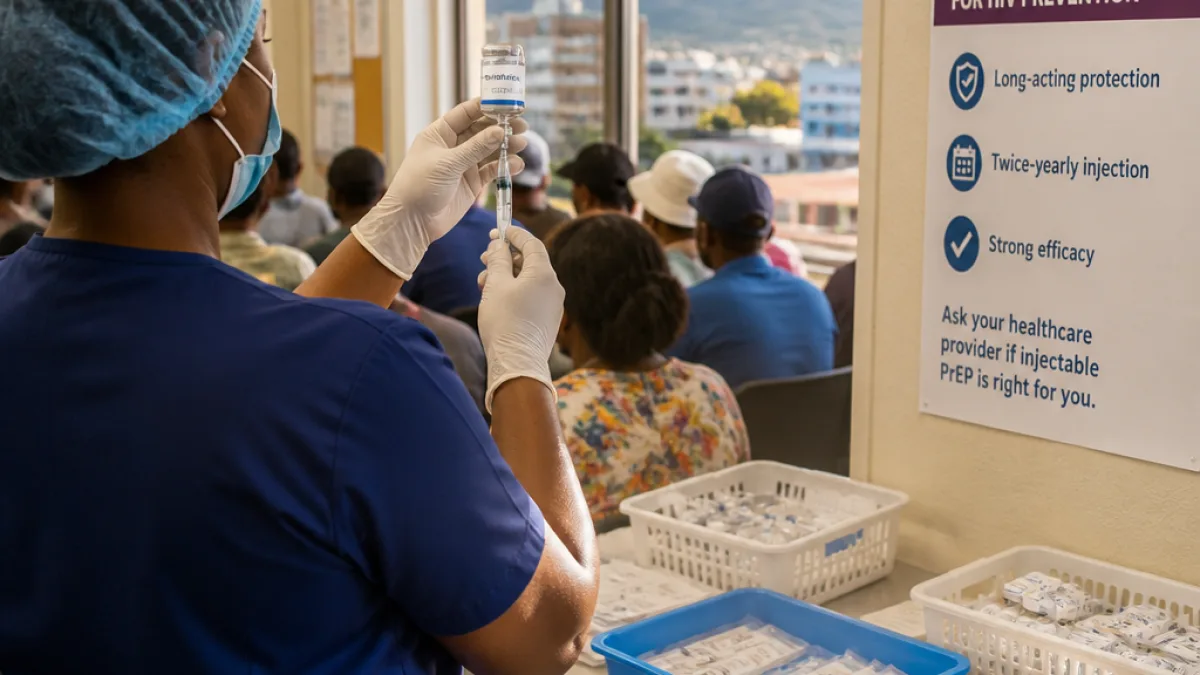
The Western Cape Department of Health and Wellness has reported early uptake of the long-acting HIV prevention injection lenacapavir, with health services administering 2 339 injections across 22 public health facilities in the Cape Town Metro between 8 June and 24 July.
High proportion of first-time users
Of those injections, 2 049 (87.6%) were given to people who had not previously taken oral pre-exposure prophylaxis (PrEP), the department said. Lenacapavir is an antiretroviral medicine used to both treat and prevent HIV; it is not a vaccine. The injection is given twice a year and is presented as an additional prevention option alongside daily oral PrEP, which has been available in South Africa since 2016.
MEC for Health and Wellness Mireille Wenger said these early figures show the value of offering people choice. She said:
“One of our greatest opportunities to reduce new HIV infections is to ensure that more people who are at risk choose an effective prevention option. What is particularly encouraging about these early results is that almost 88 percent of people receiving lenacapavir are new to PrEP. This means we are expanding access to HIV prevention and reaching people who may previously have found daily medication difficult or simply were not using PrEP at all.”
Why the injection matters
Health officials say long-acting options can remove barriers to prevention by reducing the need to remember a daily tablet. According to the department, healthcare workers report that many patients have chosen lenacapavir because receiving one injection every six months is easier than remembering to take a pill every day.
For people who struggle with daily adherence, who have unstable living conditions, or who prefer less frequent clinical interactions, a twice-yearly injection offers an alternative route to effective protection.
Rollout figures at a glance
| Metric | Figure |
|---|---|
| Injections administered | 2 339 |
| Facilities offering lenacapavir | 22 |
| Recipients new to PrEP | 2 049 (87.6%) |
What this means for residents
Early uptake suggests the programme is reaching residents who previously did not use oral PrEP. For clinicians and prevention programmes, the injection may broaden the pool of people able to protect themselves, particularly among groups who find daily medication challenging.
- Lenacapavir is a long-acting antiretroviral used for HIV prevention and treatment; it is not a vaccine.
- It is administered as an injection every six months.
- Daily oral PrEP has been available in South Africa since 2016 and remains an option.
Local context and next steps
The Western Cape Department of Health and Wellness described the introduction of lenacapavir as an important milestone for the province. The department’s early data cover a short initial period of the rollout; continued monitoring will be needed to see how uptake changes over time, how adherence is maintained, and whether the injection affects new HIV-infection rates.
Clinics offering lenacapavir and public-health programmes will need to ensure systems are in place for follow-up, safety monitoring and counselling about ongoing prevention choices. For people considering their options, healthcare workers can explain the differences between daily oral PrEP and the twice-yearly injection so individuals can select the prevention method that best suits their circumstances.
The department’s figures show a promising start to the rollout. As the programme expands, health services aim to track demographic trends and outcomes to ensure the injection reaches communities at risk and complements existing prevention services.
Reporting from health facilities across the Cape Town Metro suggests demand for long-acting prevention is real. Whether this early momentum is sustained will depend on supply, clinic capacity, ongoing counseling and how communities respond to the new choice.
For now, the Western Cape’s lenacapavir rollout has put thousands of people on a twice-yearly prevention pathway for the first time — a development that public-health officials hope will contribute to reducing new HIV infections in the province.