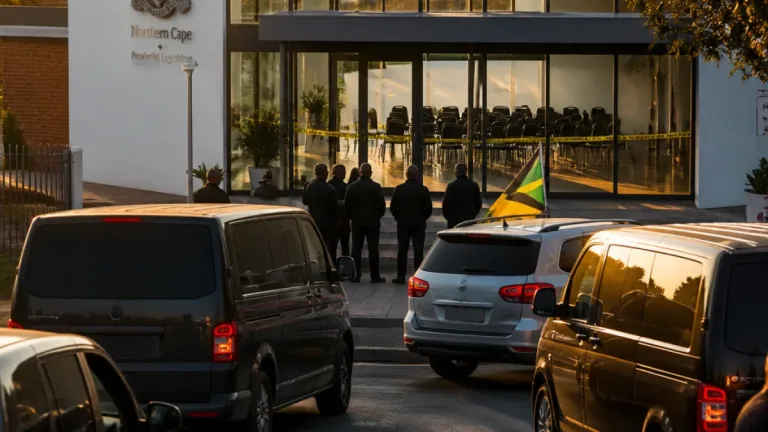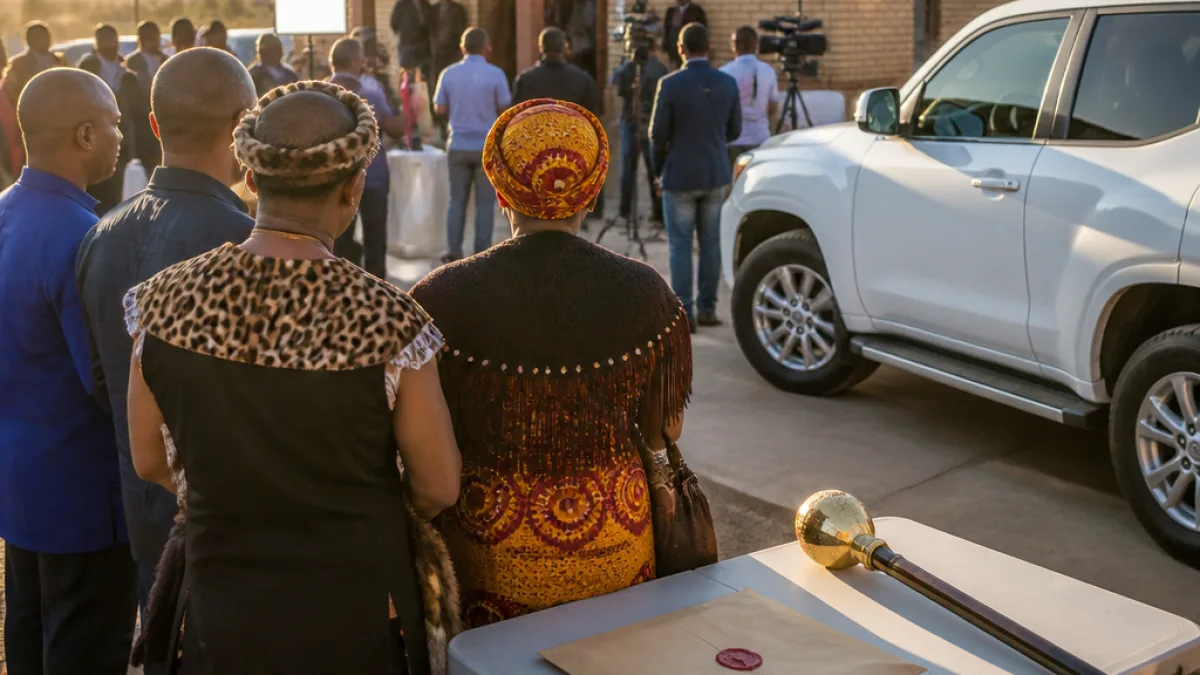
A member of the Bapo Ba Moerane royal family has apologised to President Cyril Ramaphosa after confronting him during a courtesy visit to Bapong in the North West on Saturday, provincial officials said.
What happened
The confrontation occurred while the president was on a formal visit to Bapong. According to a statement from Premier Lazarus Mokgosi’s office, the royal family member later offered an apology to the president and the provincial office has described the matter as closed.
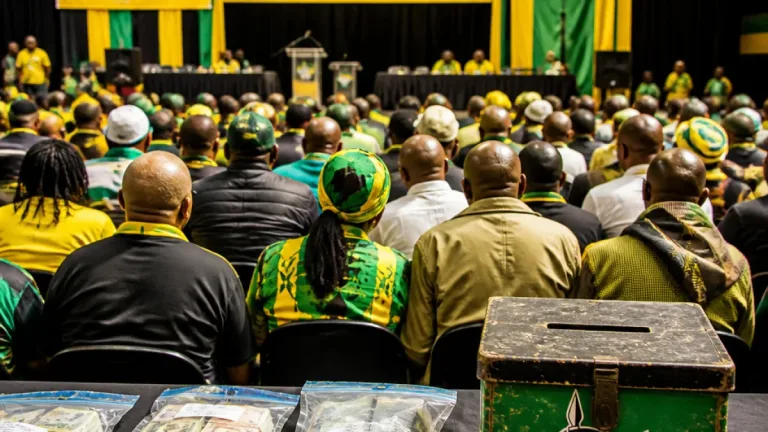
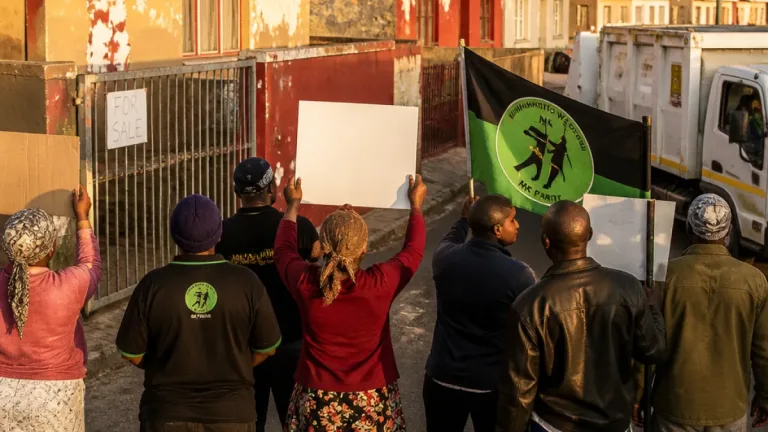
Local reporting identified the royal house involved as the Bapo Ba Moerane, a recognised traditional authority in the area. The incident was described in coverage as linked to a disagreement over a registration station, though provincial officials have not released detailed findings or a timeline of events beyond the apology and the closure notice.
Why it matters for North West
Confrontations between traditional leaders, community representatives and national figures draw particular attention in the North West because of the prominent role traditional authorities play in local governance and dispute resolution. Encounters of this kind can signal broader tensions over service delivery, local administration or community representation, and they tend to attract both local and national political interest.
Provincial leaders often move quickly to contain fallout from such incidents to avoid escalation. In this case, the premier’s office said the matter was settled after the apology, which aims to restore formal relations and calm local sentiment.
Timeline (as reported)
| Date | Event |
|---|---|
| Saturday (visit day) | President Cyril Ramaphosa received a courtesy visit in Bapong; a member of the Bapo Ba Moerane royal family confronted him. |
| Subsequently | The royal family member apologised to the president; Premier Lazarus Mokgosi’s office said the matter is closed. |
Responses and accountability
The premier’s office statement that the matter is closed is a formal position, but it leaves outstanding questions for residents and civic actors about the underlying causes of the confrontation, and whether any administrative or policy issues related to the disputed registration station will be addressed.
Local civil society groups and community leaders typically expect follow-up on substantive grievances after such high-profile encounters: clarity on decisions, an explanation of next steps and mechanisms for affected parties to lodge formal complaints. At present, the only confirmed facts from provincial communication are the apology and the closure of the matter.
What this means for residents
- Residents should look to official channels — the provincial government and relevant municipal offices — for any updates on the disputed registration station or related service queries.
- If community members feel aggrieved, they can request minutes or statements from local meetings, lodge formal complaints with their municipality, or engage with ward councillors and traditional council structures.
- Monitoring whether the provincial office publishes a fuller account or corrective measures will be important for holding leaders to account.
For now, the incident has been formally contained by the provincial statement. But in communities across the province, encounters like this often reflect unresolved local issues that require ongoing attention from government, traditional authorities and civic organisations.
This report will be updated if the premier’s office releases further details or if community representatives provide additional documentation about the incident and the underlying dispute over the registration station.