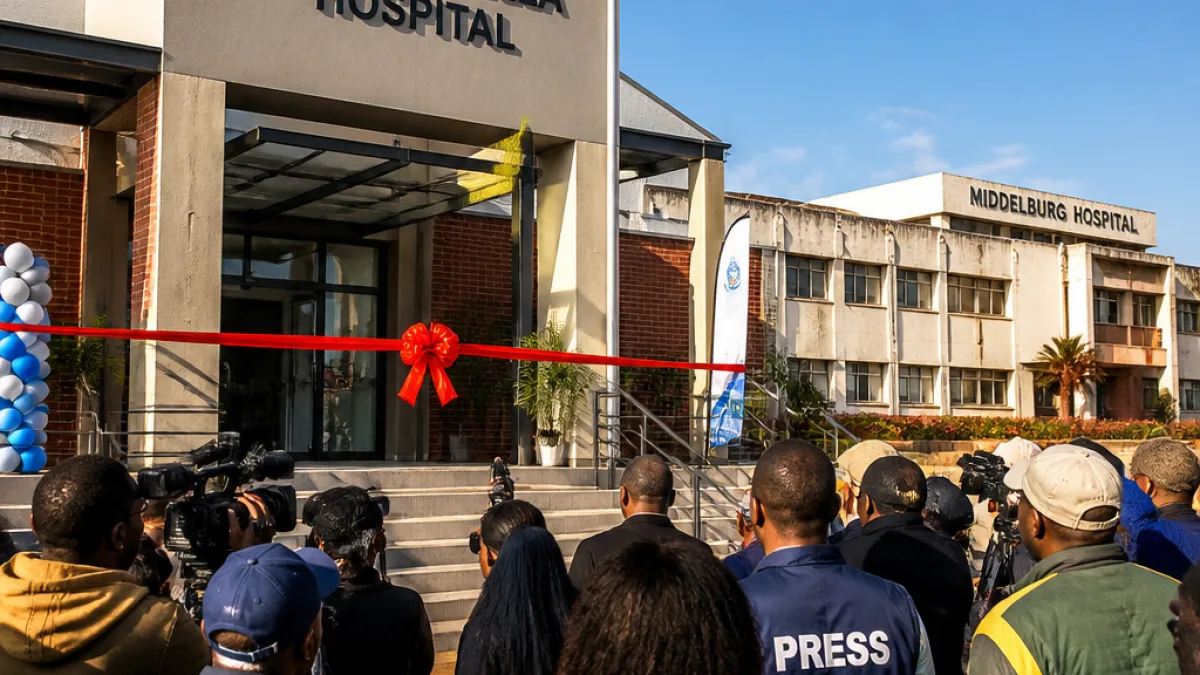
MPUMALANGA — President Cyril Ramaphosa officially opened the new 220-bed King Nyabela Hospital in Middelburg on Tuesday, a project the government says will serve more than 240,000 residents in the Steve Tshwete Local Municipality and surrounding parts of the Nkangala District.
Replacement for ageing facility
The hospital replaces the old Middelburg Hospital, which officials said had become dilapidated and costly to maintain after more than a century of service. Construction on the new Level 1 district hospital began in 2017 and the facility was ready for occupation on 1 November 2025, officials confirmed.
President Ramaphosa, joined at the event by Health Minister Dr Aaron Motsoaledi, Mpumalanga Premier Mandla Ndlovu, Steve Tshwete Mayor Cllr Mhlonishwa Masilela, Nkangala District Mayor Cllr Thomas Ngwenya and traditional leaders, described the opening as a milestone in government efforts to improve access to quality public healthcare in the province.
"Today, we are officially opening the King Nyabela Hospital, which will serve more than 240,000 people in the Steve Tshwete Local Municipality," Ramaphosa said.
Services and capacity
The facility provides a wider range of services than the old hospital, aiming to deliver more comprehensive care locally. Among its clinical features are:
- 220 beds across general and specialised wards
- A 24-hour accident and emergency department
- Three operating theatres
- High care, neonatal and paediatric wards
- Dedicated antenatal and postnatal services
- Outpatient services including pharmacy, TB and HIV management
Beyond routine outpatient offerings, the hospital will host allied health and supportive services such as dentistry, eye care, dietetics and nutrition, social work, occupational therapy, physiotherapy, medical male circumcision and mental health services.
| Facility feature | Details |
|---|---|
| Beds | 220 |
| Operating theatres | 3 |
| Population served | More than 240,000 (Steve Tshwete Local Municipality) |
| Key wards | Surgical, medical, paediatric, antenatal, postnatal, neonatal, high care |
Local impact and access
Officials said all services previously provided at Middelburg Hospital have been relocated to King Nyabela, with an emphasis on improving quality and breadth of care. The new facility sits along the N4 in Middelburg and is intended to serve patients from across the Nkangala District, reducing the need to travel to larger, more distant hospitals for many routine and emergency services.
Health ministerial delegations and provincial leadership highlighted the hospital as one of the province’s largest health infrastructure projects in recent years, formed as part of a broader drive to modernise public healthcare and expand service coverage.
Operational considerations
With the hospital now officially open, attention will turn to ensuring staffing, equipment maintenance and supply chains meet the demands of a larger facility. The presence of high-care and neonatal services means a need for specialised personnel and reliable 24-hour support services.
Local councils and traditional leadership attended the opening, underlining the political and community interest in the facility’s success. The provincial government said the hospital’s opening represents a significant step toward improving health outcomes but did not provide details on ongoing operational funding or staffing numbers at the ceremony.
What residents can expect
Residents of Steve Tshwete and surrounding communities can now access a broader range of services locally, including emergency care at all hours and a wider outpatient offering. The availability of allied health services aims to provide more holistic care under one roof.
As the hospital settles into full operation, patients and caregivers should monitor local health department communications for details on clinic hours, referral arrangements and any changes to services previously provided at the old Middelburg Hospital.
The opening of King Nyabela Hospital marks a notable investment in Mpumalanga’s public health infrastructure, one that local and provincial leaders hope will ease pressure on existing facilities and expand access to modern medical care for thousands of residents.