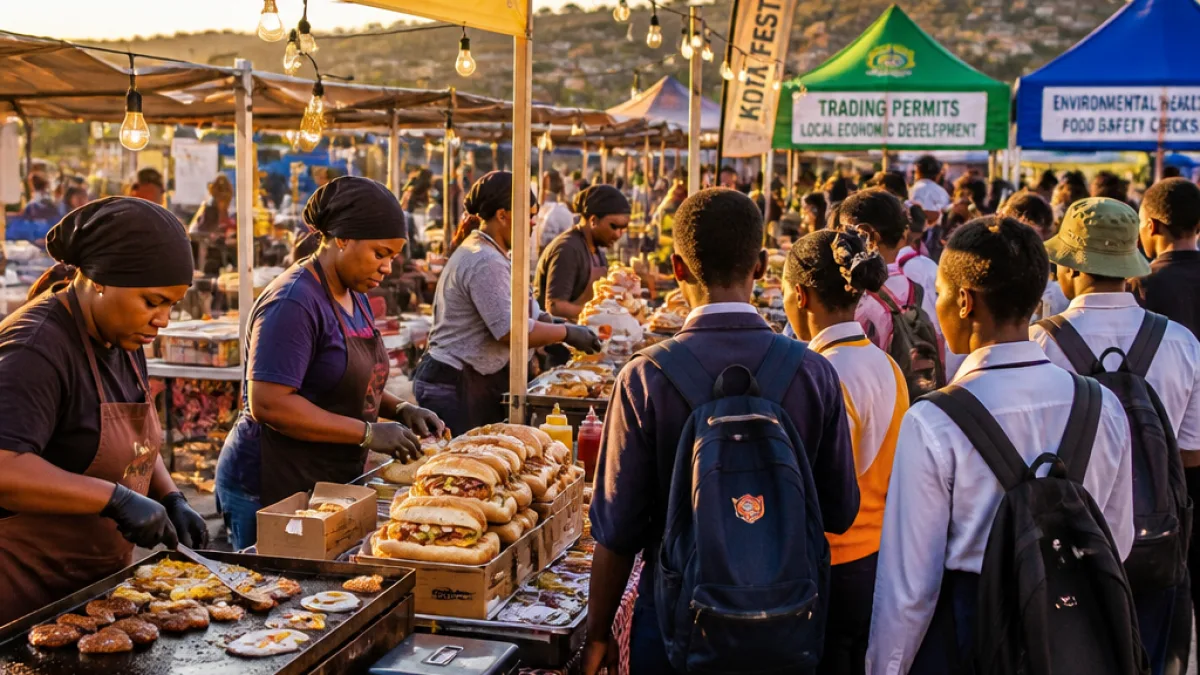
Hundreds of food lovers flocked to a recent weekend event celebrating the kota — the township sandwich that has become a fixture of South African street food culture — and vendors in Limpopo reported brisk sales, according to local reports.
Strong turnout, clear demand
The Limpopo Kota Festival drew large crowds of locals and students, and vendors said sales increased markedly across the event. After the festival, attendees and stallholders urged organisers and local authorities to consider making the event a regular entry on the province’s cultural calendar.
Organisers did not disclose detailed attendance figures or revenue totals in the initial report, but the descriptor of "hundreds" of attendees in reporting underlines a clear public appetite for township food celebrations in the province.
Economic impact and lingering questions about funding
Street-food festivals can offer short-term revenue for small traders and informal-business operators. In Limpopo, where small and micro enterprises make up a significant portion of local economies, a recurring kota festival could supplement incomes for vendors and create opportunities for food suppliers and other microenterprises.
That potential raises practical questions that remain unanswered in the initial coverage: who will underwrite a regular event, what level of municipal or provincial support will be required, and how will organisers ensure compliance with health, safety and trading regulations?
Those questions are important for two reasons. First, while a one-off festival can boost takings for a weekend, sustainability requires predictable planning and resources. Second, formalising an event on the provincial calendar typically requires budgetary allocations, administrative backing and co‑ordination with local government units.
What vendors and attendees asked for
According to reporting, vendors enjoyed strong sales and both locals and students called for the festival to become regular. The demand came especially from young people and students, suggesting that future events might attract a similar demographic and accompanying consumption patterns.
- Increased sales for vendors over the festival weekend.
- Calls from students and locals for the event to recur regularly.
- Potential for broader economic benefits if the festival is institutionalised.
Practical considerations for a regular festival
Transforming a successful weekend into an annual or recurring festival requires attention to logistics and finance. Key points to resolve include vendor permitting and fees, municipal services such as waste removal and toilets, public health inspections, and security. If provincial government or a municipality is asked to support the event, a formal proposal and budget will likely be necessary.
| Stakeholder | Key requirement |
|---|---|
| Vendors | Trading permits, hygiene compliance, stall allocation |
| Organisers | Event planning, marketing, liaison with authorities |
| Municipalities/Province | Support with services, potential funding or calendar inclusion |
Why the money question matters
As a correspondent focused on documents and budgets, the recurring theme is simple: community enthusiasm does not automatically translate into administrative support. For the kota festival to move from a popular weekend to an institutionalised event on the provincial calendar, somebody must commit funds and administrative capacity.
That commitment could take several forms: a municipal events budget, private sponsorship, or a hybrid model that combines vendor fees with public support. Each option has trade-offs for affordability, accessibility and vendor margins — factors that will determine whether small traders actually benefit.
Next steps for residents and authorities
Locals who want the festival regularised should seek clarity from organisers about plans and timelines, and ask municipal officials whether an events application or council support is being pursued. For those interested in vendor opportunities, staying informed about permits, health requirements and potential costs will be crucial.
Until those administrative and financial questions are answered, the festival’s future will depend on ad hoc organisation and community goodwill. The weekend turnout shows appetite; the next phase must address how the event will be funded, regulated and sustained so that vendors and attendees both benefit in the long term.
Rhulani Mabasa is the Limpopo correspondent focusing on local events, budgets and community development.