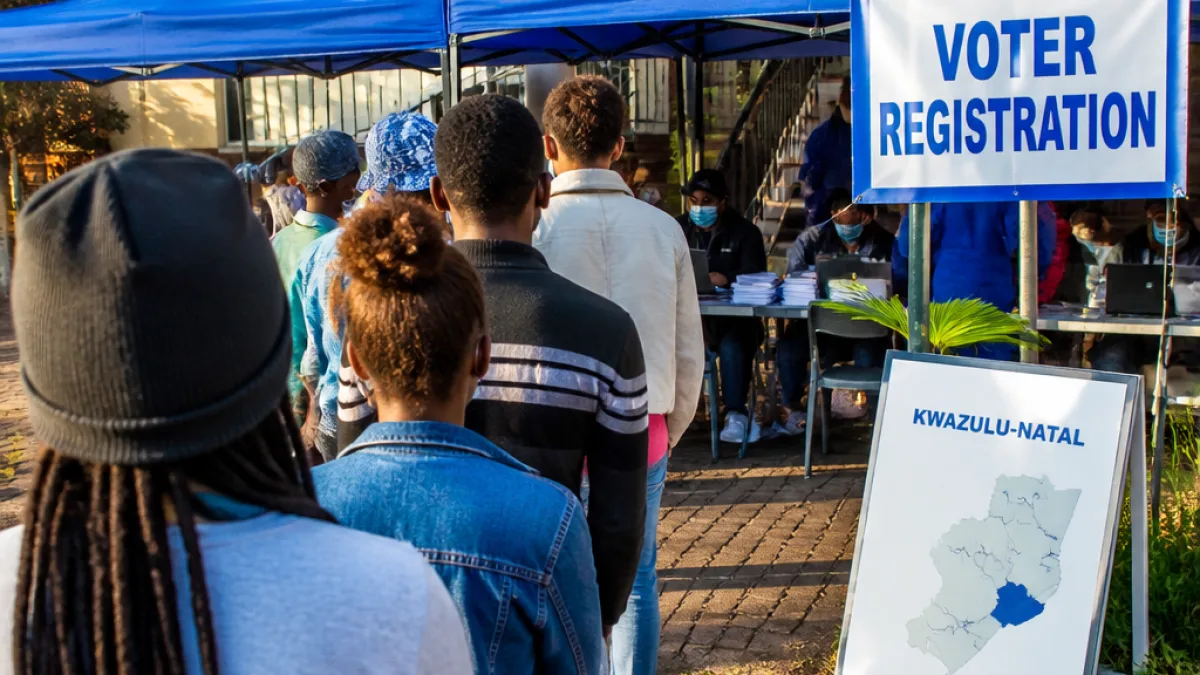
The Independent Electoral Commission (IEC) recorded 53 958 voter registration transactions in KwaZulu‑Natal by midday on Sunday, 2 August, making the province the country’s busiest during the commission’s final voter registration weekend ahead of the 4 November local government elections.
Strong turnout across voting stations and online portal
The IEC said it had engaged with more than 238 000 citizens through voting stations and its free online voter registration portal by 12:00 on Sunday. Most of these interactions — 217 922 — took place at physical voting stations, while 20 078 transactions were completed online.
Nationally, new registrations accounted for 13.4% of transactions, with 31 892 people registering for the first time. The majority of processed transactions were updates to existing registrations as voters sought to ensure their details were accurate before the close of voting station‑based registration.
“South Africans are showing up! IEC is encouraged by the strong turnout across the country as citizens continue to register and update their details ahead of LGE 2026. Every registration strengthens our democracy.” — IEC South Africa (tweet)
Provincial breakdown and context
Preliminary figures show KwaZulu‑Natal leading the provinces, followed by the Eastern Cape with 45 375 transactions and Gauteng with 40 425. Other provinces reported substantial activity as well, reflecting nationwide responsiveness to the IEC’s final registration opportunity on 1 and 2 August.
| Province | Transactions (by midday 2 Aug) |
|---|---|
| KwaZulu‑Natal | 53 958 |
| Eastern Cape | 45 375 |
| Gauteng | 40 425 |
| Limpopo | 28 721 |
| Western Cape | 19 057 |
| Mpumalanga | 16 662 |
| North West | 15 106 |
| Free State | 12 686 |
| Northern Cape | 6 010 |
What this means for KwaZulu‑Natal
KwaZulu‑Natal’s leading registration figure is consistent with historical trends and the province’s population density, the IEC noted. High registration volumes in the province could influence voter turnout patterns and ward contests in November, though registration figures alone do not predict actual turnout on election day.
The surge in updates indicates many voters are checking addresses and other details — a necessary step for those who have moved or whose particulars have changed since the last registration cycle. The IEC’s mix of voting station and online options appears to have provided accessibility for different groups of voters.
Practical information for voters
- Voting station registration was open until 17:00 on Sunday, 2 August — this was the final voting station‑based opportunity.
- The IEC’s online voter registration portal remained an alternative earlier in the registration period and recorded 20 078 transactions by midday on 2 August.
- Eligible citizens who registered for the first time (31 892 nationally) and those who updated their details should check the IEC’s channels for information on voting districts and polling stations ahead of 4 November.
The IEC’s figures published on Sunday provide a snapshot of the final registration drive. Authorities will release further data and final registers in the weeks leading up to the local government elections. For now, the commission welcomed the high levels of engagement and urged all eligible voters to ensure their details are correct.
Reporting from KwaZulu‑Natal indicates strong participation in the registration process across the province’s metros and districts. The full electoral impact will only be evident once ballots are cast on 4 November.