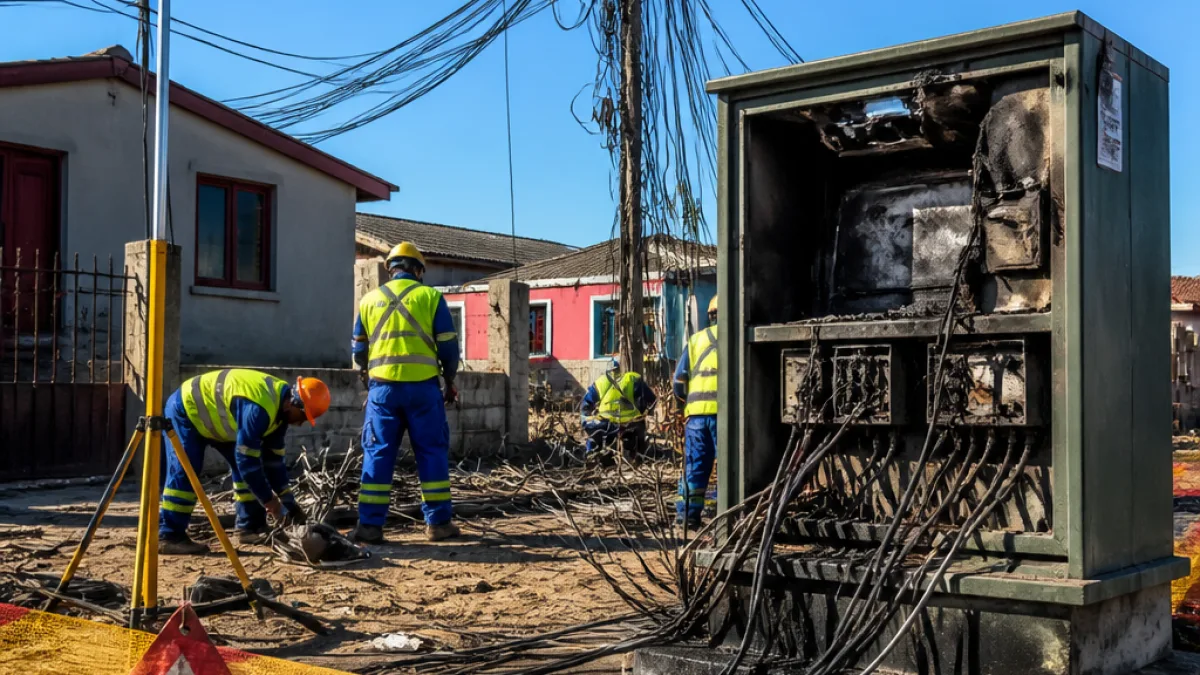
Eskom has deployed repair teams to restore electricity in parts of Khayelitsha, Cape Town, after damage to the network linked to illegal connections, electricity theft and repeated vandalism of infrastructure, the utility said on Saturday.
Damage and delays blamed on criminal activity
The utility said substantial progress had been made since additional resources were sent to the area, but added that some customers remained without power because of the extent of the damage. According to Eskom, the criminal activities are prolonging repairs and increasing strain on the broader electricity network.
“These criminal activities continue to delay restoration efforts and place additional strain on the electricity network,” it said.
Eskom said technical teams and contractors were working around the clock, attending to faults and clearing a backlog of work orders. The utility reported that many customers have had their supply restored after crews completed a significant number of jobs, and that multiple teams remained on site to deal with outstanding outages.
Local impacts and community response
Power interruptions in dense urban areas such as Khayelitsha have knock-on effects beyond household inconvenience. Residents reliant on electric pumps for water, small businesses operating on tight margins, and clinics or community centres that lack robust backup supply can all be affected. Eskom thanked the community for patience and cooperation while repairs continue.
City, health and emergency services typically track such outages closely, as prolonged or repeated losses of supply can increase safety risks at informal trading sites, traffic intersections and locations without alternative lighting or refrigeration. Eskom’s statement did not give a completion time for the remaining restorations.
Why repairs are taking longer
In its update, Eskom highlighted three recurring causes that complicate restoration work:
- Illegal connections: Unauthorised links to the network create unsafe conditions and damage infrastructure.
- Electricity theft: Direct tampering with lines and meters increases outages and can overload circuits.
- Vandalism: Repeated destruction of poles, substations or cables means teams must replace equipment rather than make minor repairs.
Repair work in areas with these problems requires extra safety measures, forensic checks and often replacement of critical components — all of which add time and cost to restoration efforts.
| Issue | Effect on restoration |
|---|---|
| Illegal connections | Unsafe working conditions; additional isolations and reconfiguration required |
| Electricity theft | Damaged meters and overloaded lines; increased outage frequency |
| Vandalism | Replacement of equipment needed rather than simple repairs |
What residents should expect
Eskom’s update indicates a phased restoration process: crews are prioritising safety and the most critical faults first, while continuing to clear the backlog across affected sections of Khayelitsha. Residents should expect intermittent updates from the utility and can report new faults or damaged infrastructure through Eskom’s usual call channels.
Community leaders and ward councillors often coordinate with Eskom and the City of Cape Town in these situations to identify vulnerable households and public facilities that need priority attention. Eskom’s appeal for cooperation reflects the practical challenge of working in environments where networks have been compromised by theft and vandalism.
For now, the utility has not published a full timetable for a final restoration but said work remains ongoing and thanked the community for its support as teams continue repairs.
Residents affected by the outages should remain cautious around damaged equipment, avoid attempting unofficial repairs or reconnections, and report hazards to both Eskom and the City’s emergency services.