Research to roof tiles: Stellenbosch science moves into the hands of young builders
Years of laboratory work at Stellenbosch University have been translated into a practical training and support initiative that organisers say will help small builders and brickmakers reduce costs while lowering the construction sector’s carbon footprint.
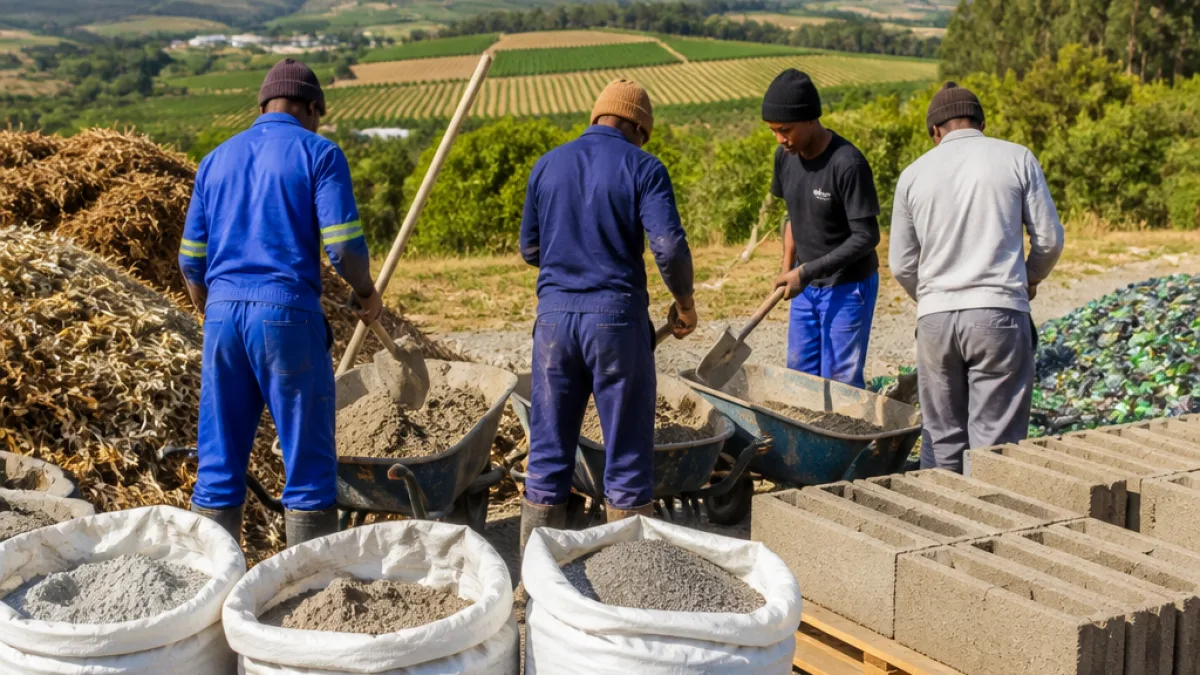
The Circular Cement Youth Entrepreneurship Programme (CCYEP), launched at the Council for Scientific and Industrial Research (CSIR) campus in Stellenbosch, will support 100 young entrepreneurs drawn from underserved communities across four provinces: the Western Cape, KwaZulu‑Natal, Mpumalanga and North West. The programme teaches participants how to use locally available industrial and agricultural waste materials as partial substitutes for conventional cement.
From university bench to business model
The initiative grew out of research led by Professor John Babafemi, Professor of Sustainable Concrete Materials at Stellenbosch University. His work examines replacing portions of cement with by‑products such as fly ash, slag, agricultural waste and waste glass. Organisers say this approach can cut input costs for small builders while addressing the sector’s environmental impact: cement production accounts for around 8% of global carbon dioxide emissions.
"I’ve always had this dream of touching the local community. I want to see people building with these materials. I want to see informal settlements being transformed," Professor John Babafemi said.
Programme partners include Fix Forward and Impact Hub Cape Winelands, with technical input from Stellenbosch University. Funding comes from the Industrial Development Corporation (IDC) via the Presidential Youth Employment Initiative (PYEI) and the Department of Employment and Labour. The combination of academic research, civil‑society facilitation and government funding is presented by organisers as a model for translating university research into practical livelihoods.
What participants will learn and what it could mean locally
- Use of locally available waste streams as cement partial replacements (fly ash, slag, waste glass, agricultural residues)
- Practical training for small‑scale production of building materials
- Business skills to improve margins, increase affordability of materials and create jobs
Organisers say the programme is about more than emissions. By demonstrating how proven research can be applied outside the laboratory, CCYEP aims to make building materials more affordable, improve profit margins for small producers and create employment opportunities in vulnerable communities. For Stellenbosch and surrounding towns, that could mean local entrepreneurs producing lower‑cost bricks and blocks for small contractors and owner‑builders.
Partners and roles
Key organisations named in the launch and their stated roles are shown below:
| Organisation | Role |
|---|---|
| Stellenbosch University | Research and technical expertise |
| Fix Forward | Programme development |
| Impact Hub Cape Winelands | Implementation partner |
| Industrial Development Corporation (IDC) | Funder (via PYEI) |
| Department of Employment and Labour | Funder/partner |
Impact Hub Cape Winelands’ involvement began after CEO Marli Goussard met Professor Babafemi at a Stellenbosch University Social Impact Committee meeting. That meeting prompted a partnership to move the research into community settings, according to the launch materials.
Local context and risks
The Western Cape has an active small‑scale construction and brickmaking sector, including informal producers operating at neighbourhood level. If CCYEP trainers and participants can reliably replicate the material recipes and quality controls developed in the lab, local builders could see immediate cost savings. However, moving from controlled research environments to on‑site production requires quality assurance, regulatory clarity and market acceptance—areas the programme will need to address as it scales.
For Stellenbosch, the initiative represents a visible example of university research aimed at local upliftment: not only publishing papers, but equipping young entrepreneurs to build businesses with lower costs and lower emissions. Whether those early entrants into the programme can convert training into sustainable enterprises will be a key measure of success for the project and for partners that include government funders.
The CCYEP’s debut in Stellenbosch underlines growing interest in circular construction methods and in using university resources to support youth employment. The next steps will be to run the training, test the business model and monitor whether savings and environmental benefits materialise at community level.