London exhibition uses food imagery and charcoal from Kharkiv to document cultural losses
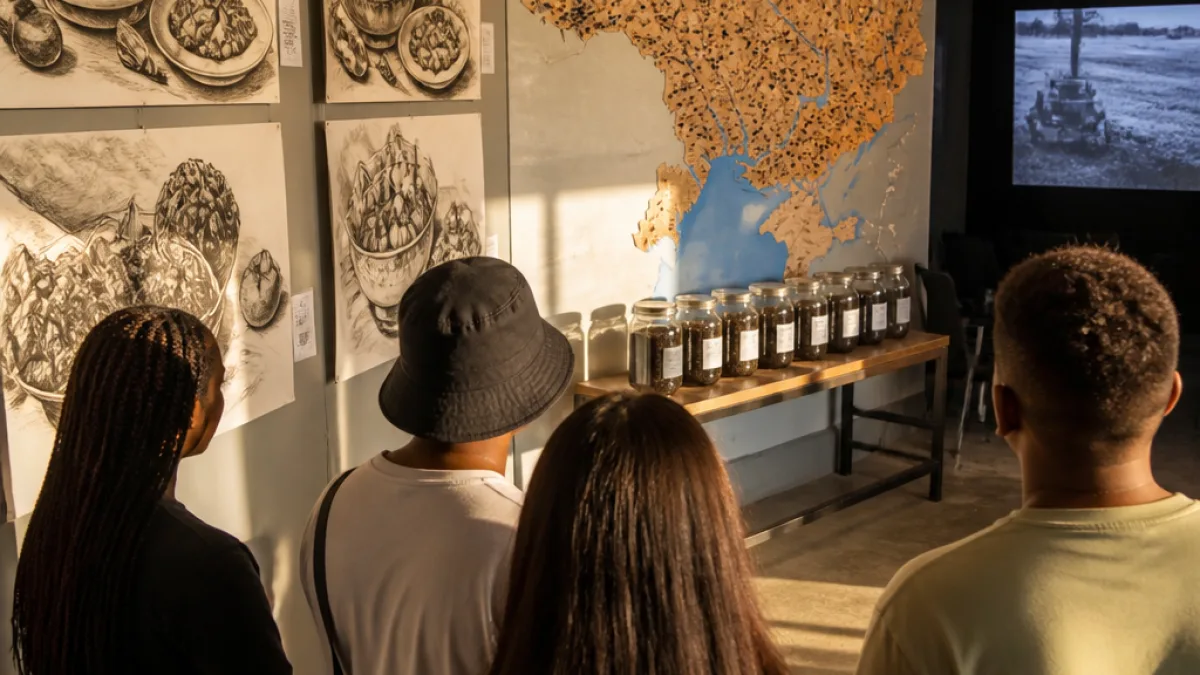
British artist Piers Secunda will present Nature Morte: The Extermination of Ukraine at Fitzrovia Gallery in London from 12 August to 6 September 2026, according to reporting by Our Culture Mag. The exhibition examines the systematic destruction of Ukraine’s cultural heritage since Russia’s full-scale invasion, pairing painted still lifes with documentary evidence and a mapped archive of damage.
Secunda’s project, the report says, is research-led and draws on visits to Ukraine in 2024 and 2026. At first glance the paintings appear to depict traditional Ukrainian dishes and ingredients. The works, however, carry deeper layers of evidence: the artist used ink made from charcoal gathered in Kharkiv, which was among the first sites to suffer damage to government buildings in 2022, and each painting is linked via QR code to supporting material on looting, site destruction and the forced deportation of children.
- Dates: 12 August–6 September 2026
- Research visits: 2024 and 2026
- Documentary included: 40-minute film by David Miller
Alongside the paintings, the exhibition reportedly includes a map charting more than 5,000 recorded instances of damage to cultural sites across Ukraine, and a 40-minute documentary by filmmaker David Miller, a frequent collaborator of Secunda’s. Our Culture Mag notes that Secunda has previously produced work that has informed government inquiries and international heritage initiatives; his past pieces are held in collections including the British Museum and the Victoria and Albert Museum.
"Nature Morte: The Extermination of Ukraine"
The way Secunda combines still-life imagery with documentary material reflects a long tradition in art of using familiar domestic objects to interrogate larger social and political traumas. In this instance, according to the report, arrangements of food and ingredients are composed in pyramid formations that the artist uses to gesture towards structures of power.
For readers in Secunda and the wider Mpumalanga region, the exhibition is an example of how contemporary artists are using material traces from conflict zones to assemble public archives. The use of charcoal from Kharkiv ties the paintings materially to a place of early and sustained violence in the 2022 invasion, while the QR-linked documentation seeks to translate visual work into a verifiable record of cultural loss.
International exhibitions such as this one feed into broader debates about cultural restitution, heritage protection and the documentation of war damage. The report notes that Secunda’s research-led practice has previously had practical impact beyond galleries, informing inquiries and international heritage work. Visitors to Fitzrovia Gallery will therefore encounter not only painted surfaces but also an archival project that attempts to make that damage legible and traceable.
| Item | Detail |
|---|---|
| Exhibition title | Nature Morte: The Extermination of Ukraine |
| Venue and dates | Fitzrovia Gallery, London — 12 Aug to 6 Sep 2026 |
| Documentary | 40-minute film by David Miller |
| Mapped damage | More than 5,000 recorded instances |
Readers who follow cultural policy and heritage protection in Mpumalanga may find parallels in local conversations about protecting historical sites and artefacts. While the exhibition is physically distant, its methods — bringing archival evidence into a public exhibition and linking visual art to documentary records — illustrate practices that local museums, heritage bodies and civil society employ when documenting and contesting damage to cultural property.
This report is drawn from material published by Our Culture Mag.