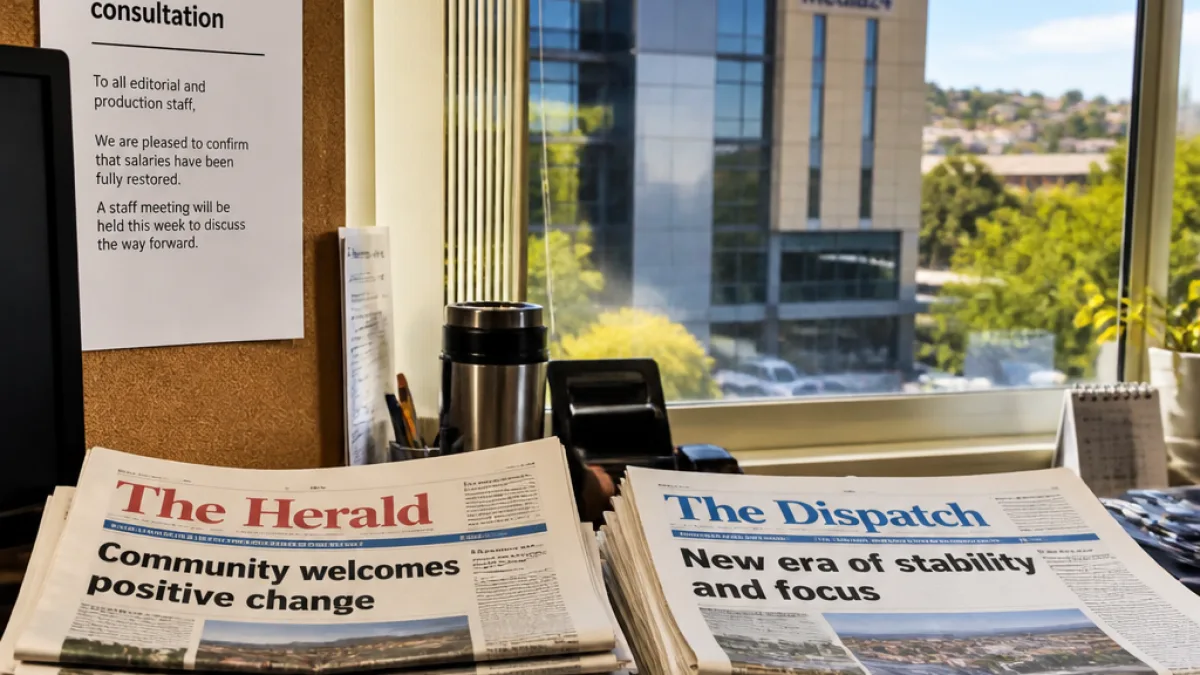
The South African National Editors’ Forum (SANEF) has urged Media24 to be clear about the consequences of a proposed new editorial model while welcoming the resolution of a salary crisis that left staff at two Eastern Cape newspapers unpaid for days.
Calls for transparency over newsroom changes
In a statement, SANEF said it was concerned that Media24 has opened consultations with staff about a planned editorial reorganisation that would consolidate functions across its newsrooms. The trade body recognised the pressures facing the industry — declining print revenue, shifting audience habits and rapid digital change — but said the company must be explicit about the implications for jobs and editorial capacity.
SANEF noted that Media24 has not yet said the consultations will definitely result in retrenchments. Even so, the forum warned that newsroom restructurings across the media sector have often led to staff reductions, heavier workloads for remaining journalists and a narrowing of editorial range.
Impact on media plurality and public-interest journalism
The forum pointed to a sustained period of contraction at Media24, including closures of titles and a reduced print footprint. SANEF said such decisions have already eroded institutional memory and diverse editorial voices — developments that have consequences for media plurality, editorial independence and the long-term sustainability of public-interest reporting.
Although SANEF did not set out specifics of the proposed model, it asked Media24 to engage openly and transparently with affected employees and their representatives throughout the consultation process to limit harm to editorial diversity and to protect newsroom capacity.
Salary dispute in the Eastern Cape resolved
SANEF also welcomed reports that the salary crisis affecting employees at The Herald and The Dispatch in the Eastern Cape had been resolved after several days during which staff did not receive pay and faced uncertainty. The forum said the restoration of salaries was a necessary step to stabilise the newsrooms while consultations on organisational changes proceed.
Details in SANEF’s statement did not specify the cause of the delayed payments or the mechanism by which the dispute was resolved. The forum’s statement framed the outcome as important for staff welfare and for the continuity of local reporting.
- What SANEF wants: Clarity on the scope and outcomes of Media24’s newsroom consultations.
- Key risks identified: Potential job losses, reduced editorial diversity, increased workloads and loss of institutional memory.
- Immediate relief: Salaries at two Eastern Cape titles were restored after days without pay.
Why this matters to Eastern Cape readers
Regional newspapers remain vital for accountability reporting on provincial government, local municipalities and service-delivery issues. Any narrowing of editorial capacity in the Eastern Cape risks weaker scrutiny of public institutions and fewer reporters covering municipal budgets, local courts and community issues that seldom attract national attention.
For many communities, local reporters are the primary channel for public-service announcements, local election coverage and follow-up on broken services. SANEF’s intervention highlights that decisions made at corporate level about newsroom organisation have ripple effects for citizens’ access to reliable local information.
What to watch next
Media24’s consultation process and any formal announcements will be closely watched. Stakeholders to monitor include newsroom staff and their labour representatives, SANEF and other media freedom bodies, and funders or partners that support public-interest journalism.
| Issue | Status |
|---|---|
| Media24 editorial consultations | Underway; scope not fully disclosed |
| Potential job losses | Not confirmed, SANEF warns risk exists |
| Eastern Cape newspaper salaries | Reported to be resolved after days without pay |
SANEF’s statement serves as both a warning and a call to action: warning about the cumulative impact of newsroom shrinkage on the quality and plurality of journalism, and a call for transparent engagement between corporate management and those who produce the news. For readers in the Eastern Cape, the outcome of these consultations could determine whether local reporting remains robust or is further weakened by organisational change.
As this story develops, readers should look for formal notices from Media24 and updates from newsroom representatives about any changes to staffing, beats and the capacity to report on local public-interest issues.