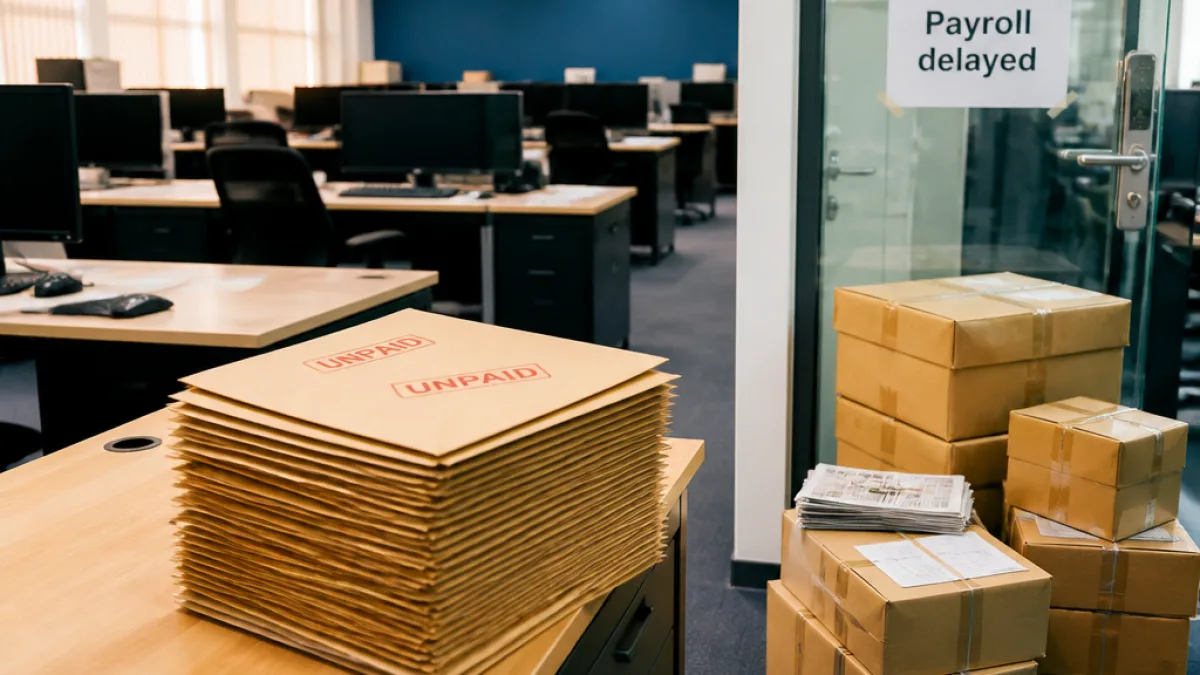
Salaries at five Eastern Cape newspapers were not paid this month, leaving roughly 80 staff uncertain about their financial future and raising the possibility of disrupted publication across parts of the province.
Change of ownership followed by payment collapse
Arena Holdings sold five publications in the province to Ubuntu Media Holdings with the transaction effective from 1 May, according to reporting. The affected titles include regional dailies in East London and Gqeberha and three community papers serving East London, Queenstown and Port Alfred.
Staff members reported limited communication from new management after salaries were not paid on the usual payday. Senior-level employees were said to be unaware of any impending difficulties and described a lack of clarity about the composition of the new board overseeing the titles.
“So far, we’ve received a few e-mails advising us that the issue is not yet resolved. C-level management acted surprised when the money wasn’t paid on Friday,” the source said.
Who is affected
The disruption reportedly affects about 80 staff, spanning editorial, production and administrative roles. Employees expressed concern that the previous owner would not be able to step in to help and that the promised transitional arrangements had not protected them from immediate hardship.
| Publication | Main town/city |
|---|---|
| Daily Dispatch | East London |
| The Herald | Gqeberha |
| Three community papers | East London, Queenstown, Port Alfred |
Staff say transition arrangements were vague
Employees said they had been told there would be a staged handover and a three-month transition period during which Arena would support operations. That process was described as continuing until 31 July, after which full responsibility would rest with Ubuntu Media Holdings.
Subsequent legal correspondence between the two companies was reported to have taken place in the days before salaries were missed, and Arena has been reported to have distanced itself from the matter, stating it no longer owns the papers.
Impact and immediate concerns
Staff described the primary harm as uncertainty — not knowing whether the titles will continue to publish or how long unpaid salaries might persist. For many employees, missing a salary has immediate consequences for meeting household and credit obligations.
- Roughly 80 employees affected across five publications.
- Potential disruption to distribution of regional news if publishing is paused.
- Limited transparency about the new board and future financial backing.
What employees want
Source accounts indicate staff are seeking clear, honest communication, confirmation of when overdue salaries will be paid and a credible plan for the companies’ financial stability.
They also want transparency about who is now responsible for governance at the titles and assurances that transition arrangements previously discussed will be honoured or replaced with workable alternatives.
Wider implications for regional media
The affected newspapers are among the province’s established local titles. A prolonged stoppage would reduce coverage of municipal governance, service delivery and community events in parts of the Eastern Cape, making a local information gap a likely secondary consequence of an unresolved payroll dispute.
Regional media funding and sustainability have been under pressure nationally, and ownership changes often bring financial risk for staff and readers when cash-flow or management plans are unsettled.
Next steps and what to watch
Staff reported that discussions were under way and that further comment from the affected organisations would follow once internal and legal consultations had taken place. Readers and community stakeholders should watch for statements from Ubuntu Media Holdings, Arena Holdings and any labour or media unions that may become involved.
For employees facing immediate hardship, reaching out to labour unions or the Department of Employment and Labour for guidance on salary disputes and sequestration protections may be advisable.
The coming days are likely to determine whether publishing continues uninterrupted and whether staff will receive back pay or an agreed schedule for outstanding salaries.
Coverage will continue as developments are reported and official responses are issued.