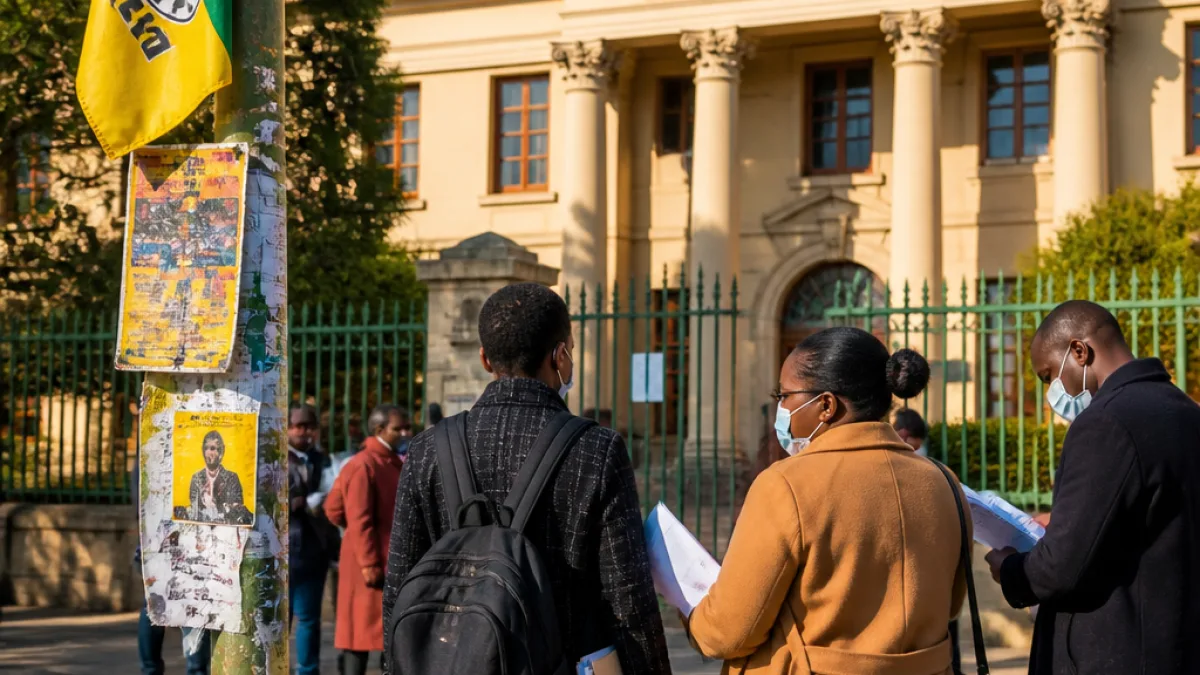
The Makhanda High Court has dismissed the African National Congress’s applications for leave to appeal a judgment that earlier declared the party’s Eastern Cape Provincial Task Team (PTT) unlawful and invalid, leaving the ANC without a recognised interim leadership structure in the province.
The legal challenge was brought by ANC members Sinethemba Mpande, Nompumelelo Mzothwa and Lwazi Rotya, who in March obtained an interdict preventing the party from holding its planned 10th provincial elective conference amid disputes over membership rolls and branch processes, according to reporting by Akani Nkuna and Lehlohonolo Lehana.
Background to the court dispute
In May, following the expiry of the Provincial Executive Committee’s term and the collapse of the elective process, ANC Secretary-General Fikile Mbalula appointed a 40-member Provincial Task Team — 20 women and 20 men drawn from the province’s eight regions — to manage the party’s affairs in the Eastern Cape until a new conference could be convened. Eastern Cape Premier Oscar Mabuyane was named to lead the PTT.
The three applicants challenged the legality of that appointment in the Makhanda High Court, arguing the PTT contravened the ANC Constitution, the party’s internal guidelines and their contractual rights as members. In May the High Court ruled in their favour, declaring the PTT unlawful and invalid and ordering the ANC to pay costs. The party then sought leave to appeal that decision.
On Thursday the court dismissed the ANC’s applications for leave to appeal, leaving intact the earlier order that nullified the PTT and the costs award against the party.
ANC response and planned further litigation
In a statement issued on Thursday night the ANC said it had noted the judgment and that it would seek further legal recourse by petitioning the Supreme Court of Appeal.
“The ANC has exercised its constitutional right to pursue further legal recourse and will petition the Supreme Court of Appeal.”
The party has also faced internal criticism about its handling of the electoral processes that preceded the legal challenges. Secretary-General Mbalula has publicly criticised the judiciary’s involvement in the party’s internal affairs after the May ruling, arguing the ANC constitution provides for responses when a structure’s term collapses and that the PTT was a legitimate step to stabilise the province.
“Our judges cannot be allowed to treat the ANC like this and collapse the organization completely,” Mbalula said, according to reporting. “I submitted an affidavit (in the EC PTT matter), and it is not even recognised… I explain and give minutes on what we did to dissolve the structure, and I am told that my affidavit is an afterthought by a person behind the bench…”
Practical implications for the province and the party
With the PTT now declared invalid and no recognised interim PEC in place, the ANC in the Eastern Cape faces a leadership vacuum at a sensitive time ahead of local government elections. The PTT had been tasked with several urgent responsibilities:
- stabilising internal party structures across the province;
- managing ongoing litigation related to branch and membership disputes;
- preparing the party for the 2026 local government elections; and
- steering the province toward a legitimate elective conference.
With the court’s ruling standing, questions remain about who will carry out these functions and how the ANC will ensure organisational readiness for the elections.
What the court order means
The most immediate legal consequence is that the PTT’s decisions and actions could be open to further challenge while the party decides whether to proceed to the Supreme Court of Appeal. The order that declared the PTT unlawful also included a costs award against the ANC, reinforcing the seriousness of the court’s earlier findings.
| Key dates | Event |
|---|---|
| March 2026 | Applicants obtain interdict preventing provincial elective conference |
| May 2026 | ANC Secretary-General appoints Provincial Task Team |
| May 2026 | Makhanda High Court declares PTT unlawful and invalid |
| 6 August 2026 | High Court dismisses ANC applications for leave to appeal |
Legal practitioners and party members will now watch whether the ANC launches an appeal to the Supreme Court of Appeal, which could alter the legal landscape if the higher court agrees to hear the matter and finds in the party’s favour. Until then, the province’s ANC structures remain in a state of uncertainty.
The outcome leaves local party organisers, ward councillors and branches needing clarity about who can lawfully coordinate campaign preparations and internal administration. It also raises broader questions about the relationship between party constitutions and the courts when internal disputes escalate into litigation.
The case highlights the tension between internal party dispute-resolution mechanisms and judicial oversight — a recurrent theme in recent political litigation nationally and in the Eastern Cape, where organisational disputes have frequently reached the courts.
Reporting for this story draws on accounts by Akani Nkuna and Lehlohonolo Lehana.