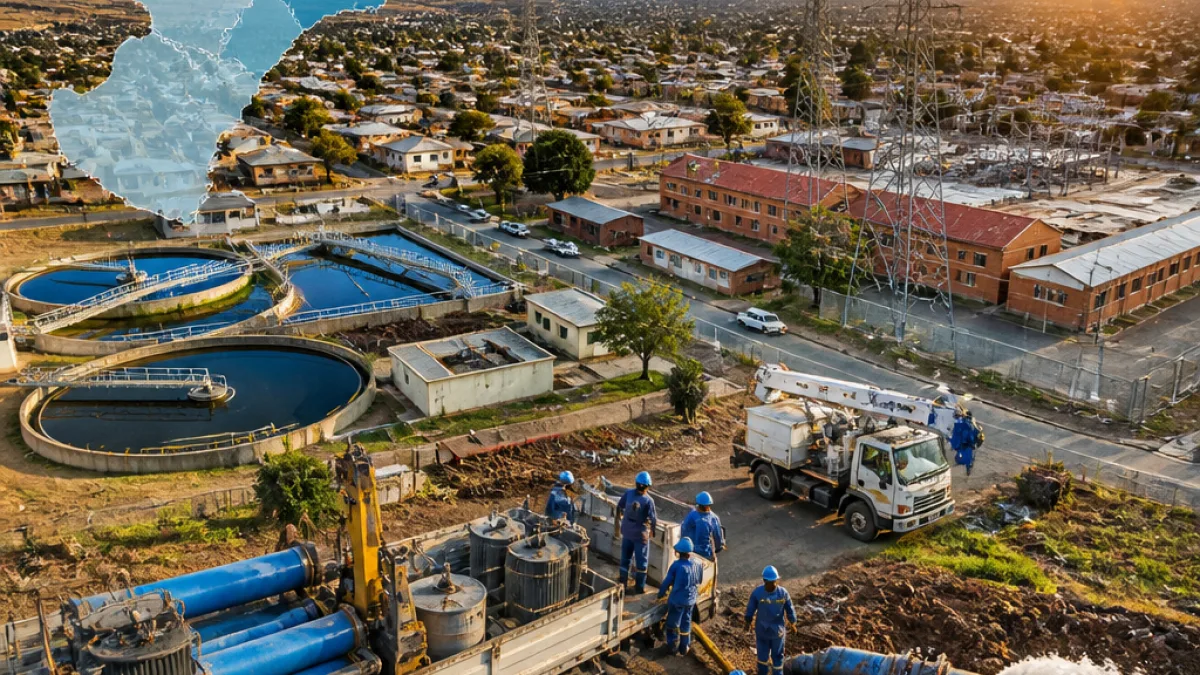
Mpumalanga has secured a R7.3 billion loan from the African Development Bank (AfDB) to fund the Mpumalanga Municipal Utility Reform Programme (MURP), a five-year pilot aimed at repairing water infrastructure, stabilising electricity networks and improving financial management across four municipalities.
Scope and objectives
The programme, approved by the AfDB and running from 2026 to 2031, targets the municipalities of Emalahleni, Lekwa, Govan Mbeki and the City of Mbombela. According to the bank’s announcement on 16 July, the initiative is expected to benefit more than 1.2 million residents by addressing recurring service disruptions that have long affected communities across the province’s coalbelt.
Funding for MURP will be directed to measurable outcomes, with disbursements tied to demonstrated improvements, including:
- reducing water and electricity losses;
- improving revenue collection;
- repairing critical infrastructure;
- strengthening utility management and operations.
Implementation and oversight
Unlike ordinary grant funding, the project will be implemented by the Development Bank of Southern Africa (DBSA) through a dedicated Programme Management Office. The programme will be guided by National Treasury, which will provide oversight alongside the DBSA.
"It will test a support model that strengthens operations and maintenance, planning, infra…"
The partial quote above was provided by Ogalaletseng Gaarekwe, deputy director-general for intergovernmental relations at National Treasury, in the AfDB statement announcing the loan.
Environmental and social outcomes
The AfDB said MURP is expected to contribute to several wider outcomes beyond service stabilisation. These include reductions in greenhouse gas emissions, job creation, improved municipal governance and enhanced climate resilience for coal-affected communities. The Inkomati-Usuthu Catchment Management Agency (IUCMA) will also receive support under the programme to help protect regional rivers and catchment areas.
As a pilot, MURP is designed to provide a model that could be extended to other municipalities in South Africa and potentially applied in other countries facing similar utility challenges.
Why this matters locally
Residents in the affected municipalities have for years faced extended water cuts, high non-revenue electricity losses and ageing infrastructure. These problems hinder business activity, burden households and increase operational costs for local government. Strengthening revenue collection and operations and maintenance could allow utilities to carry out regular repairs and reduce the frequency of service interruptions.
While the loan provides capital for upgrades, success will depend on municipal capacity to implement reforms, maintain repaired assets and meet the performance conditions tied to funding. The DBSA-managed Programme Management Office will play a central role in ensuring those conditions are met.
| Project | Value | Duration | Target municipalities |
|---|---|---|---|
| Mpumalanga Municipal Utility Reform Programme (MURP) | R7.3 billion | 2026–2031 | Emalahleni, Lekwa, Govan Mbeki, City of Mbombela |
Implementation risks and questions
Observers and residents will watch closely how funds are allocated and whether municipalities can meet the reforms’ performance indicators. Past attempts to stabilise services in some municipalities have been hampered by weak financial management, high levels of debt and technical backlogs. The linkage of disbursements to measurable improvements is intended to address those weaknesses, but it will require strong local governance and transparent reporting.
National Treasury’s involvement signals central-government interest in the pilot. The DBSA’s role as implementing agent is intended to provide technical oversight and to coordinate investments, planning and procurement.
For residents, the coming months will be crucial: preliminary planning and diagnostic work should identify the most urgent pipe repairs, transformer and feeder upgrades, and non-revenue electricity reduction measures to be prioritised for early-stage funding.
The AfDB announcement frames MURP as a potentially scalable model. If it delivers tangible reductions in outages and demonstrable financial improvements, the programme could influence how municipal services are supported elsewhere in South Africa.
Contact points: municipalities and the DBSA will publish project timelines and public reports as the programme moves from planning to implementation; residents are advised to monitor local municipal communications for details about repair schedules and service interruptions linked to upgrade work.