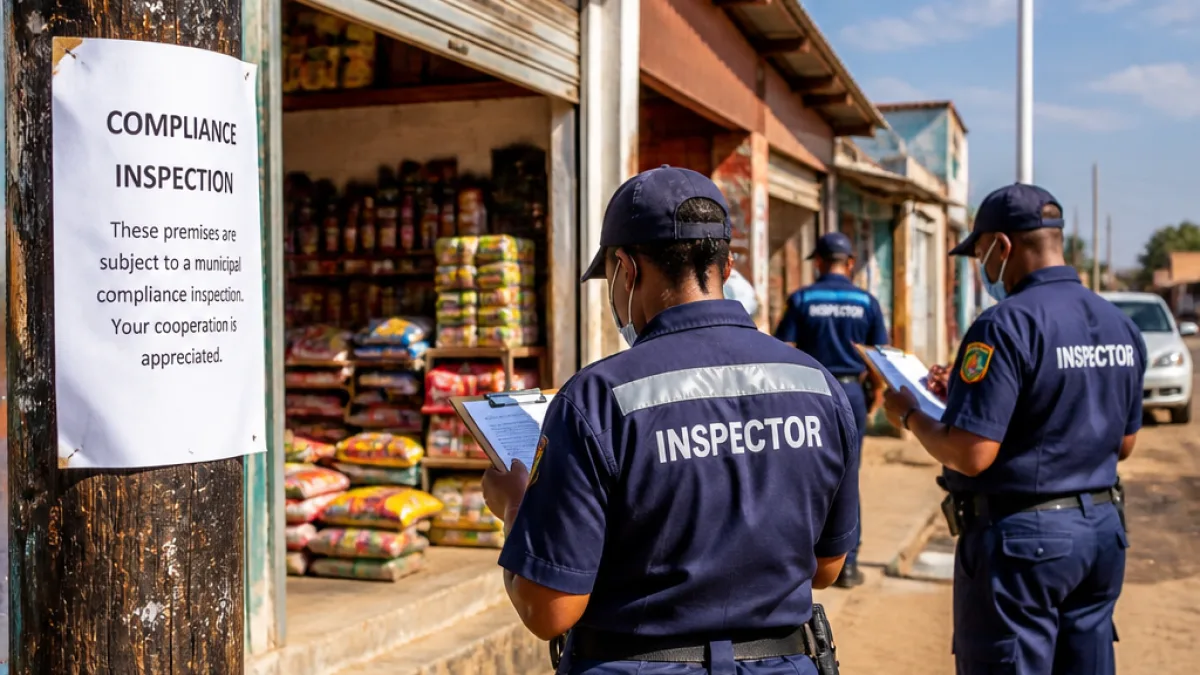
National law‑enforcement and immigration authorities inspected a large number of spaza shops in the Free State in July as part of intensified compliance operations across the country, officials confirmed on 7 August 2026.
Scope of the inspections
Provincial figures released during a media briefing on immigration enforcement operations show that 10,406 spaza shops were visited in the Free State last month. Nationwide, the Eastern Cape recorded the most inspections with 14,948 visits, followed by the Free State, while Gauteng and KwaZulu‑Natal recorded 2,631 and 2,617 inspections respectively. Other provinces inspected fewer than 1,400 shops each.
| Province | Inspections (July) |
|---|---|
| Eastern Cape | 14,948 |
| Free State | 10,406 |
| Gauteng | 2,631 |
| KwaZulu‑Natal | 2,617 |
| Limpopo | 1,315 |
| North West | 1,101 |
| Northern Cape | 915 |
| Mpumalanga | 229 |
What inspectors are looking for
Officials said the inspections are intended to ensure spaza operations comply with a range of requirements, including municipal by‑laws, food safety standards, business licensing and, where relevant, immigration legislation. The national joint operational and intelligence structure (Natjoints) coordinates the activity.
- Municipal compliance: trading hours, health and safety, signage and waste management.
- Food safety: proper storage, labelling and hygiene practices.
- Business licensing: proof of registration or permits to trade.
- Immigration checks: documentation for foreign employees where applicable.
Border operations and repatriations
Alongside domestic inspections, authorities reported stepped‑up border measures and intelligence‑led interventions. Lieutenant‑General Tebello Mosikili, chairperson of Natjoints, highlighted the Border Management Authority’s use of new technology at key ports of entry and jointly run operations involving the SAPS, the SANDF and SARS customs.
"The inspections seek to ensure compliance with municipal by‑laws, food safety regulations, business licensing requirements and immigration legislation where applicable," said Lt. Gen. Tebello Mosikili.
Mosikili said the introduction of the Vehicle Targeting System at the Lebombo Port of Entry had improved the detection of stolen vehicles and smuggling. She also reported a sustained tempo of joint border law‑enforcement operations: 93 in June and 81 in July.
Officials added that repatriation activity remains significant. As of 3 August, 77,184 undocumented foreign nationals had been repatriated to various countries. Between 1 April and 31 July, about 18,816 people were formally deported, while 3,016 remained in custody at the Lindela repatriation centre awaiting deportation. Authorities said the Musina repatriation centre was being demobilised after processing thousands of people, with just over 500 individuals left to be repatriated.
Local implications for Free State traders
For Free State spaza‑shop owners, the nationwide campaign underlines the need to ensure documentation and operating standards are in order. Non‑compliance can lead to fines, seizures of goods or other administrative actions imposed by municipalities or national agencies. Business owners operating in townships and informal trading areas are most directly affected by coordinated inspections that involve multiple departments.
Municipalities and business support organisations often offer guidance on licensing and food‑safety compliance. Traders uncertain about requirements should approach their local municipal offices or small‑business support centres for information on registration and health‑and‑safety obligations.
What authorities say next
Natjoints indicated inspections will continue across provinces as part of a planned, ongoing enforcement strategy. The combination of domestic compliance visits and reinforced border measures aims to reduce illicit trade, protect public health and ensure lawful employment practices in the informal retail economy.
Provincial authorities in the Free State have been asked to provide further detail on outcomes of the inspections locally, including numbers of warnings, fines or prosecutions, and any assistance provided to traders to correct non‑compliant practices.