Maluti‑a‑Phofung has been ranked last nationwide in the FW de Klerk Foundation’s Local Government Report Card 2026, the independent assessment released this week that measures municipal performance and constitutional accountability across South Africa.
Failures across services, finance and governance
The assessment, which applies 100 published tests across five weighted pillars, found Maluti‑a‑Phofung performing poorly on core functions including basic services and infrastructure, financial management, governance, leadership and administrative coherence, and integrity, accountability and transparency.
The municipality, which covers 4,338 square kilometres in the Thabo Mofutsanyane District and includes towns such as Phuthaditjhaba, Harrismith and Kestell, has endured a long‑term breakdown in municipal administration and basic service delivery, the report noted.
Water shortages force residents to find alternatives
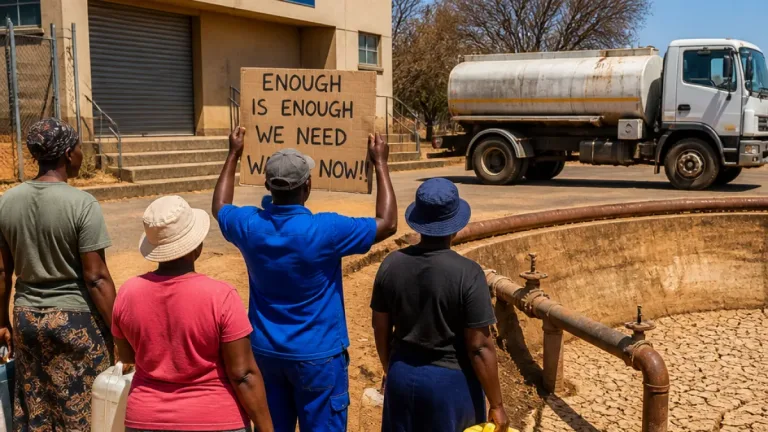
Large parts of the former QwaQwa area and surrounding settlements suffer prolonged water outages, often stretching for weeks or months. Residents have been forced to rely on water tankers or natural water sources when municipal supply fails.
The municipality’s water entity, MAP Water, is reported to be in financial distress. That financial strain has contributed to service interruptions and has led to clashes with trade unions, further disrupting operations.
Power cuts, debt and damaged infrastructure
Maluti‑a‑Phofung has historically been one of Eskom’s largest municipal debtors, owing billions of rand. That indebtedness has previously resulted in court action, bank account attachments and localised grid load‑reduction measures by Eskom.
Frequent unplanned power outages, blamed on overloaded transformers, lack of maintenance and copper theft, regularly paralyse homes and local businesses.
Sanitation systems failing; environmental and health risks
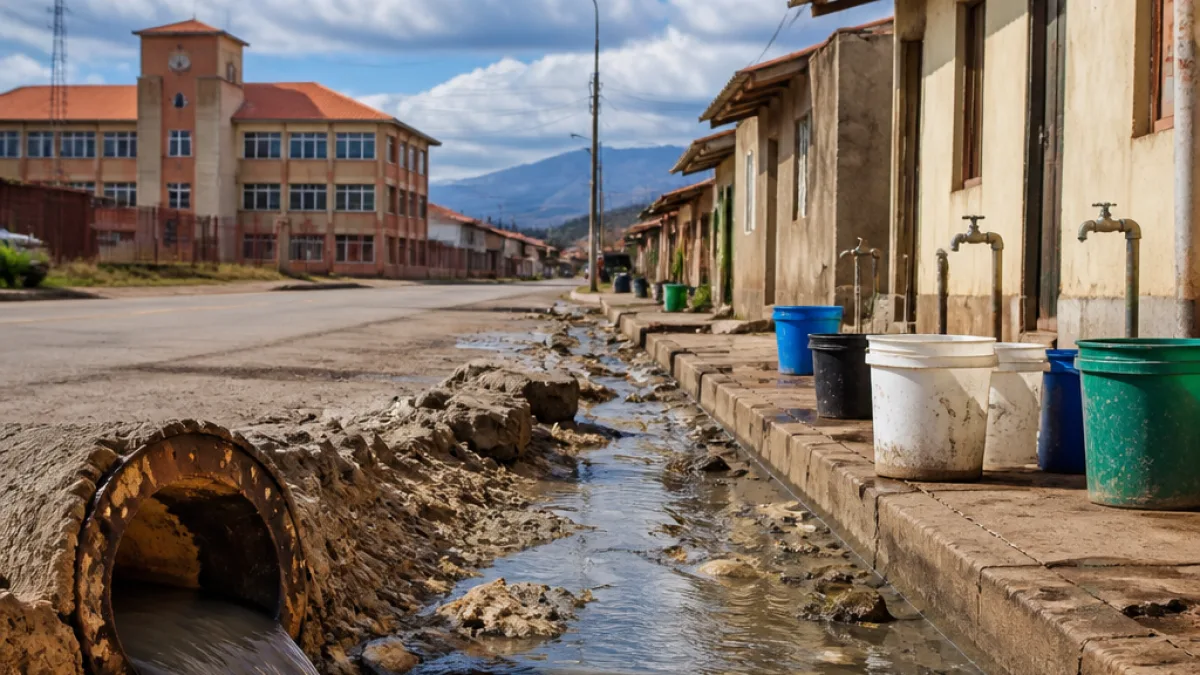
Failing wastewater treatment infrastructure has led to routine overflows of raw sewage in residential areas and rivers, creating environmental hazards and public health risks across parts of the municipality.
- Water: prolonged outages lasting weeks or months in many settlements.
- Electricity: frequent unplanned outages linked to overloaded infrastructure and historical debt to Eskom.
- Sanitation: regular raw sewage overflows from failing treatment works.
Political instability undermines recovery
The municipal council has seen frequent shifts in political power, unstable coalitions and ongoing infighting, factors the report links to weak administrative coherence and poor leadership. Such instability has complicated efforts to stabilise service delivery and address the municipality’s financial crisis.
| Report pillar | Focus |
|---|---|
| Services and infrastructure | Availability and quality of basic municipal services |
| Financial management | Revenue, debt, and fiscal sustainability |
| Governance | Procedures, oversight and adherence to law |
| Leadership and administrative coherence | Stability of political leadership and administrative effectiveness |
| Integrity, accountability and transparency | Corruption risk, disclosure and public accountability |
Local impact and what residents face
The consequences of the municipality’s dysfunction are tangible. Businesses contend with unreliable power and water, which disrupts commerce and employment. Households cope with interrupted supplies and the health risks posed by sewage discharges. Tourism and agriculture — local economic pillars given the municipality’s proximity to the Drakensberg mountains — are also affected by infrastructure instability.
While the report provides an independent diagnosis, reversing the trajectory in Maluti‑a‑Phofung will require concerted action on several fronts: stabilising municipal finances and utility entities, restoring damaged infrastructure, and establishing a more coherent political and administrative environment.
The FW de Klerk Foundation’s Local Government Report Card is positioned as a non‑partisan instrument that applies public tests to municipal practice and constitutional duties. The foundation’s ranking of Maluti‑a‑Phofung at the bottom of its national assessment highlights how prolonged institutional failure at local level can translate into daily hardship for residents.
Residents and stakeholders continue to grapple with service interruptions while awaiting concrete remedial measures from municipal leadership and oversight bodies.