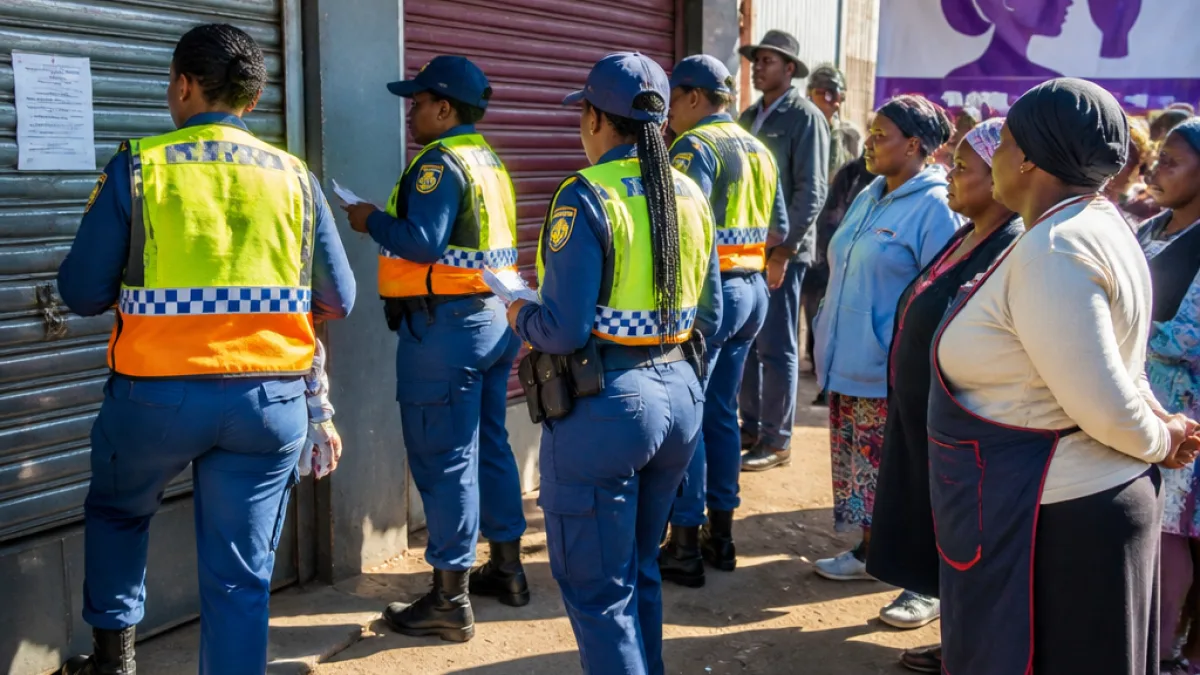
Thirteen people were arrested after an all‑female South African Police Service (SAPS) operation, dubbed Operation Basadi, conducted enforcement and awareness activities in Kutlwanong and Odendaalsrus in the Free State.
Police combine enforcement with GBV awareness
The operation, which took place on Saturday, combined targeted policing with community outreach. Officers carried out business inspections, document verification and an awareness campaign focusing on crimes including gender‑based violence (GBV).
According to SAPS reporting, the operation carried out several inspections and verification checks. Arrests were recorded for contraventions of the Immigration Act and for possession of suspected stolen property. In addition, two businesses were closed for non‑compliance.
"The #OperationBasadi Parade has commenced, with the programme opening with scripture reading and prayer by Section Head of Spiritual Services, Brigadier (Rite Reverend) SG Shobede‑Nkosi,"
The force posted updates on social media about the operation, highlighting both the enforcement element and the ceremonial opening of the parade.
Where action was taken
Operations were concentrated in Kutlwanong and Odendaalsrus, communities within the Matjhabeng local municipality near Welkom. While SAPS provided the overall arrest figure, the police did not release the ages or identities of those detained, nor did they give a breakdown by exact charges beyond immigration contraventions and possession of suspected stolen property.
Two local businesses were closed during the operation for failing to meet regulatory requirements. SAPS said these closures were for non‑compliance but did not specify which regulations were contravened.
Operation Basadi: policing and public engagement
Operation Basadi is a national SAPS initiative that places women officers at the forefront of targeted policing drives. In this iteration, the blend of enforcement and awareness work aimed to address immediate criminality while also engaging communities on issues such as GBV.
Police units conducting business inspections typically check for valid trading licences, labour compliance and documentation for staff. Where immigration irregularities are identified, suspects can be detained pending further investigation by immigration authorities.
| Activity | Outcome |
|---|---|
| Arrests | 13 |
| Primary offences mentioned | Immigration Act contravention; possession of suspected stolen property |
| Businesses closed | 2 |
Community impact and practical points
Local residents said they welcomed efforts to clamp down on crime, especially when operations target activities linked to theft and undocumented workers. At the same time, business owners expressed concern about inspections that result in closures, saying compliance requirements are often unclear or inconsistently enforced.
For traders and employers in the area, basic compliance steps include ensuring valid trading licences, up‑to‑date employee documentation and lawful employment of foreign nationals. Those unsure about requirements can contact their municipal offices or the Department of Home Affairs for guidance.
- If you are a business owner, keep your trading licence and employee records accessible during inspections.
- Employers must verify work permits and immigration documents for foreign employees; failure to do so can result in arrests under the Immigration Act.
- Report suspected stolen property to your nearest police station and obtain a case number for insurance or prosecution purposes.
Police spokespersons did not immediately provide further detail on whether any cases resulting from the arrests had been opened at specific stations or whether suspects had appeared in court. SAPS national social media feeds highlighted the gendered leadership of the operation and its opening ceremony, which included a scripture reading and prayer by a senior spiritual services official.
The combined enforcement and awareness approach reflects a broader SAPS strategy to pair visible policing with community education, particularly on GBV. How sustained these efforts will be in Matjhabeng remains to be seen; residents and local leaders will be watching implementation and follow‑through, especially where businesses are affected and when arrests relate to immigration status and property offences.
Further information on subsequent court appearances, charges or administrative outcomes was not available from SAPS at the time of reporting.