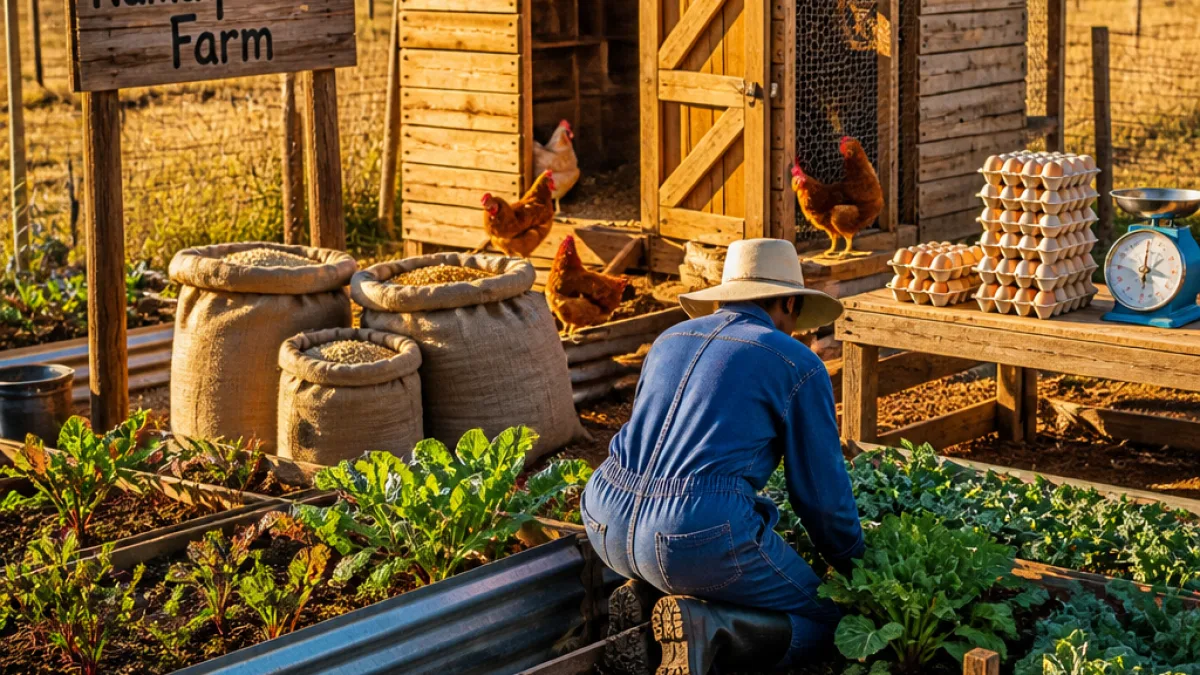
KwaMhlanga, Mpumalanga — When formal opportunities failed to materialise, Thandi Mahlangu returned to lessons learned in her mother’s garden and built a small-scale farming business that now supplies vegetables and eggs to her community in Vlaklaagte No. 1.
From seedling chores to a farm business
Mahlangu’s route into agriculture was gradual and born from necessity. She matriculated in 2016 and intended to study journalism at the Tshwane University of Technology but did not meet the admission requirements. What was meant to be a gap year stretched into several years of work and saving.
With an initial R500 from her mother, Mahlangu bought stock — selling mala (intestines) and chicken feet — travelling by bus to Pretoria to source goods and reselling them in her local community. She used profits to pay for further studies and in 2020 enrolled for electrical engineering. After graduating in 2024, the challenge of finding employment led her to start Namaqandela Farm in her family backyard later that year.
What Namaqandela Farm produces
The farm began with a selection of common leafy and root vegetables and later added eggs to the business offer. Early plantings included mustard spinach, onions, beetroot, peppers, lettuce and tomatoes. By 2026 meal demand in Vlaklaagte No. 1 encouraged the addition of egg sales.
- Vegetables: mustard spinach, onions, beetroot, peppers, lettuce, tomatoes
- Animal produce: eggs (introduced by 2026)
- Other income activities: earlier street-food trade selling cooked chicken products
Building through reinvestment and family support
Mahlangu credits her mother for the practical farming knowledge and for encouraging self-reliance. She describes how every opportunity to earn was channelled back into the business. At one stage she worked as a school assistant and saved her stipend to expand operations.
“She encouraged me never to rely on my beauty or depend on other people to provide for me, but to build a life through honesty, determination and hard work,”
That ethic underpins how Namaqandela Farm has grown from a backyard patch into a small local supplier, combining crop production with eggs to meet demand in the nearby community.
Linking small growers with wider markets
Mahlangu represented Namaqandela Farm at the Eggsellent by Lebo event, where she connected with other growers and explored potential markets and support networks for small-scale farmers in Mpumalanga. Participation at such events can offer exposure, learning and networking opportunities that are often critical for scaling micro-enterprises.
| Year | Milestone |
|---|---|
| 2016 | Matriculated; intended to study journalism |
| 2020 | Enrolled for electrical engineering |
| 2024 | Graduated and founded Namaqandela Farm |
| 2026 | Added egg sales; represented farm at Eggsellent by Lebo |
Practical implications for local small-scale farmers
Mahlangu’s story highlights a number of practical points relevant to others in the region considering smallholder farming:
- Start small and reinvest profits: she began with a modest capital injection and used earnings to grow operations.
- Diversify produce: combining vegetables with poultry products such as eggs helped meet local demand and stabilise income.
- Network through events: agricultural fairs and producer gatherings can create market linkages and training opportunities.
While the line between subsistence gardening and a viable small business is narrow, Namaqandela Farm demonstrates that backyard operations, when managed with discipline and reinvestment, can become a modest income source for households in Mpumalanga.
As communities across the province face unemployment and limited formal opportunities, stories like Mahlangu’s underline the potential of local entrepreneurship to generate livelihoods. Her experience points to the importance of practical agricultural skills, household support, and persistence in turning a simple family garden into a business serving the community in Vlaklaagte No. 1, KwaMhlanga.
Reporting from Mpumalanga.