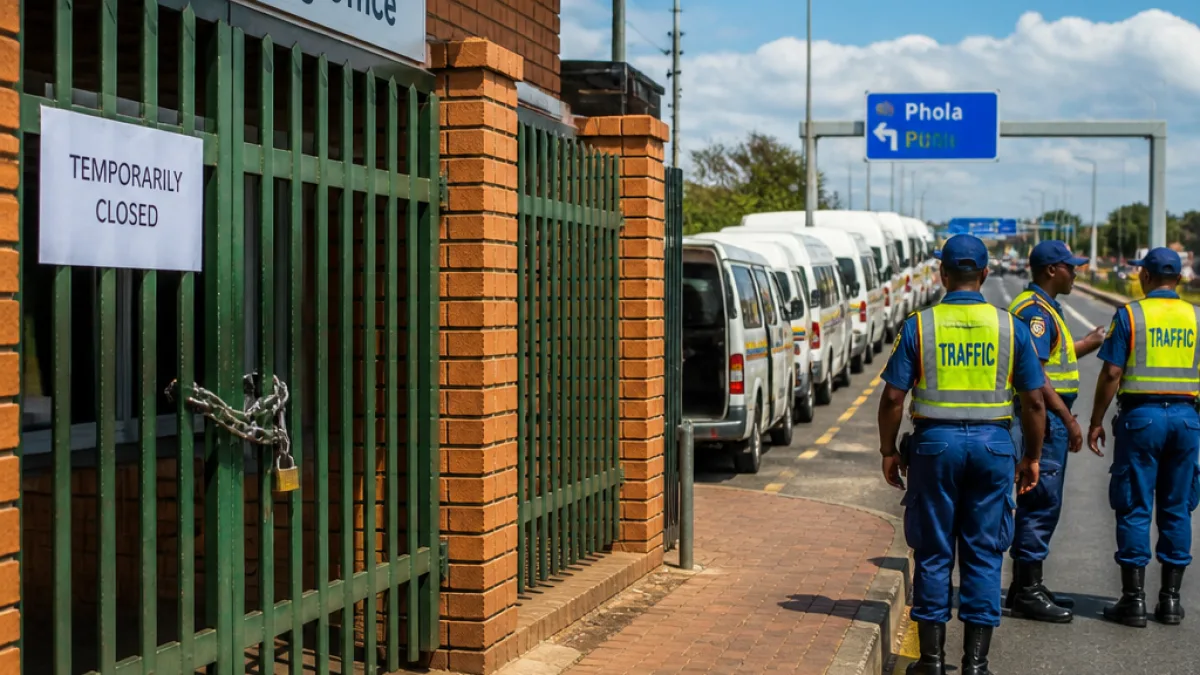
Short-staffed traffic unit struggles to maintain visible policing
The Emalahleni Local Municipality’s traffic functions are under pressure after councillors and municipal officials disclosed a critical shortage of personnel and resources. The situation has heightened community concern about road-law enforcement and access to licensing services across the City of Coal.
Municipal spokesperson Lebo Mofokeng told local media that the municipality currently employs 25 traffic officials to cover Ga‑Nala, eMalahleni and Vosman. He said the municipality needs an additional 42 traffic officers and 50 traffic vehicles to provide adequate coverage.
"It is indeed challenging for the municipality to survive with a limited capacity of traffic officers, and we need at least 42 additional traffic officers and 50 additional traffic vehicles," said Lebo Mofokeng.
Licensing office closed indefinitely
The main Emalahleni licensing office has been closed indefinitely, a factor that has prompted the provincial Department of Community Safety to explore temporary measures to restore services. The closure has not yet been given a return date in public statements, and residents reliant on licence renewals and related services face continued disruption.
Weekend visibility and a one-off operation
Questions about after‑hours and weekend visible policing were raised in council by Cllr Maureen Scheepers, who asked why policing is reportedly non‑existent over weekends in some areas. Mofokeng said traffic officials work until 21:30 and do operate on weekends, but acknowledged they are not always visible in every neighbourhood because of staff shortages.
On the weekend of 11 July motorists travelling to Phola encountered a heavy joint deployment by the Emalahleni Traffic Department, the municipality’s Law Enforcement Unit and the provincial traffic department. The blitz was arranged by Vosman SAPS, the municipality said; operational outcomes such as the number of fines issued or revenue generated were not disclosed at the time of reporting.
Local impacts and community concerns
Residents and road users face two immediate effects: reduced visible enforcement on routes and limited access to licensing services. For motorists this could mean delays in renewing licences and difficulty resolving vehicle-related administrative matters, while less visible traffic policing may increase risky behaviour on roads.
- Staffing: 25 traffic officials currently employed for three areas.
- Needs: municipality requests 42 additional officers and 50 vehicles.
- Operating hours: officials said to be on duty until 21:30 and working weekends, though coverage is uneven.
- Licensing: main office closed indefinitely; provincial department seeking temporary solutions.
What authorities say and next steps
The Department of Community Safety has been reported to be exploring temporary measures while the licensing office remains closed. The municipality says it has investigated all avenues to continue some operations at the main licensing office, but has not provided a timeline for full restoration.
Vosman SAPS arranged the July enforcement operation at Phola, according to the municipality. At the time of reporting the police station had not issued details of the operation’s outcomes. The lack of publicly available data on enforcement activity has left residents uncertain whether high‑visibility deployments will be sustained or remain intermittent blitzes.
Local context and broader consequences
Emalahleni is a city where many residents rely on private vehicles to travel between residential areas, mines and commercial centres. Effective traffic enforcement is an important element of road safety and public order; prolonged shortages of officers and vehicles reduce the municipality’s capacity to monitor speed, illegal parking, vehicle roadworthiness and licensing compliance.
Until permanent staffing and fleet support arrive, the municipality and the provincial department face pressure to devise interim ways to deliver licensing services and maintain visible enforcement, particularly over weekends and in outlying areas. Residents seeking updates should monitor municipal notices and contact local ward offices for guidance on licensing alternatives and temporary venues where services may be offered.
Further information from Vosman SAPS about the Phola operation was pending at the time of publication.