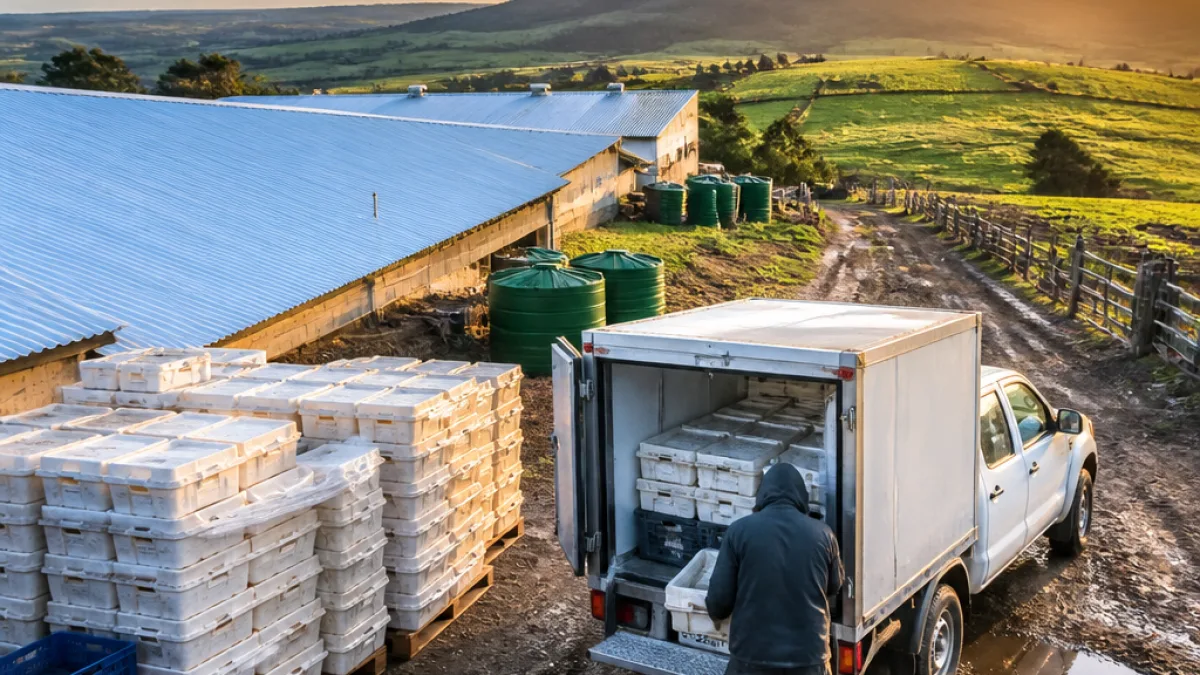
Two family-owned poultry cooperatives based in Rocklands, Kariega, have been awarded a combined R642 680 from the Eastern Cape Development Corporation’s Imvaba Cooperative Fund to rehabilitate infrastructure and buy processing equipment, the ECDC reported.
Growth from a backyard start
Milani Macethe Poultry Production Primary Cooperative began in 2002 as a small family venture that reared broilers alongside cattle and goats. What started with around 200 day-old chicks has expanded over two decades to about 1 500 broilers per production cycle, according to documentation supplied with the funding announcement.
The cooperative, which operates on a 12-hectare holding in Rocklands Valley, sells both live and processed birds to local households and regional traders. It also employs two women in permanent administrative roles drawn from the surrounding community.
Where the money goes
The larger allocation of the two awards — R379 347 — was granted to Milani Macethe. That package included R264 984 earmarked for infrastructure rehabilitation and R114 363 for processing and cold-chain equipment.
- Funding also covered the purchase of 1 500 day‑old chicks and additional poultry feed.
- Equipment procured includes a poultry plucker, chest freezers, a digital scale and a packaging machine to support on-site processing and storage.
- Reconstruction work increases the housing capacity to accommodate up to 6 000 broilers.
The second beneficiary, Langbooi Sthathu Agricultural Primary Cooperative, also based in Rocklands, received the remaining portion of the combined sum to repair structures and boost its processing capabilities, the ECDC said.
| Cooperative | Purpose | Allocation |
|---|---|---|
| Milani Macethe | Infrastructure rehabilitation; processing & cold-chain equipment | R379 347 |
| Langbooi Sthathu | Rehabilitation & equipment | R263 333 (remaining of combined R642 680) |
Rebuilding after devastating floods
The funding arrives after the cooperatives suffered damage during the Eastern Cape floods of 2022/23.
“The funding has enabled the cooperative to rebuild and expand following the devastating floods of 2022/23,”the cooperative manager Thobeka Menze said in material accompanying the award announcement.
According to the ECDC’s assistant manager for financial incentives and business support, Fikile Mzinyati, the upgrades will increase on-farm capacity and improve processing and cold storage — elements the agency says are critical for reducing post-harvest losses and meeting local demand.
Local economic and food-security implications
For Kariega, the development has several local consequences. Increasing capacity from an operation that produces 1 500 broilers per cycle up to facilities able to hold 6 000 broilers signals potential growth in supply to markets in Kariega and nearby towns. Processing equipment and cold storage should also allow cooperatives to keep chickens longer, maintain quality and sell packaged product rather than only live birds.
Employment is a further consideration. While the cooperative already holds two permanent administrative posts, expanded production and processing could create additional temporary and possibly permanent roles in farm labour, packaging and distribution. That would be significant in a region where many households depend on small-scale agriculture for income.
However, scaling up also brings challenges: reliable electricity for cold-chain equipment, ongoing access to affordable feed and veterinary services, and market access beyond immediate neighbourhoods. The ECDC funding addresses some start-up costs, but sustainability will depend on operational planning and local market uptake.
For Kariega residents interested in local food sources or small agribusiness models, the cooperatives’ progress will be worth watching. The rehabilitated facilities aim to make poultry production more resilient to climate shocks and better able to meet household demand for affordable protein.