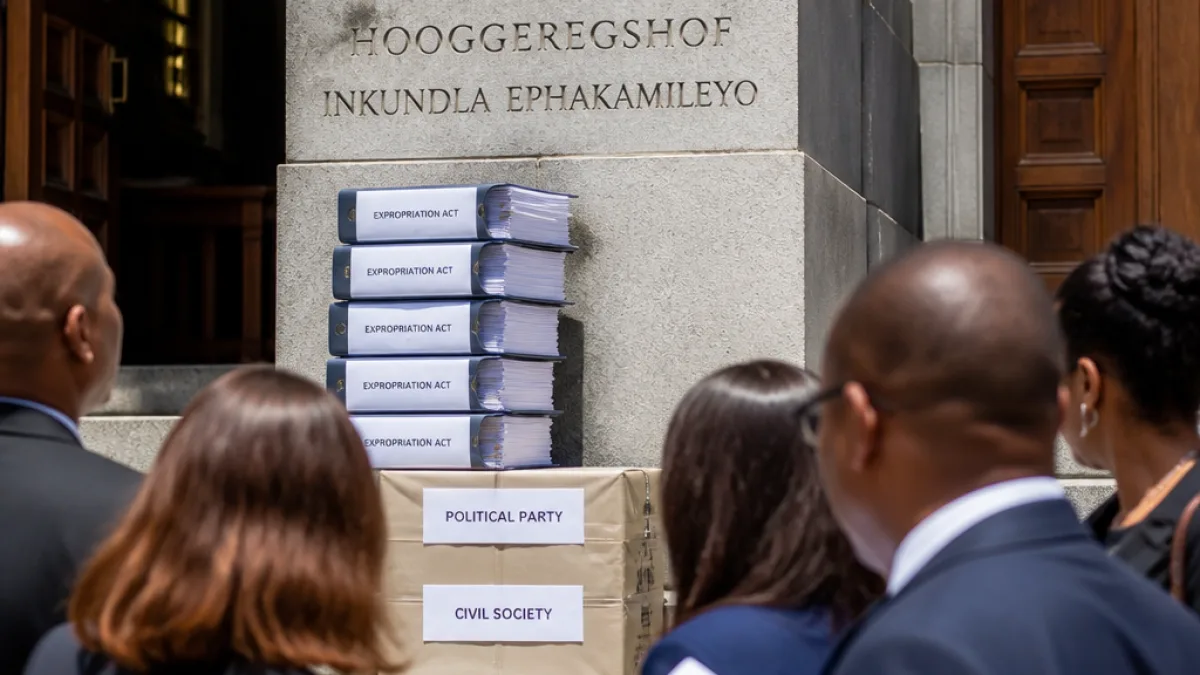
CAPE TOWN — The Democratic Alliance (DA), supported by Afriforum and the Institute for Race Relations (IRR), has taken the Expropriation Act to the Western Cape High Court challenging the law’s validity and the manner in which it was approved by Parliament.
Grounds of the challenge
The applicants contend the Act infringes constitutional protections, including the right to property, and was adopted unlawfully in the National Council of Provinces (NCOP). The DA’s Federal Council chairperson, Ashor Sarupen, said the party will urge the court to declare the Act invalid and unconstitutional.
“The Constitution requires at least five provinces to vote in favour of the bill in the National Council of Provinces (NCOP). Whereas fewer than five delegations voted in favour of the expropriation bill with the lawful authority on the day. That means the bill was passed through the NCOP unlawfully,”
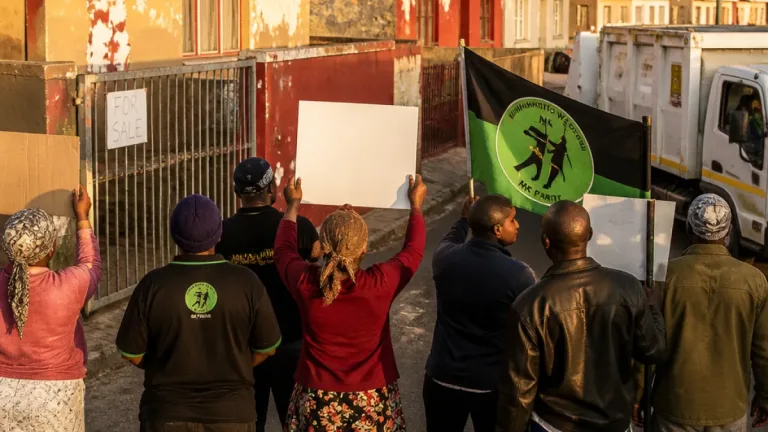
Sarupen made the remarks outside the Western Cape High Court as the matter was argued on Monday. The applicants say the procedural irregularity in the NCOP is fatal to the Act’s validity and that the statute will permit unconstitutional deprivation of property.
Who is in court and what they seek
The parties bringing the application are the DA, Afriforum and the IRR. They are seeking a declaratory order that the Expropriation Act is inconsistent with the Constitution and therefore invalid. The challenge focuses primarily on two elements: procedural defects in the Act’s passage through the NCOP and the substantive impact on property rights.
- Plaintiffs: Democratic Alliance; Afriforum; Institute for Race Relations.
- Main legal arguments: NCOP vote did not satisfy constitutional requirements; Act infringes property rights.
- Relief sought: Declaration of invalidity of the Expropriation Act.
Legal and political context
The applicants argue that the NCOP did not have the lawful delegations in place to pass the bill as required by the Constitution. The DA will present legal submissions aiming to show that fewer than the constitutionally required number of provincial delegations voted with lawful authority at the decisive NCOP sitting.
The case forms part of a broader national debate over land reform and expropriation without compensation. The DA has framed its challenge as a defence of property rights and a bulwark against measures it says could amount to unlawful expropriation.
What the applicants say
Outside the court, Sarupen said the party would not accept a law that “legalises land grabs” and that such measures have “no place in a constitutional democracy.” Those remarks underline the DA’s political framing of the legal challenge as both constitutional and policy-driven.
What is at stake for Western Cape residents
If the court finds procedural defects or substantive unconstitutionality, the ruling could halt implementation of the Act and set a precedent affecting national land policy. Western Cape property owners, farmers and municipalities are among those watching the case closely, given the province’s particular legal and economic exposure to property and land-use legislation.
Conversely, if the court upholds the Act, the judgment would remove a major legal obstacle for national policy-makers pursuing the provisions of the Act. Either outcome is likely to prompt further litigation and political mobilisation.
What happens next
The Western Cape High Court will consider the DA’s and the co‑applicants’ arguments and the state’s response. Any judgment could be appealed to higher courts, including the Constitutional Court, depending on the outcome and the legal questions involved.
| Party | Role in case | Core claim |
|---|---|---|
| Democratic Alliance | Applicant | Act is unconstitutional; NCOP procedure defective |
| Afriforum | Applicant | Protection of property rights |
| Institute for Race Relations | Applicant | Constitutional challenge to Act |
The case underscores the intersection of parliamentary procedure and constitutional rights. Legal experts and observers will be following the judgment closely for its implications on how Parliament must comply with constitutional voting requirements in the NCOP and on broader land reform measures.
For Western Cape residents, the proceedings will be significant both as a question of legal principle and for the practical consequences that any change to expropriation law might have on property, agricultural production and municipal planning.
Reporting from the Western Cape High Court was conducted on the day the matter was heard; the court will make its order after considering the written and oral submissions presented by the parties.