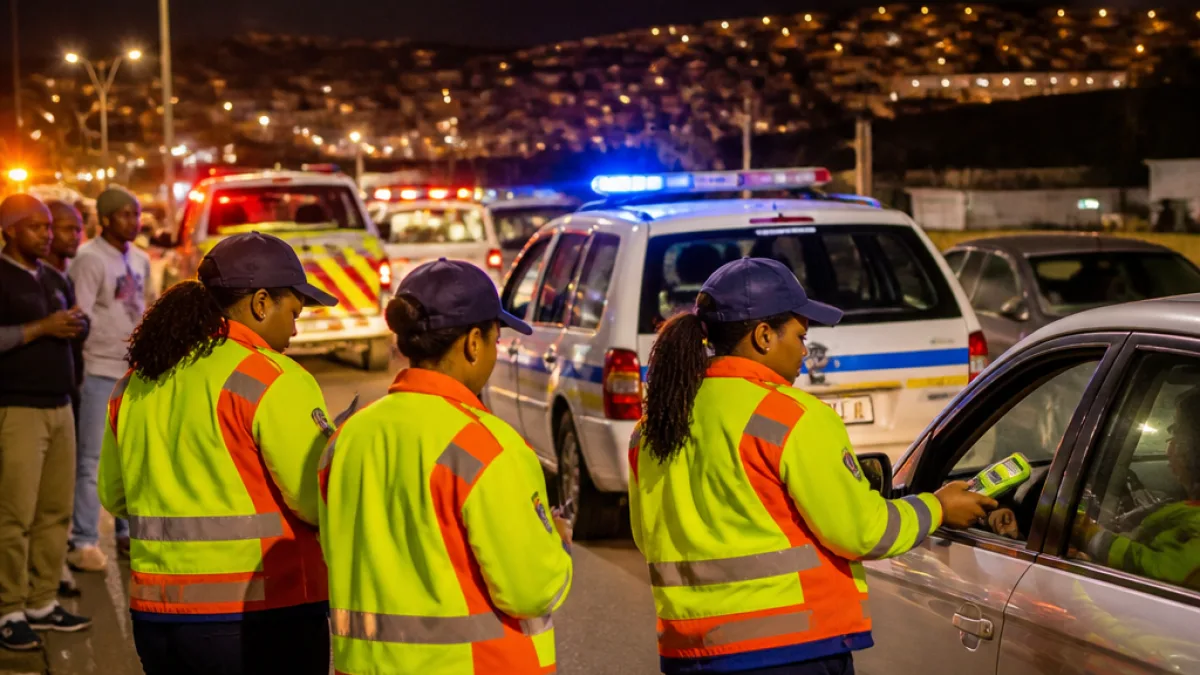
The Eastern Cape Department of Transport’s all-women road-safety operation in Maletswai has resulted in the arrest of 19 suspected drunk drivers, officials confirmed. The drive forms part of a month-long provincial campaign launched in the Joe Gqabi District to mark Women’s Month and to reinforce road-safety education and enforcement.
Education by day, enforcement by night
The initiative began with daytime road-safety education activities on a Saturday before transitioning into a zero-tolerance enforcement operation overnight. The campaign emphasises both public information and active policing in an attempt to reduce crashes and fatalities linked to alcohol consumption.
Eastern Cape Transport MEC Xolile Nqatha praised the female officers who led the operation, commending their professionalism and resolve.
"The women of the Eastern Cape Department of Transport have sent a powerful message that road safety knows no gender. It demands commitment, professionalism, and courage," Nqatha said. "Their decisive action in removing suspected drunk drivers from our roads is a reminder that every life saved matters."
The department said the Maletswai operation was only the beginning of several similar all-women law enforcement actions and road-safety campaigns slated to roll out across all regions of the province throughout the rest of August.
What happened in Maletswai
During the operation, officers combined visible policing with checkpoints and breathalyser tests to identify and remove drivers suspected of being under the influence of alcohol. Nineteen arrests were recorded during the first operation period. Further details about whether charges were followed by court appearances, bail conditions or convictions were not provided in the department's initial statement.
Road-safety campaigns that blend education and enforcement are commonly used to deter dangerous driving behaviours. In the Eastern Cape — a province with long distances between towns and a high rate of road fatalities compared with global averages — targeted interventions around holidays and commemorative months are a recurring tactic.
How communities can expect the campaign to roll out
The department indicated the campaign will deploy similar teams and activities in other districts during August. While exact dates and locations were not released, the stated approach will continue to pair day-time education with night-time enforcement.
- Primary aims: reduce drunk driving, raise awareness about road safety and enforce traffic laws.
- Method: daytime outreach and education followed by targeted night-time checkpoints and breathalyser testing.
- Geography: launched in Joe Gqabi District with planned roll-out across all regions of the Eastern Cape during August.
| Operation element | Details |
|---|---|
| Location | Maletswai, Joe Gqabi District |
| Lead personnel | All-women teams from the Eastern Cape Department of Transport |
| Activities | Daytime education; night-time enforcement and breathalyser testing |
| Result (first operation) | 19 suspected drunk drivers arrested |
Why this matters locally
Road safety is a persistent concern for Eastern Cape communities. Long distances, high speeds on regional routes and alcohol-related crashes put pressure on families and emergency services. Interventions that remove impaired drivers from the roads can prevent collisions, but sustained reductions in fatalities require consistent enforcement combined with public behaviour change.
For residents, the immediate impact is twofold: safer roads in the short term where operations are active, and the prospect of repeat operations that could maintain pressure on dangerous driving habits. For motorists, the message is unequivocal: expect checkpoints and enforcement during the campaign, and face arrest if found driving under the influence.
The department has not yet disclosed whether subsequent operations will include additional measures such as increased sanctions, collaborations with SAPS or targeted outreach to taverns and shebeens, which are sometimes part of broader anti-drunk-driving efforts in other provinces.
As the campaign continues across the Eastern Cape this month, commuters, long-distance truck drivers and local residents should take practical steps to avoid alcohol-impaired driving: plan sober drivers, use taxis or ride-hailing services, and delay trips if necessary. Local law enforcement and transport officials have signalled they will sustain visible operations during the remainder of August.
This story will be updated as the department releases further information about the campaign schedule and operational results in other districts.