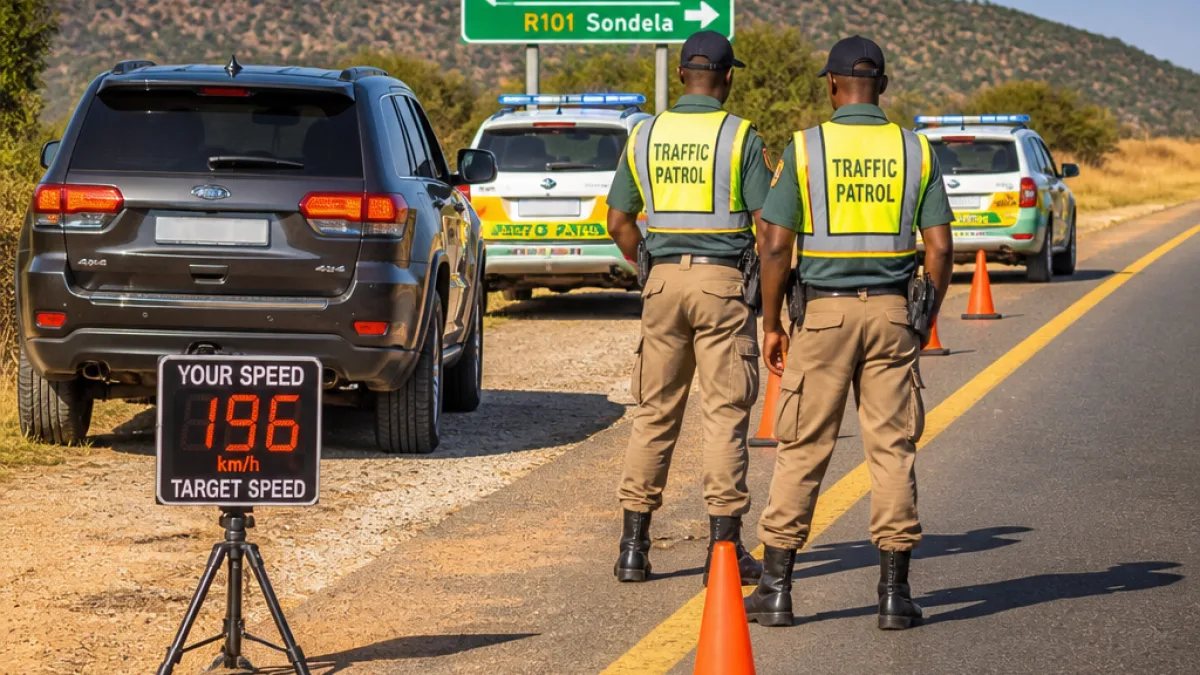
Police enforcement on the N1 near Sondela, outside Bela-Bela, resulted in the arrest of a motorist after traffic officers recorded the vehicle travelling at an estimated 196km/h, Arrive Alive reported on 31 July 2026.
What happened
According to the report, Limpopo Provincial Traffic officers stopped a Jeep Grand Cherokee on the N1 near Sondela on Thursday. The driver was taken into custody and handed over to Bela-Bela SAPS for detention. The brief item said authorities continue with their enquiries.
- Date: 31 July 2026 (reported 1 August 2026)
- Location: N1, near Sondela (Bela-Bela area)
- Vehicle: Jeep Grand Cherokee
- Recorded speed: 196km/h
- Action taken: Driver arrested and handed to Bela-Bela SAPS
Local implications and unanswered questions
The incident underlines ongoing enforcement activity on the N1 corridor that runs through the municipal area. For Bela-Bela residents and regular N1 users it raises immediate concerns around road safety and the resources devoted to policing high-speed offences on the route.
Document-focused reporting requires follow-up on the public-cost and legal consequences of such stops: how quickly are speed cases processed through the courts; what fines, licence suspensions or impoundments follow; and how much does local law enforcement spend on high-visibility or intelligence-led traffic operations? The brief report does not provide those figures or the next procedural steps for the arrested driver.
"The driver was stopped by Limpopo Provincial Traffic Officers and has since been handed over to Bela-Bela SAPS for detention," the Arrive Alive item said.
Those facts are clear; what remains unclear is the eventual outcome. Will the case proceed to summons or a charge sheet? Will the vehicle be impounded pending court, or will the matter be resolved through fines and licence points? For residents and local councillors, answers about the administrative and financial aftermath matter—both for public safety strategy and for municipal budgets that may be affected by court processes and enforcement operations.
Broader road-safety context
High-speed incidents on national and provincial roads are an established risk factor for severe crashes. Traffic operations that detect and intercept speeding vehicles aim to reduce that risk, but public understanding of the enforcement model is patchy. Local commuters and freight operators in the Bela-Bela area have a stake in seeing consistent enforcement and transparent follow-through when arrests are made.
Authorities often balance visible operations with intelligence-led stops. The Arrive Alive report places this incident in the category of a successful stop, but without operational detail—such as how the speed was measured or whether other offences were suspected—residents must wait for SAPS or Traffic Management to publish a fuller statement.
What residents can expect
Motorists using the N1 through Bela-Bela should expect continued traffic operations. For those concerned about enforcement practices and the costs involved, questions for the provincial traffic department and Bela-Bela SAPS include:
- How are speed offences processed administratively and in court?
- What are average fines and potential licence penalties for recorded speeds of this magnitude?
- How often do such stops lead to vehicle impoundment or other enforcement costs borne by the municipality or province?
At present the confirmed facts are limited to the stop, the recorded speed and the handover to Bela-Bela SAPS. Further details should emerge only from a SAPS or provincial traffic statement or from court records once the matter is formally lodged.
| Item | Detail |
|---|---|
| Date reported | 1 August 2026 |
| Incident date | 31 July 2026 |
| Location | N1 near Sondela (Bela-Bela area) |
| Recorded speed | 196km/h |
| Enforcement | Limpopo Provincial Traffic; handed to Bela-Bela SAPS |