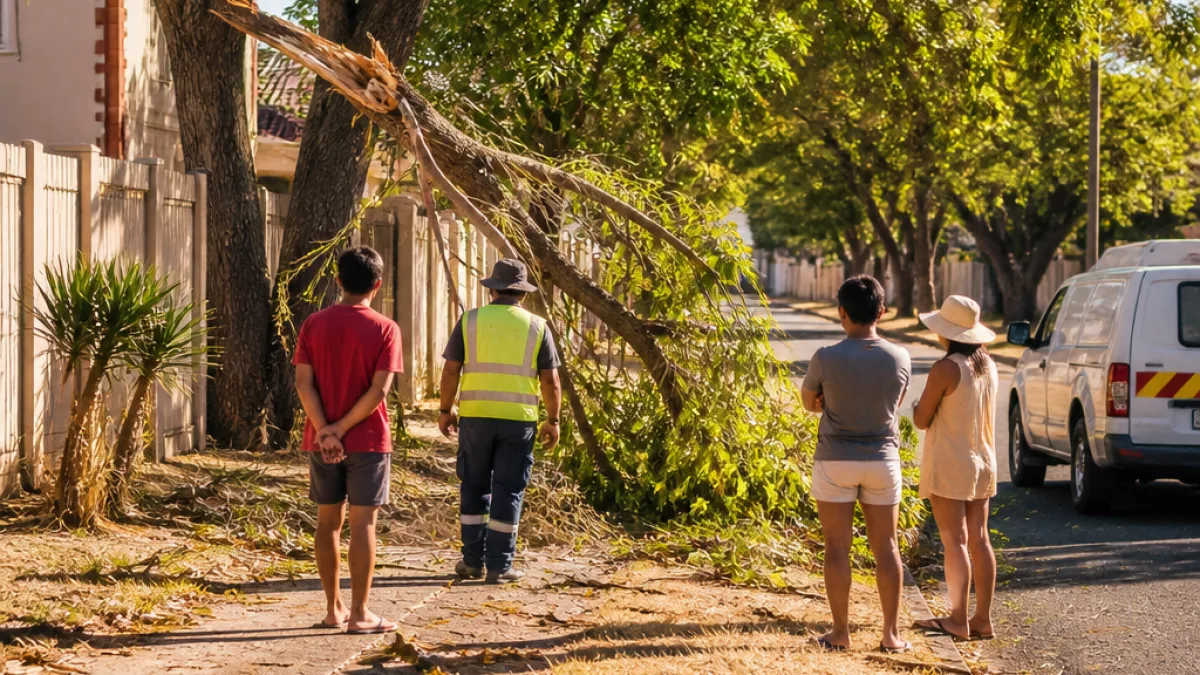
What is sudden branch drop?
Hot weather tree branch drop, sometimes called Sudden Branch Drop Syndrome or summer branch drop, is when large branches fall from mature trees during prolonged dry, hot periods — often in calm conditions and with no visible signs of decay. Although the phenomenon has been widely reported in other cities, the underlying causes are biological and apply wherever trees experience severe water stress.
How and why branches fail in heatwaves
Research and recent reporting explain that trees under extreme heat and drought shed limbs as a survival mechanism. When soil moisture is insufficient, trees cannot replace the water lost through leaves. Tiny air bubbles, called embolisms, form in the tree’s xylem (the tissue that carries water), a process known as cavitation. To protect the main trunk and root system, the tree sacrifices peripheral branches — a strategy known as hydraulic segmentation. As a result, large branches can detach and fall even without wind or obvious rot.
- Risk factors: prolonged hot, dry spells followed by sudden heavy rain; midday or early-afternoon conditions; mature trees with large peripheral branches.
- Characteristics: branches may look healthy before failing; breaks can occur silently and unexpectedly.
- Where it happens: in parks, gardens and tree-lined streets — places where people commonly sit, play or gather beneath trees.
Practical safety measures for residents and local authorities
While the phenomenon has been highlighted in other jurisdictions, the same precautions are relevant here in East London. Local residents and managers of public spaces should consider straightforward measures to reduce risk during hot periods.
- Avoid sitting or gathering directly beneath large, mature trees during prolonged heat or immediately after heavy downpours.
- Municipalities and private property owners should increase inspections of large trees following extended dry spells and after sudden rains.
- Where branches appear at risk, engage qualified arborists to assess and, if necessary, prune or make safe tree limbs.
- Public-park users should supervise children and avoid letting play congregate under big trees in extreme heat.
"During extended periods of hot, dry weather trees lose more water through their leaves than they can absorb from the soil. This imbalance places trees under significant water stress, altering the physical properties of their tissues and reducing their margin of safety against mechanical failure."
Simple guidance for municipal action
Local authorities and municipal parks departments can reduce risk by prioritising inspections and communication during heatwaves. The following table summarises practical steps that can be taken immediately, based on the causes and triggers reported by tree scientists and urban-council advisories.
| Trigger | Short-term action |
|---|---|
| Prolonged dry, hot conditions | Increase visual inspections of mature trees; issue public advisories to avoid sitting under large canopies |
| Sudden heavy rain after drought | Inspect for newly weakened branches; restrict access to affected park sections if needed |
| Large, overhanging branches near gathering spots | Commission professional risk assessments and remedial pruning |
Why this matters for East London
Large trees are a valuable part of our city landscape — they provide shade and improve urban living. But the same trees can pose a hidden hazard when they are under environmental stress. Awareness, timely inspection and clear public messaging are low-cost ways to reduce the chance of injury or property damage.
Residents who notice newly fallen limbs or large cracks in branches should report their concerns to the municipal parks or roads department so qualified personnel can assess the situation. Simple precautions — especially during heatwaves and in the hours after heavy rain — can prevent accidents.
The phenomenon of sudden branch drop is not limited to any one city. Understanding the biology behind it helps households, schools, businesses and municipal services to take proportionate, evidence-based action when weather extremes arrive.